HC Refuses to Quash FIR in Partnership Dispute Involving Alleged Rs. 16.33 Lakh Misappropriation:
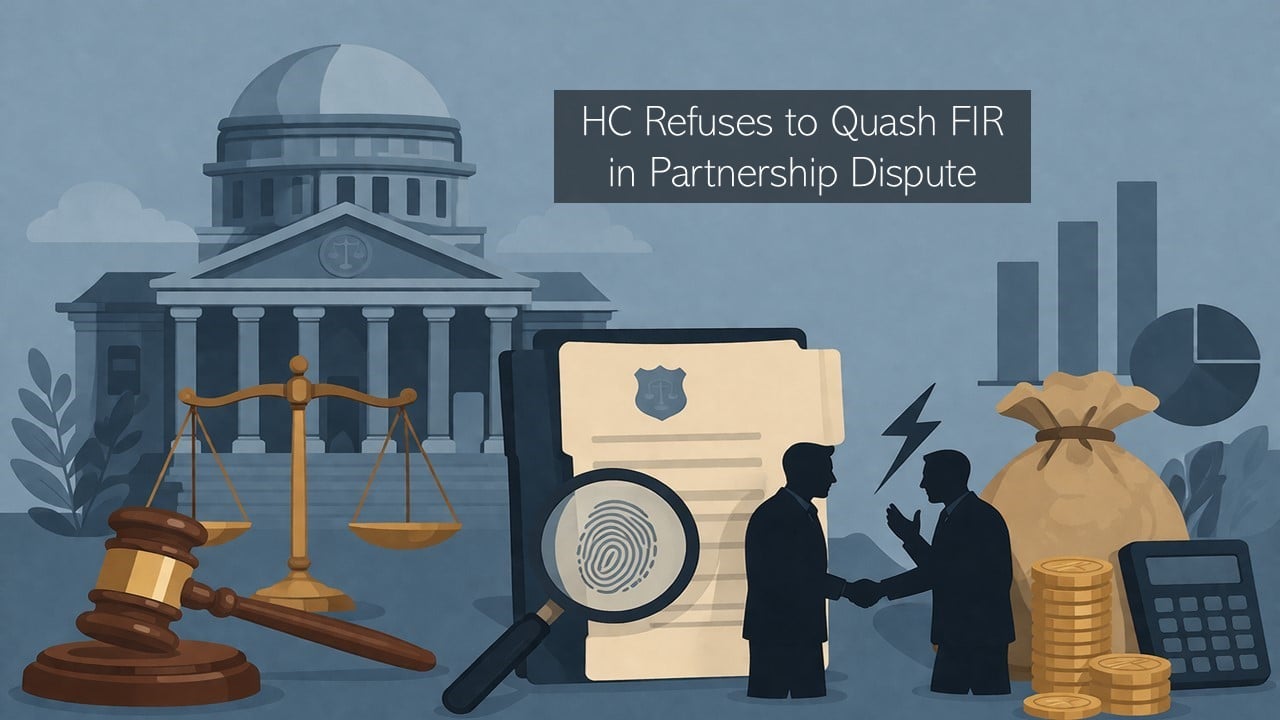
The High Court held that criminal proceedings alleging misappropriation and forgery cannot be quashed at the threshold merely on the ground that the dispute is civil in nature.
HC Denies to Set Aside FIR in Partnership Dispute Involving Misappropriation Allegations
 Meetu Kumari
 Apr 8, 2026
HC Refuses to Quash FIR in Partnership Dispute Involving Alleged Rs 16.33 Lakh Misappropriation
The petitioner, Arup Roy, challenged criminal proceedings arising out of a partnership dispute with the complainant concerning a firm named M/s Aavya Tech. The complainant alleged that the petitioner induced him to enter into a partnership in 2021, took control of business operations and documents, but failed to invest his agreed capital. It was further alleged that the petitioner misappropriated funds amounting to Rs 1,633,000, manipulated financial records, including income tax returns, and removed key business documents.
The Magistrate, upon a complaint under Section 175(3) Cr.P.C., directed an investigation after a preliminary enquiry. Aggrieved, the petitioner approached the High Court seeking quashing of the FIR, contending that the dispute was purely civil in nature, arising out of partnership dealings and lacked ingredients of criminal offences like cheating and criminal breach of trust.
Main Issue: Whether criminal proceedings arising out of a partnership dispute involving allegations of misappropriation and forgery can be quashed at the threshold on the ground that the dispute is civil in nature.
HC Decided: The High Court dismissed the revision petition and refused to quash the proceedings. It held that merely because a dispute arises out of a partnership transaction, it cannot automatically be treated as purely civil if the complaint discloses elements of criminal offences. The Court observed that the allegations, including failure to invest agreed capital, misappropriation of funds, manipulation of financial records, and removal of documents, prima facie satisfied the ingredients of offences under the Bharatiya Nyaya Sanhita.
The Court, while relying upon State of M.P. Vs Awadh Kishore Gupta and Ors, reiterated that at the stage of quashing, it is not permissible to evaluate the truthfulness of allegations or appreciate evidence. If the complaint, taken at face value, discloses the commission of a cognisable offence, the proceedings must continue. It further noted the petitioner’s non-cooperation during the investigation and the petitioner's absconding conduct as additional factors weighing against interference.
Thus, the Court held that allowing quashing at this stage would amount to stifling a legitimate prosecution and may result in a miscarriage of justice. The investigating agency was directed to proceed independently without being influenced by observations made in the order.
To Read Full Judgment, Download PDF Given Below
About Author


Meetu Kumari
Content Manager
Meetu Kumari is an Experienced Advocate and Content Writer with 4+ years of demonstrated history of working in the law practice industry. Skilled in Developing Content, Researching, and Drafting. Strong professional with a Bachelor of Science (B.Sc.) focused on Law from Gujarat National Law University.
Meetu Kumari is an Experienced Advocate and Content Writer with 4+ years of demonstrated history of working in the law practice industry. Skilled in Developing Content, Researching, and Drafting. Strong professional with a Bachelor of Science (B.Sc.) focused on Law from Gujarat National Law University.
 Studycafe
 Jodhpur, Rajasthan, India
 2264
2264My Recent Articles
- ITAT Condones 302-Day Delay, Restores Salary Assessment for Fresh VerificationPremium
- ITAT Condones Delay After Tax Consultant's Death, Restores Appeals for Fresh HearingPremium
- ITAT Remands Salary Addition, Says Taxability Depends on Salary Becoming Due, Not Mere ReceiptPremium
- ITAT Deletes TP Royalty Adjustment, Orders Fresh Review of Commission BenchmarkingPremium
- ITAT Quashes Reassessment Over Unsigned Section 148 Notice Issued to AssesseePremium
Up Next
Loading suggestions…


Recent Posts

All Posts


Recent Posts
All Posts