High Court Remands Adjudication on Service Tax Demand Raised on Electricity Charges of Rs 1.78 Cr:
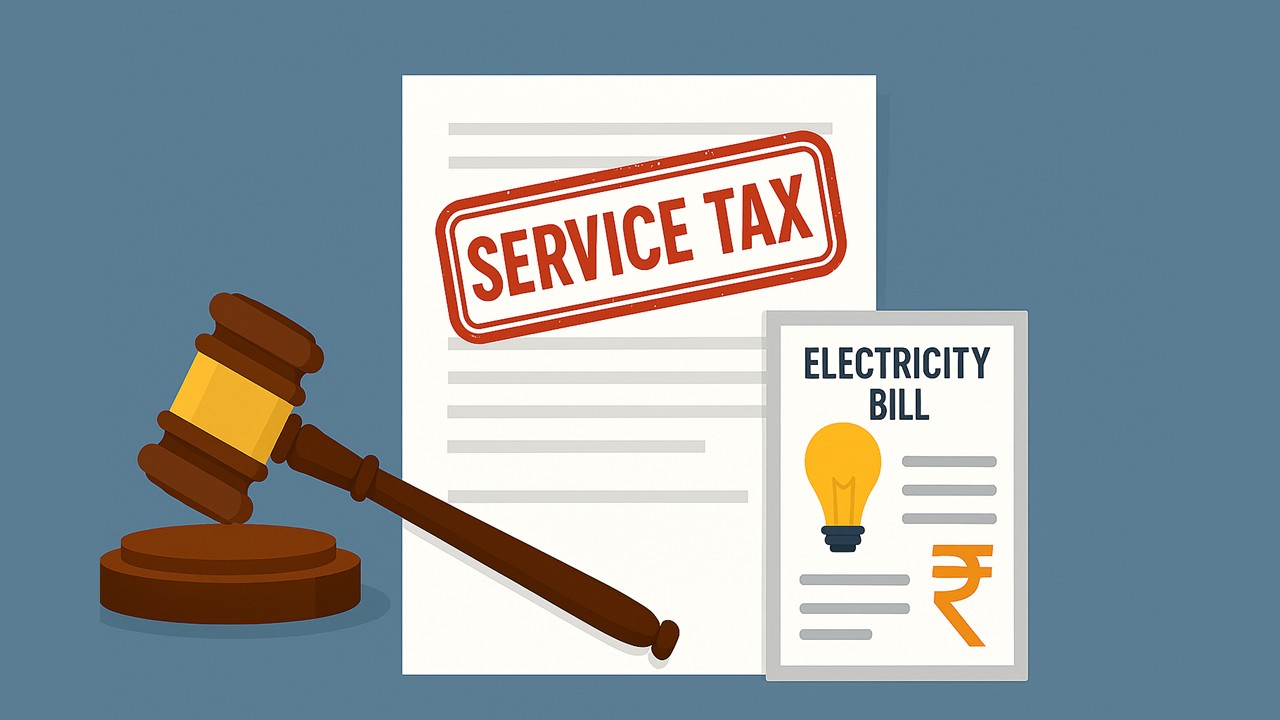
High Court remands service tax dispute of Rs.1.78 crore on electricity reimbursements for fresh adjudication, noting factual verification required on metering, billing, and parity of rates.
High Court directs fresh adjudication on levy of service tax over electricity reimbursements; holds issue to be factual and not fit for writ interference.
 Meetu Kumari
 Oct 21, 2025
High Court Remands Adjudication on Service Tax Demand Raised on Electricity Charges of Rs 1.78 Cr
The petitioner, a development and leasing company of a commercial building, had purchased high-tension electricity from a distribution utility and provided it to submetered tenants. On the departmental audit, it was found that the petitioner received amounts with regard to electricity from tenants but did not pay service tax on the same. Thereafter, Show Cause Notices were issued in October 2016 and May 2017, alleging that electricity recoveries formed part of the taxable consideration for renting or maintenance services, resulting in a confirmed service tax demand of Rs. 1,78,60,449, along with interest and penalty. The adjudicating authority rejected the petitioner’s contention that such collections were mere reimbursements at actuals, and held that the supply of electricity by a non-utility entity did not fall under the exemption available to distribution licensees under Notification No.32/2010-ST dated 22.06.2010. The petitioner approached the Court contending that electricity constituted “goods”, and its recovery on a no-profit basis could not be treated as a taxable service, particularly when supported by identical rate parity between sub-meter readings and the distribution company’s invoices.
The Revenue, however, took the stand that the petitioner was not a licensed electricity distributor and had provided composite services by providing seamless power and administration of common facilities, thus bringing in service tax under the provisions of the Finance Act, 1994. Reliance was placed on Section 66B and Section 66D(k) of the Finance Act to contend that the exclusion was limited to transmission and distribution utilities accepted under law. The Court, after perusing records such as the Order-in-Original dated 30.11.2017 and April 2018 appellate observations, pointed out that the inquiry as to whether the petitioner simply passed actual electricity charges or levied any markup entailed meticulous factual scrutiny of metering data, bills, and consumption profiles, which could not be decided in writ jurisdiction.
Issue Raised: Whether electricity charges recovered by the petitioner from tenants on a sub-meter basis, claimed to be reimbursements at actuals without any markup, were liable to service tax under the Finance Act, 1994 or fell within the negative list exemption under Section 66D(k) read with Notification No. 32/2010-ST dated 22.06.2010.
[related id="395781"]
HC Held: The High Court held that the dispute was primarily factual in nature and that the correctness of the petitioner’s claim, whether the electricity amounts collected were mere reimbursements reflecting the distribution company’s rates or included an additional charge, could not be determined without detailed scrutiny of records. It was noted that the petitioner had submitted sample bills, consumption charts, and meter readings to prove rate parity, whereas the revenue objected to the propriety of such data. In such situations, the High Court felt it was not appropriate to invoke writ jurisdiction to decide such questions of fact and directed instead that the issue be remitted for fresh adjudication.
The Bench disposed of the writ petition accordingly by remanding the matter to the Adjudicating Authority for consideration afresh. The authority was directed to issue notice of hearing, allow both sides to place relevant documents and evidence, and pass a reasoned order within three months in accordance with law. The Court clarified that it had not expressed any opinion on the merits of the case, and all contentions of the parties remained open.
To Read Full Judgment, Download PDF Given Below
About Author


Meetu Kumari
Content Manager
Meetu Kumari is an Experienced Advocate and Content Writer with 4+ years of demonstrated history of working in the law practice industry. Skilled in Developing Content, Researching, and Drafting. Strong professional with a Bachelor of Science (B.Sc.) focused on Law from Gujarat National Law University.
Meetu Kumari is an Experienced Advocate and Content Writer with 4+ years of demonstrated history of working in the law practice industry. Skilled in Developing Content, Researching, and Drafting. Strong professional with a Bachelor of Science (B.Sc.) focused on Law from Gujarat National Law University.
 Studycafe
 Jodhpur, Rajasthan, India
 2264
2264My Recent Articles
- ITAT Condones 302-Day Delay, Restores Salary Assessment for Fresh VerificationPremium
- ITAT Condones Delay After Tax Consultant's Death, Restores Appeals for Fresh HearingPremium
- ITAT Remands Salary Addition, Says Taxability Depends on Salary Becoming Due, Not Mere ReceiptPremium
- ITAT Deletes TP Royalty Adjustment, Orders Fresh Review of Commission BenchmarkingPremium
- ITAT Quashes Reassessment Over Unsigned Section 148 Notice Issued to AssesseePremium
Up Next
Loading suggestions…


Recent Posts
All Posts
Recent Posts
All Posts