How to Save Income Tax with HUF: Complete Guide to Hindu Undivided Family Benefits with Examples:

Learn how forming a Hindu Undivided Family (HUF) can help you legally reduce your income tax through smart income splitting, deductions, and exemptions.
A Simple and Legal Way to Save Taxes Using HUF Structure in India
 Saloni Kumari
 Jul 1, 2025
Table of Contents

How to Save Income Tax with HUF: Complete Guide to Hindu Undivided Family Benefits with Examples
A Hindu Undivided Family (HUF) is a legal procedure in India to reduce your tax burden by splitting income among family members. It is especially useful for individuals earning high incomes or those receiving income from inherited property. Below is the detailed information regarding how HUF works, who can form it, and how it helps in saving taxes.
What is HUF and How Does it Work?
A Hindu Undivided Family (HUF) is a family unit recognised under Indian law. It consists of a Karta (the head of the family) and its members. The Karta can be the oldest male or female coparcener (a person who has a birthright to the family property). The Karta handles the finances and signs on behalf of the Hindu Undivided Family (HUF).- Coparceners are family members by birth (a minimum of 2 are required to create an HUF).
- Members are included via marriage (like a wife or mother).
- Note: An adopted child is treated as a coparcener, but a wife or mother cannot demand partition or become the Karta unless there are no other coparceners and the father has expired.
Who Can Form an HUF?
- Only Hindus, Jains, Sikhs, and Buddhists are permitted to form HUFs.
- Married couples with at least one child are permitted to form HUFs.
- To officially form an HUF, you need to submit a simple affidavit and a PAN application.
Tax Benefits and Deductions Through HUF
Creating an HUF allows families to take advantage of separate exemptions and deductions:- Section 80C: If an individual exhausts their personal 80C limit, the HUF can still pay for life insurance premiums of its members and claim the deduction.
- PPF Contributions: While the HUF can’t open a new PPF account, it can contribute to existing ones of its members and claim deductions.
- Section 54F (Capital Gains): If an individual already owns a residential property, they can still claim for exemption on capital gains through the HUF if the second property is in the HUF's name.
- Self-Occupied Property Rule: Normally, only 2 properties can be considered "self-occupied" for tax purposes. However, with an HUF, an additional 2 properties can be considered self-occupied, permitting greater tax exemption.
Who Dies HUF Benefits?
- Salaried individuals can create an HUF for additional business income.
- If HUF inherits property through a will, such property's income will be HUF's income.
- HUF can claim exemptions and deductions separately on its income.
HUF: Key Insights and How It Helps You Save Taxes
Forming a Hindu Undivided Family (HUF) can be a smart way to reduce tax on your income in India. It permits income to be split and taxed separately, which often leads to big tax savings. Let’s break down the key points in a simple way.Tax Rules on Transferring Money or Assets to an HUF
When you move money or assets into an HUF, how it gets taxed depends on who is giving it: 1. If a HUF member transfers assets:- It is not taxed (tax-free transfer).
- However, the income from that asset (such as rent or interest) is taxed in the hands of the member (the person who transferred it), not the HUF.
- It is taxed if the amount is more than Rs. 50,000.
- The income is taxed in the HUF’s name.
- The transfer is completely tax-free.
- And the income earned from it is taxed in the HUF’s name.
How Different Income Sources Are Taxed in an HUF
Passive Income:- This includes rent, dividends, capital gains, and interest from HUF-owned assets.
- It is taxed in the HUF’s hands.
- If the HUF runs a business, the profit is taxed in the name of the HUF.
- This includes salary, freelancing, or professional work done by members.
- It is taxed individually, not in the HUF account.
Giving an Interest-Free Loan to HUF: A Grey Area
Some people provide interest-free loans to their HUF, which the HUF invests in real estate, mutual funds, or shares. But there’s confusion on who pays the tax on the earnings from that investment:- One view says it should be clubbed with the income of the person who gave the loan.
- Another view says it should be taxed in the HUF’s name.
- Because of this difference in opinion, it’s best to speak with a tax expert if you plan to offer such loans to your HUF.

Closing an HUF: How It’s Treated
- Partial Closing: When only a few members separate from the HUF, it’s not recognised for tax purposes. Income is still taxed in the name of the HUF.
- Complete Closing: When all members separate, the HUF is fully dissolved. After that, income or capital gains are taxed individually in the hands of each person.
Selling Property: Before or After HUF Split?
If your HUF owns property and you plan to sell it, selling after the HUF is split can reduce your tax. Here’s how: Section 54EC:- Under this section, you can claim up to Rs. 50 lakh in capital gains exemption by investing in special bonds.
- The entire Rs. 10 crore sale is taxable in the name of the HUF.
- Using the Rs. 50 lakh exemption, the taxable portion is Rs. 9.5 crore.
- The HUF will pay Rs. 1.12 crore in taxes.
- Each owner sells their half of the property for Rs. 5 crore.
- Both owners use their Rs. 50 lakh exemption.
- The taxable portion is Rs. 3.5 crore for each person.
- The tax for each person is Rs. 52 lakh.
- The total tax paid together is Rs. 1.04 crore.
- Total amount of tax saved: Rs. 8 lakh
About Author


Saloni Kumari
Content Writer
Saloni is a Content Writer with 2+ years of experience at studycafe.in. She writes legal, taxation, and finance related content including GST, Income Tax etc. Skilled in translating complex judicial pronouncements and regulatory developments into clear, and reader-friendly articles. Experienced in covering judgements of ITAT, High Court, GSTAT, and news related to Income Tax, GST, and corporate law. She can be reached at [email protected].
Saloni is a Content Writer with 2+ years of experience at studycafe.in. She writes legal, taxation, and finance related content including GST, Income Tax etc. Skilled in translating complex judicial pronouncements and regulatory developments into clear, and reader-friendly articles. Experienced in covering judgements of ITAT, High Court, GSTAT, and news related to Income Tax, GST, and corporate law. She can be reached at [email protected].
 StudyCafe
 Delhi, Delhi, India
 2919
2919My Recent Articles
- IBA Recommends Public Sector Banks to Reduce Ambit of Physical Branch Audits to 50% of Total Business
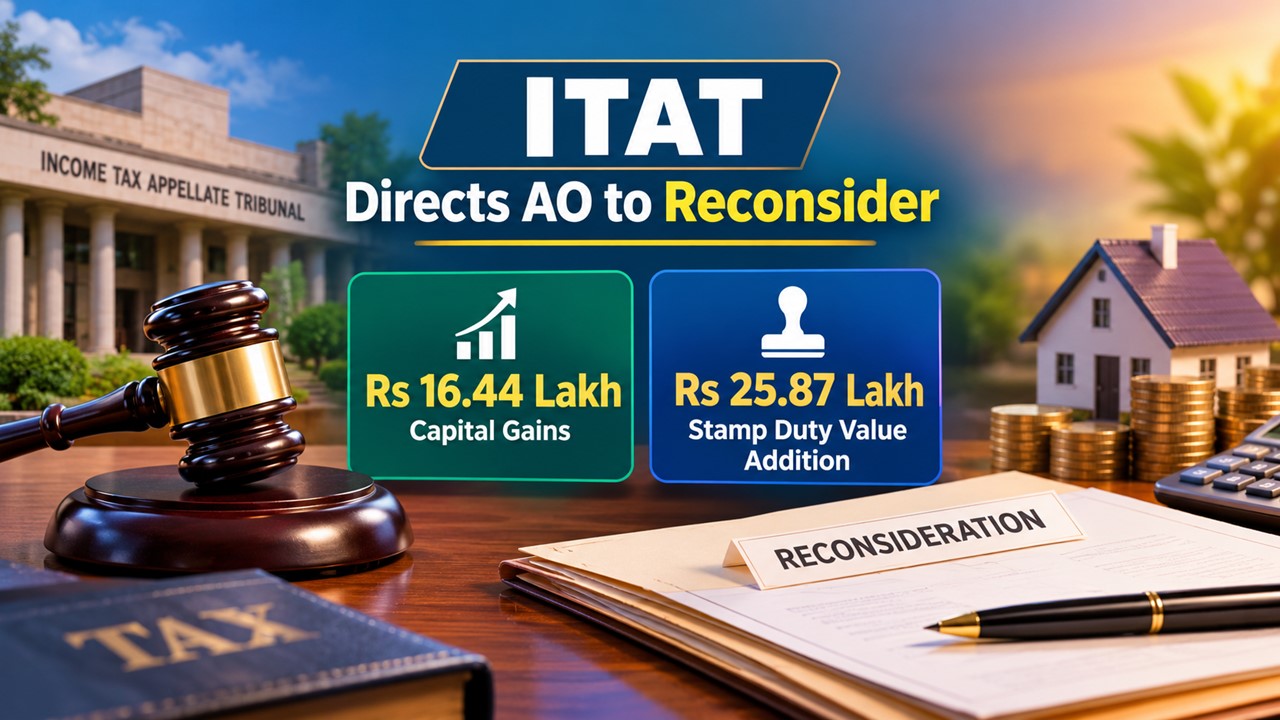
- ITAT Directs AO to Reconsider Rs 16.44 Lakh Capital Gains and Rs 25.87 Lakh Stamp Duty Value Addition
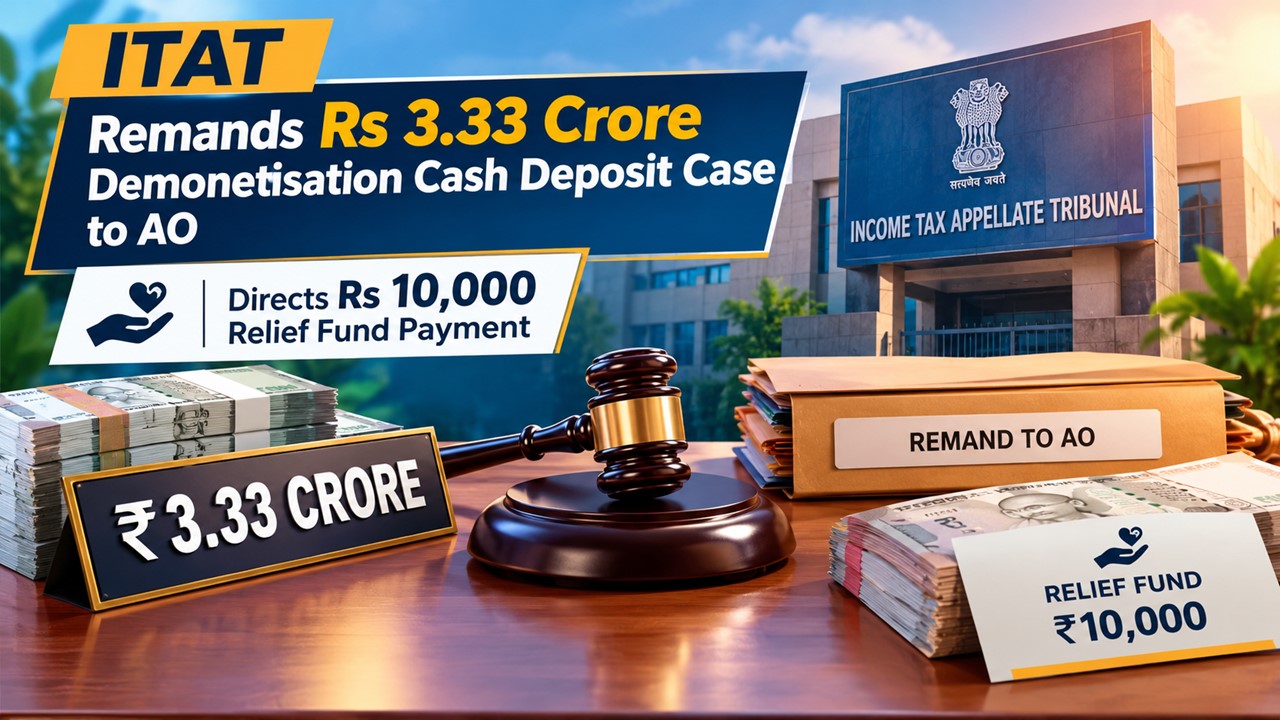
- ITAT Remands Rs 3.33 Crore Demonetisation Cash Deposit Case to AO, Directs Rs 10,000 Relief Fund Payment
- Income Tax Dept Increases Scope for Saksham Nudge Initiative to Further Include Professional Insuring Timely Compliance
- Vedanta Subsidiary ESL Steel Receives GST SCN for Rs. 2.76 Lakh IGST Demand Over Alleged RCM Short Payment
Up Next
Loading suggestions…


Recent Posts


All Posts

Tags
Recent Posts
All Posts