Internal Control Failures: Real Examples and Lessons for Auditors:
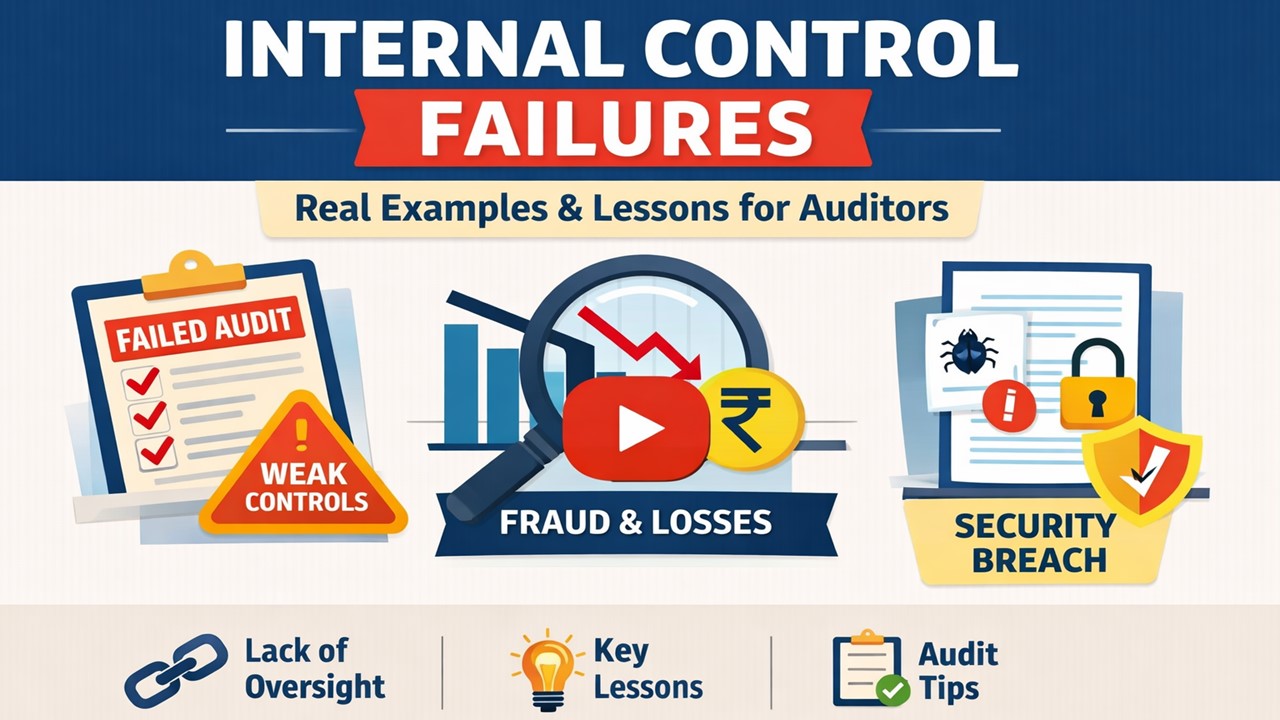
Know the real life examples of internal control failure and the reason behind their failure.
Real Examples of Internal Control Failures for Auditors
 CA Tushar Makkar
 Jan 7, 2026
Table of Contents

Internal control failures can turn a successful company into a cautionary tale overnight. As auditors and accounting professionals in India, understanding these failures is not just about learning what went wrong—it's about protecting the companies you audit and the investors who trust them.
What Are Internal Controls and Why Do They Fail?
Think of internal controls as safety nets in a company. They're the checks and balances that prevent errors, catch fraud, and ensure financial reports are accurate. When these systems break down, the consequences can be devastating.
Internal control failures typically happen in three ways. First, there are design problems where the control itself is flawed from the start—like having one person handle both receiving cash and recording it in the books. Second, operational issues occur when good controls exist but aren't followed properly—imagine having a rule that all payments need approval, but employees routinely skip this step. Third, compliance gaps emerge when companies fail to follow required laws and regulations.

The Satyam Scandal: India's Biggest Wake-Up Call
When we talk about internal control failures in India, one name stands out: Satyam Computer Services. In January 2009, chairman Ramalinga Raju confessed to one of India's largest corporate frauds, shaking the entire nation.
The numbers were shocking. Raju admitted to inflating Satyam's assets by Rs. 7,800 crores—that's about 94% of what the company claimed to have. He overstated revenues by Rs. 5,040 crores, nearly 75% of reported income. The company showed Rs. 5,361 crores in cash that simply didn't exist. Fake invoices, fictitious clients, and imaginary employees receiving "salaries" were all part of this elaborate scheme.
What started small in 2002-03 as a minor adjustment to meet analyst expectations snowballed into a massive fraud. Raju himself described it as "riding a tiger, not knowing how to get off without being eaten."

What Went Wrong at Satyam?
The Satyam case teaches us several hard lessons. The internal auditors completely missed the red flags for years. External auditors from PricewaterhouseCoopers failed to detect the irregularities, leading to hefty penalties—the SEC fined PwC India $7.5 million, and SEBI barred them from auditing listed companies for two years.
There was no proper segregation of duties. Raju had too much power concentrated in his hands. The board of directors failed to question management decisions effectively. The audit committee didn't probe deep enough into financial statements. And most importantly, there was an absence of a strong whistle-blower mechanism until it was too late.
The fraud finally came to light when Raju attempted to acquire two companies owned by his family—Maytas Properties and Maytas Infrastructure (Maytas is Satyam spelled backwards). This desperate move to replace fake assets with real ones backfired, exposing the entire scam.
Common Internal Control Weaknesses Auditors Should Watch For
As an auditor, you need to spot these red flags early. Here are the most common weaknesses that lead to failures:
Poor Segregation of Duties
When one person has control over multiple critical functions—like authorizing transactions, recording them, and reconciling accounts—fraud becomes easy. In smaller companies, this is often justified by "we don't have enough staff," but it's a recipe for disaster.
Weak Documentation Practices
Missing approvals, incomplete records, and lack of supporting documents are major warning signs. If a company can't produce proper documentation during an audit, ask yourself why. Are they disorganized, or is something being hidden?
Inadequate Management Review
When senior management doesn't regularly review financial reports, reconciliations, and operational data, errors and fraud can go unnoticed for years. Management oversight is your first line of defense.
Technology Failures
In today's digital world, weak access controls, shared passwords, and poor system security create opportunities for manipulation. If employees are using shared login credentials or if there's no log of who accessed what data, that's a serious control gap.
Lack of Continuous Monitoring
Companies that only check their controls once a year during audits are playing with fire. Controls need ongoing monitoring to ensure they're working as intended.
Real-World Lessons for Indian Auditors
The Satyam scandal led to major reforms in India. The Companies Act was strengthened, corporate governance norms were tightened, and audit standards became more rigorous. But have we truly learned our lessons?
Maintain Professional Skepticism
Don't just tick boxes. Question everything. If numbers look too good to be true, they probably are. Raju won the Golden Peacock Award for Corporate Governance just months before the fraud was exposed—awards and reputation aren't guarantees of integrity.
Look Beyond Financial Statements
Check if the company's reported numbers match ground reality. Are those clients real? Do bank balances actually exist? Simple confirmation procedures could have caught Satyam's fake cash much earlier.
Assess the Tone at the Top
How does management behave? Do they encourage transparency? Is there pressure to meet unrealistic targets? A culture that values results over ethics is a breeding ground for fraud.
Don't Ignore Small Red Flags
Satyam's fraud started with small adjustments. What begins as a "minor" misstatement can grow into a massive scandal. Address control weaknesses immediately, regardless of how insignificant they seem.
Focus on High-Risk Areas
Concentrate your audit efforts where the risk of fraud is highest—cash handling, revenue recognition, procurement, and related party transactions. These are the areas where most frauds occur.
Practical Steps to Strengthen Internal Controls
For auditors advising clients, recommend these practical measures. Companies should implement proper segregation of duties, even in small teams. Use technology to automate approvals and create audit trails. Conduct surprise checks and rotational audits. Establish anonymous whistle-blower hotlines. Provide regular training on ethics and fraud awareness.
Most importantly, build a culture where people feel safe reporting concerns without fear of retaliation. The Satyam fraud might have been stopped earlier if employees felt empowered to speak up.
The Way Forward
Internal control failures aren't just about weak systems—they're about human choices. As auditors, you're the gatekeepers of financial integrity. Your skepticism, diligence, and courage to question authority can prevent the next Satyam.
Remember, every major fraud was once a small control weakness that someone ignored. Don't be that someone. Ask the difficult questions. Dig deeper when things don't add up. Challenge management when necessary. Your role isn't just to sign off on financial statements—it's to protect investors, employees, and the wider economy.
The Satyam case reminds us that strong internal controls backed by ethical leadership are non-negotiable. As India's corporate sector continues to grow, the need for vigilant auditors has never been greater. Learn from past failures, stay alert to emerging risks, and never compromise on audit quality. The trust placed in you is immense—honor it with professionalism and integrity.
About Author


CA Tushar Makkar
Chartered Accountant
 Delhi, Delhi, India
 10
10My Recent Articles
- How to Build a Winning LinkedIn Profile After CA Final Results
- Big Four vs Tier-2 Firms: Which Path Actually Accelerates Your CA Career in India?
- Big Four Assessment Centre Preparation: What Every CA Student Must Know Before Walking In
- LinkedIn Profile Mistakes CA Freshers Make That Cost Them Big Four Interviews
- How to Communicate Effectively with Partners and Managers as a Fresher
Loading suggestions…


Recent Posts



All Posts


Tags
Recent Posts
All Posts