Impact of AI on Audit and Assurance Services: What CAs Should Prepare For:
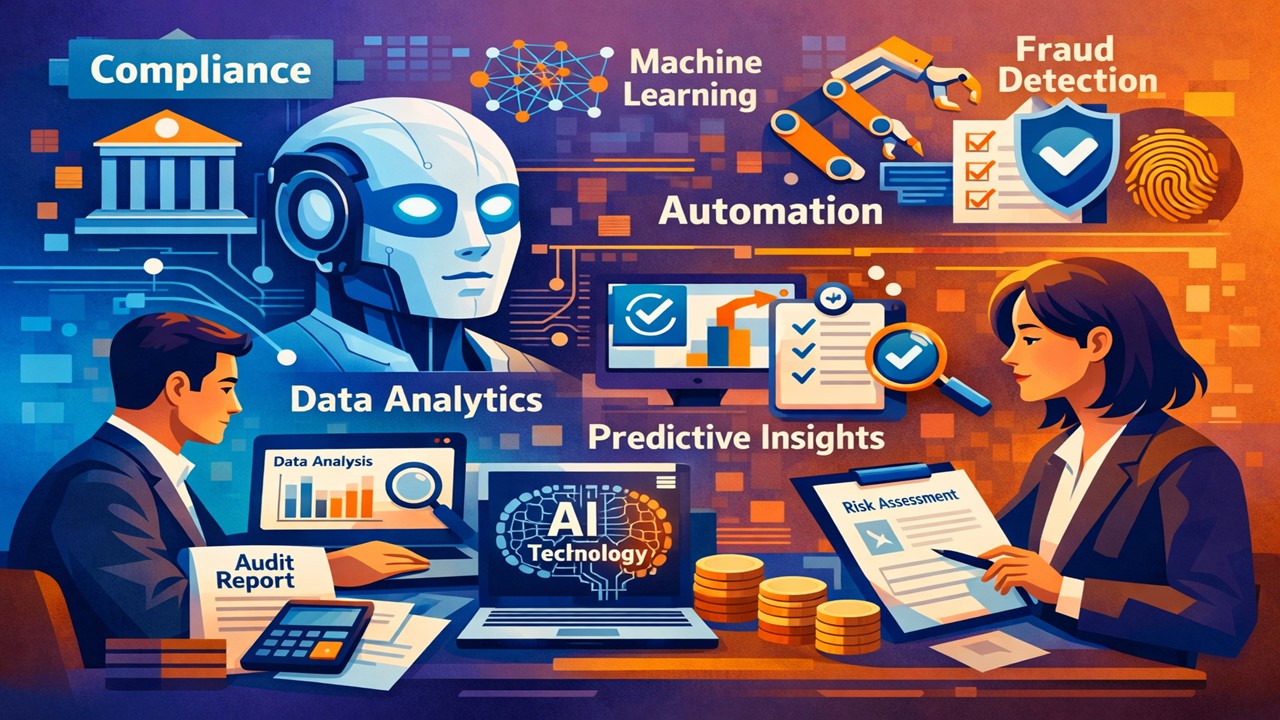
For Indian CAs dealing with GST returns, TDS compliance, multiple bank reconciliations, and Tally exports, AI tools are becoming game-changers.
How AI Is Changing Auditing for Chartered Accountants
 CA Tushar Makkar
 Jan 7, 2026
Table of Contents

Remember those late nights during audit season? You're buried under stacks of vouchers, cross-checking bank statements line by line, hoping your eyes don't miss that one suspicious transaction among thousands. Your team is exhausted, and you know there's still 80% of the data you haven't even looked at because there just isn't enough time.
Well, things are changing. Fast.
Artificial Intelligence (AI) is quietly transforming how Chartered Accountants conduct audits in India. And no, this isn't another "robots will replace CAs" story. This is about how smart CAs are using AI to do their jobs better, faster, and with fewer mistakes.

What is AI in Audit and Why Should Indian CAs Care?
AI in audit means using smart software that can learn patterns, spot anomalies, and process huge amounts of data automatically. Think of it as having a super-efficient assistant who never gets tired, never makes calculation errors, and can review every single transaction instead of just samples.
For Indian CAs dealing with GST returns, TDS compliance, multiple bank reconciliations, and Tally exports, AI tools are becoming game-changers. They understand local formats, know Indian tax rules, and can integrate with the software we already use daily.
How AI is Actually Helping CAs in Real Audit Work
Analyzing 100% of Transactions, Not Just Samples
Traditional auditing relies on sampling – you check maybe 5-10% of transactions and hope nothing major slips through. AI systems can process and analyze entire datasets, meaning you can now review every single transaction without spending months on it.

Picture this: A Mumbai-based CA firm auditing a retail chain with 50,000 daily transactions. Previously, they'd sample 2,000 transactions manually. Now, with AI tools, they analyze all 50,000 transactions, and the software flags the 150 unusual ones that need human attention. The CA focuses only on those 150, not wasting time on the 49,850 normal transactions.
Spotting Fraud and Unusual Patterns
AI doesn't just process data – it learns what "normal" looks like for your client and immediately flags anything unusual.
Let's say you're auditing a Bangalore IT company. AI algorithms analyse vast amounts of data to identify patterns and anomalies that might indicate risks or fraudulent activities. The software notices that vendor payments typically happen on the 5th of each month, but suddenly there are three payments to a new vendor on odd dates. It flags this. You investigate and discover an employee had created a fake vendor.
A human auditor might have missed this pattern while manually checking invoices. AI catches it in seconds.
Automating Boring, Repetitive Tasks
Nobody became a CA to spend hours entering data or matching numbers in Excel. AI handles routine tasks that auditors previously performed manually, freeing you to focus on what really needs your professional judgment.
Think about bank reconciliation. AI tools connect to your Tally data, read bank statements (even PDFs!), match transactions automatically, and flag mismatches. What took your article assistant two days now takes 30 minutes, and with 80% fewer errors.
Real-Time Risk Assessment
Instead of finding problems months after they happened, AI helps you spot risks as they develop.
AI can help identify the impact of financial performance based on current events on a timely basis. For example, if your client is in the textile business and there's news about cotton price fluctuations or import duty changes, AI tools can immediately flag how this might impact inventory valuation or going concern assumptions.
What Indian CAs Need to Prepare For
The Skills You'll Need
AI won't replace CAs, but CAs who use AI will replace CAs who don't. Here's what you need to start building:
Basic Tech Literacy: You don't need to become a programmer, but understanding how AI tools work, their limitations, and how to interpret their outputs is crucial. Research indicates that auditors responsible for auditing AI systems must possess knowledge in AI, including the underlying models, data science, statistics and mathematics.
Critical Thinking: AI will give you insights and flags, but you still need to use your professional judgment to decide what matters. Just because AI flags something doesn't automatically mean it's material or wrong.
Data Analysis Skills: You'll shift from data gathering to data interpretation. Learning to read patterns, understand visualizations, and ask the right questions of data becomes more important.
Soft Skills Matter More: Using AI is associated with an increased demand for soft skills—such as cognitive abilities, efficiency, and customer service. While AI handles calculations, you'll spend more time explaining results to clients, making judgment calls on complex issues, and providing strategic advice.
Challenges You'll Face (And How to Handle Them)
Challenge 1: Understanding AI's Black Box
Sometimes AI gives you an answer, but you don't fully understand how it reached that conclusion. The main AI adoption challenges are related to transparency and explainability, AI bias, data privacy, robustness and reliability.
What to do: Always verify AI outputs, especially for critical audit judgments. Use AI as a powerful assistant, not as the final decision-maker. If you can't explain to your client or an auditing authority how you reached a conclusion, you haven't done your job properly.
Challenge 2: Over-Reliance on Technology
There's a risk of blindly trusting AI results without applying professional skepticism.
What to do: Treat AI like you'd treat work done by your junior assistant – review it, question it, and verify key findings. Never let AI make final judgment calls on matters requiring professional expertise, like going concern assessments or materiality decisions.
Challenge 3: Data Quality Issues
AI is only as good as the data you feed it. If your client's Tally data is messy, incomplete, or incorrectly classified, AI tools will give you garbage results.
What to do: Invest time upfront ensuring data quality. Create standard operating procedures for clients on data entry and classification. Remember – garbage in, garbage out.
Challenge 4: Keeping Up with Changes
AI regulations in India are still evolving. GST rules change frequently. AI tools receive regular updates to GST and TDS rule engines, but you need to stay informed about both technology updates and regulatory changes.
What to do: Commit to continuous learning. Join webinars, follow ICAI's AI initiatives, and stay connected with peers who are using AI tools.
Practical Steps to Start Using AI Today
Start Small and Scale Gradually
Don't try to revolutionize your entire practice overnight. Pick one pain point – maybe bank reconciliation or invoice matching – and try an AI tool for that specific task.
For example, a Delhi-based CA firm started by using AI only for expense classification in one client's audit. Once the team got comfortable, they expanded to other areas and other clients.
Choose India-Focused Tools
Look for AI audit tools that understand Indian compliance needs. They should integrate with Tally and Zoho Books, know GST formats, understand TDS rules, and have support for regional languages if your clients need it.
Invest in Training Your Team
AI use in audit firms increases the number of auditor jobs and does not replace auditors. Your team needs training not just on using AI tools, but on interpreting AI outputs and knowing when to trust or question them.
Run workshops, create internal guidelines, and encourage your juniors to experiment with AI tools on smaller assignments first.
Document Everything
When using AI in audits, document which tools you used, how you used them, what outputs you got, and how you verified those outputs. This creates a proper audit trail and helps if questions come up later.
What the Next 5 Years Look Like for CAs
The CA profession isn't disappearing – it's evolving. Here's what's likely to happen:
More Jobs, Different Work: Contrary to fears, AI is creating more opportunities. Those who hire AI employees have a 4.3% increase in the number of auditor jobs. The work shifts from manual data processing to analysis, judgment, and advisory.
Value-Added Services: As routine audit work gets faster, you'll have more time for consulting services – helping clients understand their financial patterns, improve processes, or plan strategically.
Continuous Auditing: Instead of annual audits looking backwards, AI enables continuous monitoring. You could provide quarterly or even monthly insights to clients, catching issues early.
Specialization Opportunities: Some CAs will specialise in auditing AI systems themselves – ensuring the AI tools companies use are reliable, unbiased, and compliant.
The Bottom Line for CAs
AI in audit isn't about technology replacing professionals – it's about professionals using technology to deliver better work. The CAs who'll thrive are those who embrace AI as a tool while remembering that judgment, ethics, and professional skepticism can't be automated.
Start learning today. Start small. Experiment with AI tools on low-risk assignments. Build your understanding gradually. The future of auditing in India is AI-assisted, human-led work – and that future is already here.
The real question isn't "Will AI take my job?" but rather "How can I use AI to become a better, more valuable CA?" The firms and professionals answering that question now will be the leaders of tomorrow's audit profession.
So, are you ready to work smarter, not just harder?
About Author


CA Tushar Makkar
Chartered Accountant
 Delhi, Delhi, India
 10
10My Recent Articles
- How to Build a Winning LinkedIn Profile After CA Final Results
- Big Four vs Tier-2 Firms: Which Path Actually Accelerates Your CA Career in India?
- Big Four Assessment Centre Preparation: What Every CA Student Must Know Before Walking In
- LinkedIn Profile Mistakes CA Freshers Make That Cost Them Big Four Interviews
- How to Communicate Effectively with Partners and Managers as a Fresher
Loading suggestions…


Recent Posts

All Posts

Recent Posts
All Posts