How to Communicate Effectively with Partners and Managers as a Fresher:
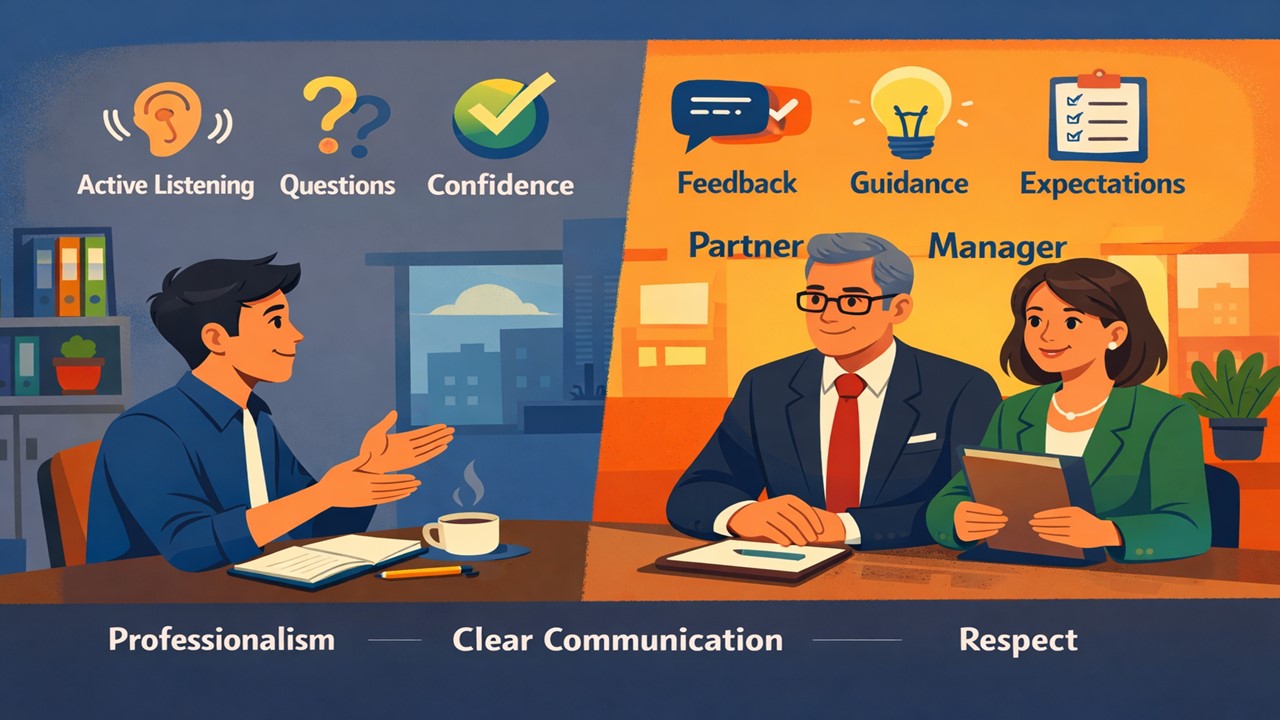
Know how to communicate effectively with managers and partners as a fresher, in simple, practical terms that actually work in Indian workplaces.
Effective Communication In Corporate Job
 CA Tushar Makkar
 Jan 7, 2026
Table of Contents

Remember your first day at your new job? The nervousness, the excitement, and that tiny voice in your head asking, "Should I email my manager or just walk up to them? What if I sound stupid?" If you've felt this way, you're not alone. Every fresher in India goes through this phase.
Here's the reality: knowing how to communicate with your managers and partners at work can make or break your career growth. Your technical skills might have landed you the job, but it's your communication skills that will help you keep it and grow in it.
Think about it – your manager holds the key to your projects, your appraisals, and your learning opportunities. Your colleagues and partners are the people you'll collaborate with daily. If you can't communicate effectively with them, even the best coding skills or marketing strategies won't take you far.

Let's break down exactly how to communicate effectively with managers and partners as a fresher, in simple, practical terms that actually work in Indian workplaces.
Why Communication Skills Matter More Than You Think
Before we dive into the how-to part, let me share something important. Most freshers think communication is just about speaking good English. Wrong! Communication in the workplace is about expressing your ideas clearly, listening actively, asking the right questions, and building trust with the people around you.
In fact, many Indian companies – from IT giants in Bangalore to startups in Mumbai – say that poor communication is one of the biggest reasons why freshers struggle in their first jobs. On the flip side, freshers who communicate well get better projects, faster promotions, and stronger professional relationships.

So whether you're working at TCS, a startup, or a family business in Pune, these communication skills will serve you throughout your career.
Understanding Your Manager's Communication Style
Your first task as a fresher is to understand how your manager likes to communicate. Just like we all have different learning styles, managers have different communication preferences too.
Some managers prefer quick Slack messages or WhatsApp updates. Others want detailed emails with proper formatting. Some like daily check-ins, while others prefer weekly meetings. Your job is to figure out what works for them.
How to Learn Your Manager's Preference
During your first week, pay close attention to how your manager communicates with the team. Do they send long emails or short messages? Do they schedule frequent meetings or prefer asynchronous updates? Notice these patterns.
If you're unsure, just ask! There's nothing wrong with saying, "I want to make sure I'm updating you in the way that works best for you. Do you prefer email updates or should I schedule quick meetings?" This shows maturity and professionalism.
Most Indian managers appreciate when freshers take this initiative because it shows you care about making their life easier.
The Art of Asking Questions Without Looking Clueless
Here's a common fear among freshers: "If I ask too many questions, will my manager think I'm incompetent?" Let me tell you something – asking questions is not a sign of weakness; it's a sign of intelligence.
When to Ask Questions
The key is knowing when and how to ask. Don't interrupt your manager in the middle of an important meeting to ask where the washroom is. But definitely ask if you don't understand a project requirement.
Here's a smart approach: when you're assigned a task, clarify everything upfront. Ask about deadlines, expectations, who else is involved, and what success looks like. This prevents confusion later and shows you're taking ownership.
How to Frame Your Questions
Instead of saying "I don't understand this," try saying "I understand that we need to prepare a sales report, but could you help me understand which specific metrics should be included?"
See the difference? The first sounds helpless. The second shows you've tried to understand and need specific guidance. Indian managers respond much better to the second approach.
Also, try to batch your questions. Instead of pinging your manager every five minutes, note down your questions and ask them together during a scheduled time. This respects their time and shows you're organized.
Speaking Up in Meetings Without Sounding Overconfident
Meetings can be intimidating for freshers. You're sitting with senior people who've been in the company for years, and you're worried about saying something wrong.
Here's what works: start by contributing small things. If someone shares an idea and you have a genuine question, ask it politely. If you've done research on a topic being discussed, share your findings. You don't have to give a TED talk; just participate meaningfully.
The Golden Rule for Meeting Communication
Listen more than you speak, but when you speak, make it count. Don't stay silent throughout just because you're new. Your fresh perspective might be exactly what the team needs.
Also, learn the art of reading the room. If it's a formal quarterly review meeting, keep your tone professional. If it's a casual team brainstorming session over coffee, you can be more relaxed. Indian workplaces have both formal and informal communication spaces – learn to navigate both.
How to Give Updates That Your Manager Actually Wants to Hear
This is huge. Freshers often either over-communicate or under-communicate. Finding the balance is key to effective workplace communication.
The Update Formula That Always Works
When giving updates to your manager, follow this simple structure:
Start with the bottom line – what's the current status? Then provide context – what have you completed? Next, mention any challenges – what's blocking you? Finally, suggest next steps – what do you plan to do?
For example: "The client presentation is 80% complete (status). I've finished the market research slides and competitor analysis (context). I'm waiting for the design team to send the final graphics (challenge). Once I receive them by tomorrow, I'll complete the deck and share it with you for review (next steps)."
See how clear that is? Your manager knows exactly where things stand without having to dig through paragraphs of text.
Don't Wait for Things to Go Wrong
Here's a mistake many freshers make: they only update their manager when there's a problem. That's like only calling your parents when you need money!
Keep your manager in the loop regularly, especially on important projects. A simple "Just wanted to update you that the report is on track for Friday's deadline" goes a long way in building trust.
Building Relationships with Partners and Colleagues
Your manager isn't the only person you need to communicate with effectively. Your colleagues, team partners, and cross-functional teammates are equally important for your success.
Start with Small Talk, Then Transition to Work
Don't be the person who only talks business. In Indian workplaces, relationships matter. Chat about the weekend, ask about someone's hometown, discuss the latest cricket match. These small conversations build rapport.
Once you've built that foundation, work conversations become much easier. You'll find it's easier to ask for help, collaborate on projects, and even handle conflicts when you have a decent relationship with your colleagues.
Be Reliable in Your Communication
If you tell a colleague you'll send them a file by 3 PM, send it by 3 PM. If you can't, inform them beforehand. Reliability in communication builds trust faster than anything else.
Remember, in most Indian companies, you'll be working with the same people for months or years. Your reputation as someone who communicates clearly and keeps commitments will open doors for you.
Understanding Formal vs Informal Communication
Indian workplaces have both formal hierarchies and informal networks. As a fresher, you need to understand when to use which.
When to Keep It Formal
Use formal communication (proper emails, scheduled meetings) for things like leave requests, project proposals, escalations, or anything that needs documentation. Always maintain professional language in these situations.
When You Can Be Casual
For quick updates, brainstorming sessions, or day-to-day team coordination, informal channels like Slack, WhatsApp groups, or even in-person chats work perfectly fine. But even here, maintain basic professionalism and respect.
A good rule of thumb: if you wouldn't say it in front of your manager, don't type it in the team chat.
Handling Difficult Conversations and Feedback
Not all conversations will be easy. Sometimes you'll disagree with your manager. Sometimes you'll receive critical feedback. How you handle these moments defines your professionalism.
When You Disagree with Your Manager
First, choose your battles. Not everything needs to be debated. But if you genuinely think something could harm the project, speak up respectfully.
Say something like, "I understand your perspective on this approach. I was wondering if we could also consider this alternative because..." Then explain your reasoning with facts, not emotions.
Even if your idea isn't accepted, your manager will respect that you thought critically and communicated your concerns properly.
Receiving Feedback Gracefully
When your manager gives you feedback – especially critical feedback – resist the urge to defend yourself immediately. Listen fully, ask clarifying questions if needed, and thank them for the feedback.
Yes, it might sting. Yes, you might feel defensive. But how you respond to feedback shows your maturity and growth mindset. Indian managers really value freshers who can take feedback constructively.
Later, when you're calm, reflect on the feedback and create an action plan. Then follow up with your manager showing what you've improved. This closes the feedback loop beautifully.
The Power of Written Communication
In today's hybrid work environment, written communication has become more important than ever. Whether it's emails, Slack messages, or project documentation, your written words represent you.
Writing Effective Emails
Keep your emails clear and concise. Use a descriptive subject line – not "Query" but "Request for Marketing Data for Q4 Report." Start with a greeting, get to the point quickly, and end with a clear call to action.
For example: "Hi Priya, Hope you're doing well. I'm working on the Q4 marketing report and need the campaign performance data for October and November. Could you please share this by Thursday? Thank you!"
Notice how this email is friendly yet professional, specific about what's needed, and includes a deadline. That's how you write emails that get responses.
The WhatsApp and Slack Etiquette
Many Indian companies use WhatsApp for team communication. Just because it's informal doesn't mean you should treat it like your college group chat. Avoid excessive emojis, don't send voice notes unless necessary, and definitely don't message your manager at 11 PM unless it's an emergency.
On Slack, use threads to keep conversations organized, tag people when needed, and use appropriate channels. If something is urgent, mark it as such. If it's just information, send it in the right channel without excessive pinging.
Body Language and Non-Verbal Communication
This might surprise you, but more than half of communication is non-verbal. Your body language, facial expressions, and tone of voice matter as much as your words.
In Physical Meetings
When talking to your manager in person, make eye contact (but don't stare), maintain good posture, nod to show you're listening, and avoid crossing your arms (it looks defensive).
In Indian culture, showing respect through body language is important. Don't sit when your manager is standing, arrive on time for meetings, and put your phone away during conversations.
In Virtual Meetings
Keep your camera on whenever possible, dress appropriately even at home, look at the camera when speaking, and minimize distractions in your background. These small things show you're taking the meeting seriously.
Learning from Your Mistakes
Here's the truth: you will make communication mistakes as a fresher. You'll send an email to the wrong person. You'll misunderstand instructions. You'll speak up at the wrong time. It happens to everyone.
The key is learning from these mistakes. If you sent an unclear email and it caused confusion, note it down and improve next time. If you interrupted your manager accidentally, apologize and be more mindful.
Many successful professionals in India will tell you that their biggest growth came from communication mistakes they made early in their careers. The difference between those who succeeded and those who struggled was simple: the successful ones learned and adapted.
Building Long-Term Communication Habits
Effective communication with managers and partners isn't a one-time skill you master and forget. It's an ongoing practice that evolves throughout your career.
Create Your Personal Communication Checklist
Start developing good habits now. Before sending an important email, check: Is it clear? Is it respectful? Does it have all necessary information? Is the tone appropriate?
Before meetings, prepare: What's the agenda? What questions might be asked? What value can I add? These small mental preparations make a huge difference.
Seek Feedback on Your Communication
Every few months, ask your manager or a trusted colleague, "How's my communication? Is there anything I can improve?" This shows self-awareness and commitment to growth.
Most people won't volunteer this feedback, but if you ask, they'll give you valuable insights that can help you improve faster.
Your Action Plan Starting Tomorrow
Feeling overwhelmed? Don't be. You don't need to implement everything at once. Here's what you can do starting tomorrow:
Observe how your manager communicates and match their style. Ask one clarifying question on your current project. Give one clear, structured update to your manager. Have one genuine conversation with a colleague. Send one well-written email following the tips above.
That's it. Just these five things. Do them consistently, and within weeks, you'll notice people responding to you better, trusting you more, and including you in important discussions.
The Bottom Line
Communication with managers and partners as a fresher isn't rocket science, but it does require conscious effort and practice. The good news? Every interaction is an opportunity to improve.
Remember, your managers and colleagues were once freshers too. They understand what you're going through. Most of them want to help you succeed. Your job is to make it easy for them to help you by communicating clearly, respectfully, and professionally.
Start with the basics – listen actively, speak clearly, ask questions, give regular updates, and be reliable in your communication. As you grow more comfortable, you'll develop your own communication style that works for you and your workplace.
Your first job is not just about learning technical skills; it's about learning how to work with people. Master workplace communication now, and you'll have a skill that serves you for life, no matter where your career takes you. The freshers who communicate well don't just survive in Indian workplaces – they thrive.
About Author


CA Tushar Makkar
Chartered Accountant
 Delhi, Delhi, India
 10
10My Recent Articles
- How to Build a Winning LinkedIn Profile After CA Final Results
- Big Four vs Tier-2 Firms: Which Path Actually Accelerates Your CA Career in India?
- Big Four Assessment Centre Preparation: What Every CA Student Must Know Before Walking In
- LinkedIn Profile Mistakes CA Freshers Make That Cost Them Big Four Interviews
- Internal Control Failures: Real Examples and Lessons for Auditors
Loading suggestions…


Recent Posts



All Posts



Tags
Recent Posts
All Posts