ITAT disallows Section 54F claim: Multiple Self-Contained Units Constitute Separate Houses:
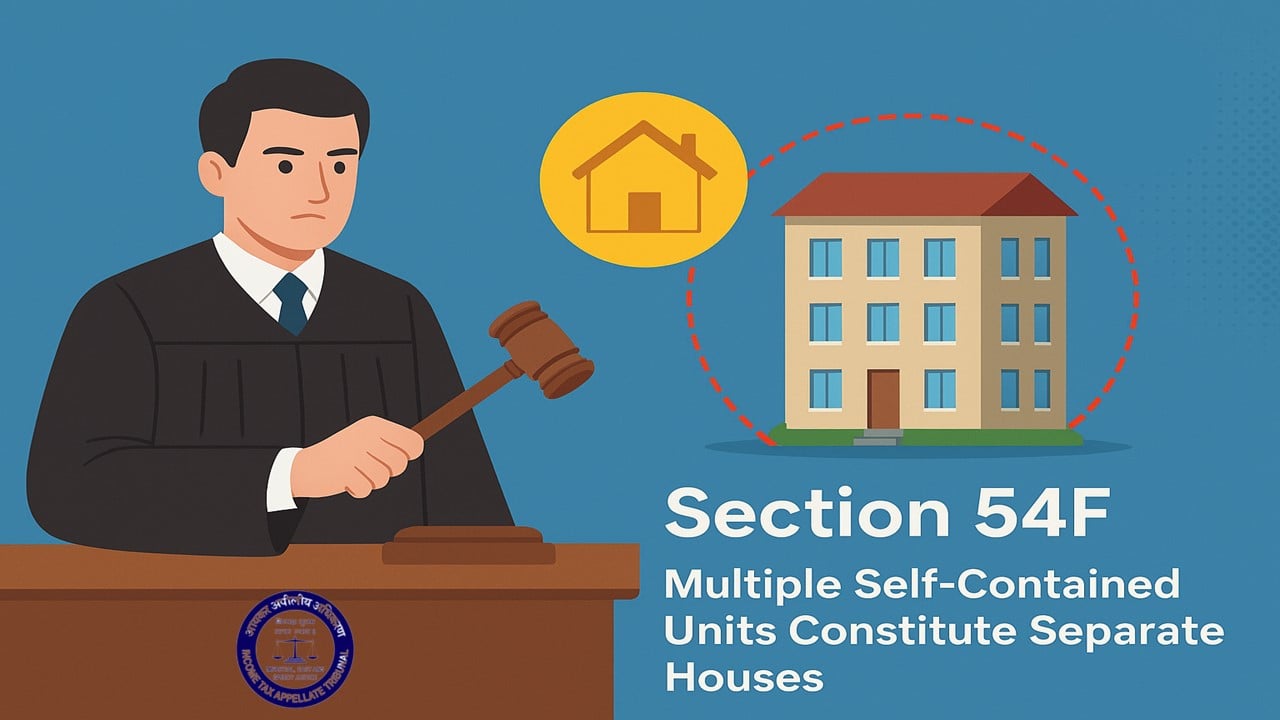
Tribunal rules multiple residential units bar Section 54F relief; accepts evidence showing cash deposits came from withdrawals, rent and security deposits.
ITAT Deletes Demonetisation Cash Addition but Upholds Denial of Section 54F Claim
 Meetu Kumari
 Dec 11, 2025
ITAT disallows Section 54F claim: Multiple Self-Contained Units Constitute Separate Houses
The appeal concerned Late Shri Ram Kishore Seth for AY 2017–18, arising from a scrutiny assessment limited to capital gains and cash deposits during the demonetization period. The assessee had sold a portion of his Pitampura property under a joint development agreement, under which the builder demolished the old structure and constructed multiple floors. The assessee claimed a deduction under Section 54F on the compensation received. The Assessing Officer rejected the claim, holding that the assessee already owned multiple independent residential units in Karol Bagh and Pitampura, making him ineligible for Section 54F, which requires that the assessee should not own more than one residential house other than the new asset. The AO also treated cash deposits of Rs. 17,28,000 during demonetization as unexplained under Section 69A, applying Section 115BBE. The CIT(A)/NFAC sustained both additions, prompting the present appeal before the Tribunal. Main Issue: Whether the assessee was eligible for deduction under Section 54F when he owned multiple independent residential units, and whether the cash deposits during demonetisation were duly explained through cash withdrawals, rent receipts, and refundable security deposits. ITAT Decision: The Tribunal upheld the denial of Section 54F deduction, having found that the assessee was earning rent from multiple independent units in the Karol Bagh property, each with separate kitchens, amounting to distinct residential houses. It held that the principle in Gita Duggal applies to situations where multiple units form one organic residential structure for the purpose of construction, but does not override the statutory bar under Section 54F that restricts the exemption to taxpayers owning not more than one residential house on the date of transfer. The Tribunal accepted the assessee’s explanation that Rs. 8,00,000 was redeposited cash withdrawn from one bank and placed into another, and that further amounts stemmed from refundable security deposits and cash rent from properties. Bank statements and supporting documents demonstrated traceability of funds. The Tribunal therefore deleted the addition of Rs. 17,28,000 under Section 69A. Thus, the additional legal ground challenging the rate under Section 115BBE became infructuous, though the Tribunal also noted that as per judicial precedent, Section 115BBE applies prospectively from AY 2018-19. To Read Full Judgment, Download PDF Given Below
About Author


Meetu Kumari
Content Manager
Meetu Kumari is an Experienced Advocate and Content Writer with 4+ years of demonstrated history of working in the law practice industry. Skilled in Developing Content, Researching, and Drafting. Strong professional with a Bachelor of Science (B.Sc.) focused on Law from Gujarat National Law University.
Meetu Kumari is an Experienced Advocate and Content Writer with 4+ years of demonstrated history of working in the law practice industry. Skilled in Developing Content, Researching, and Drafting. Strong professional with a Bachelor of Science (B.Sc.) focused on Law from Gujarat National Law University.
 Studycafe
 Jodhpur, Rajasthan, India
 2264
2264My Recent Articles
- ITAT Condones 302-Day Delay, Restores Salary Assessment for Fresh VerificationPremium
- ITAT Condones Delay After Tax Consultant's Death, Restores Appeals for Fresh HearingPremium
- ITAT Remands Salary Addition, Says Taxability Depends on Salary Becoming Due, Not Mere ReceiptPremium
- ITAT Deletes TP Royalty Adjustment, Orders Fresh Review of Commission BenchmarkingPremium
- ITAT Quashes Reassessment Over Unsigned Section 148 Notice Issued to AssesseePremium
Up Next
Loading suggestions…


Recent Posts


All Posts



Recent Posts
All Posts