ITAT Rejects Capital Gains Tax on Settlement Compensation Received:
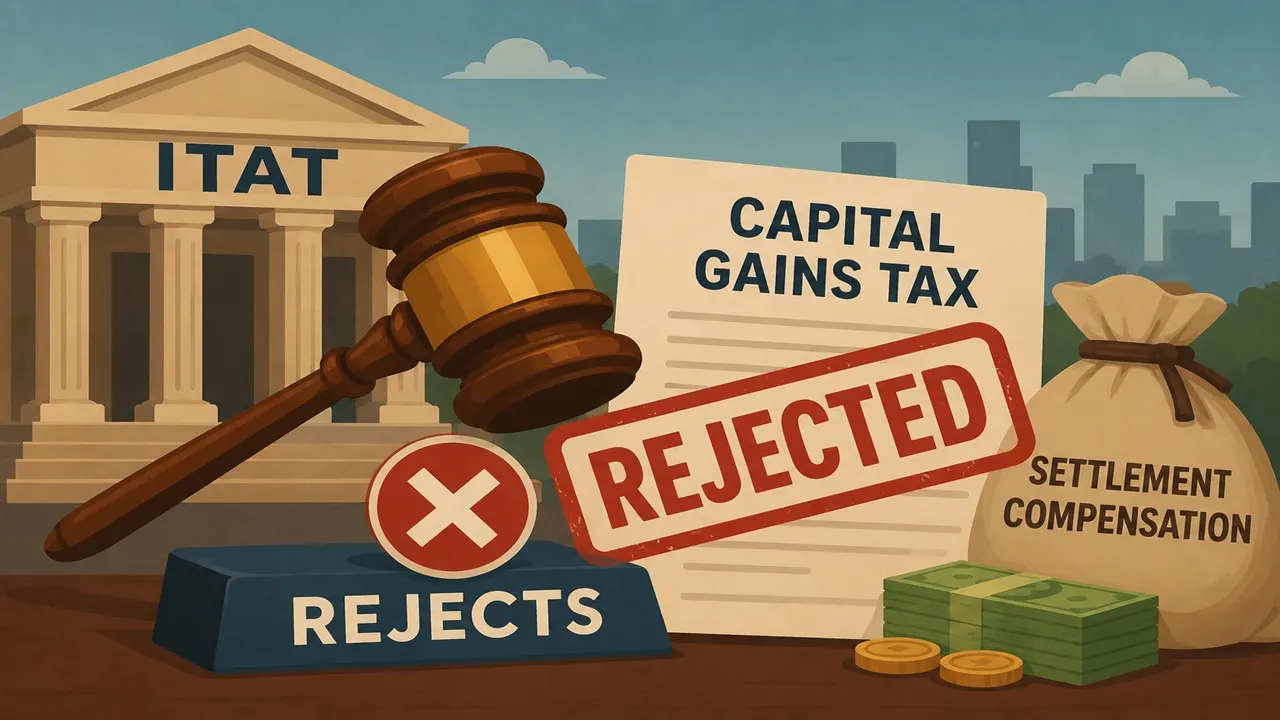
Tribunal rules damages received for right to sue are not taxable capital gains. Damages Under Consent Decree Held Outside Capital Gains Provisions Tribunal rules damages received for right to sue are not taxable capital gains.
Damages Under Consent Decree Held Outside Capital Gains Provisions
 Meetu Kumari
 Jun 6, 2026
The Mumbai Bench of the Income Tax Appellate Tribunal (ITAT) has held that compensation received pursuant to a consent decree for relinquishment of a “right to sue” cannot be taxed as capital gains under the Income Tax Act, 1961. A Bench comprising Judicial Member Amit Shukla and Accountant Member Girish Agrawal dismissed the Revenue’s appeals and upheld the relief granted to the assessees, Shri Kekin Kunverji Chheda and Shri Kaushal Yashwant Agarwal.
The dispute arose from compensation received by the assessees under a consent decree passed by the Bombay High Court on 10 July 2017 in a suit filed against Aadi Properties LLP. The assessees had originally entered into agreements for allotment of commercial space in a proposed project and had paid advances towards the proposed purchase. However, the project was subsequently abandoned, making specific performance of the agreements impossible.
Following disputes between the parties, the assessees approached the Bombay High Court seeking relief. The matter was eventually settled through consent terms, under which compensation was awarded in lieu of the assessees’ right to sue for damages arising from the failure of the project.

The Assessing Officer reopened the assessments under Section 147 and held that the compensation received by the assessees represented consideration for transfer of a capital asset. Accordingly, the amounts received were brought to tax as long-term capital gains under Section 45 of the Act.
The Commissioner of Income Tax (Appeals) deleted the additions by following the Tribunal’s earlier decision in the case of another co-recipient of the same compensation, Shri Virendra Bhavanji Gala, who was also a party to the consent decree.

Before the Tribunal, it was noted that the issue had already been decided in favour of similarly placed parties arising from the very same consent decree. The Tribunal observed that the Bombay High Court had specifically recorded that specific performance of the original arrangement was not possible and that damages in lieu of the plaintiffs’ right to sue constituted the only available remedy.
“Since specific performance of the allotment of commercial premises was not possible, damages in lieu of the plaintiff’s right to sue would be the only relief/remedy available.”
The Tribunal reiterated that a mere right to sue is not transferable in view of Section 6(e) of the Transfer of Property Act, 1882. Since such a right cannot be transferred, it does not constitute a transferable capital asset capable of attracting capital gains tax.
“A mere right to sue cannot be transferred and compensation received in respect of such right cannot be subjected to capital gains tax.”
The Bench further distinguished the Revenue’s reliance on the Bombay High Court decision in CIT v. Vijay Flexible Containers, observing that in that case the right to seek specific performance of an existing property transaction continued to exist, whereas in the present case the project itself had been abandoned and specific performance was impossible.
Thus, the Tribunal upheld the orders of the CIT(A), held that the compensation received by the assessees was a non-taxable capital receipt, and dismissed both appeals filed by the Revenue.
To Read Full Order, Download PDF Given Below.
About Author


Meetu Kumari
Content Manager
 Studycafe
 Jodhpur, Rajasthan, India
 2264
2264My Recent Articles
- ITAT Condones 302-Day Delay, Restores Salary Assessment for Fresh VerificationPremium
- ITAT Condones Delay After Tax Consultant's Death, Restores Appeals for Fresh HearingPremium
- ITAT Remands Salary Addition, Says Taxability Depends on Salary Becoming Due, Not Mere ReceiptPremium
- ITAT Deletes TP Royalty Adjustment, Orders Fresh Review of Commission BenchmarkingPremium
- ITAT Quashes Reassessment Over Unsigned Section 148 Notice Issued to AssesseePremium
Loading suggestions…


Recent Posts


All Posts
Recent Posts
All Posts