ITAT Says PCIT Approval Insufficient to Issue Section 148 Notice After Expiry of 3-Year Time Limit:
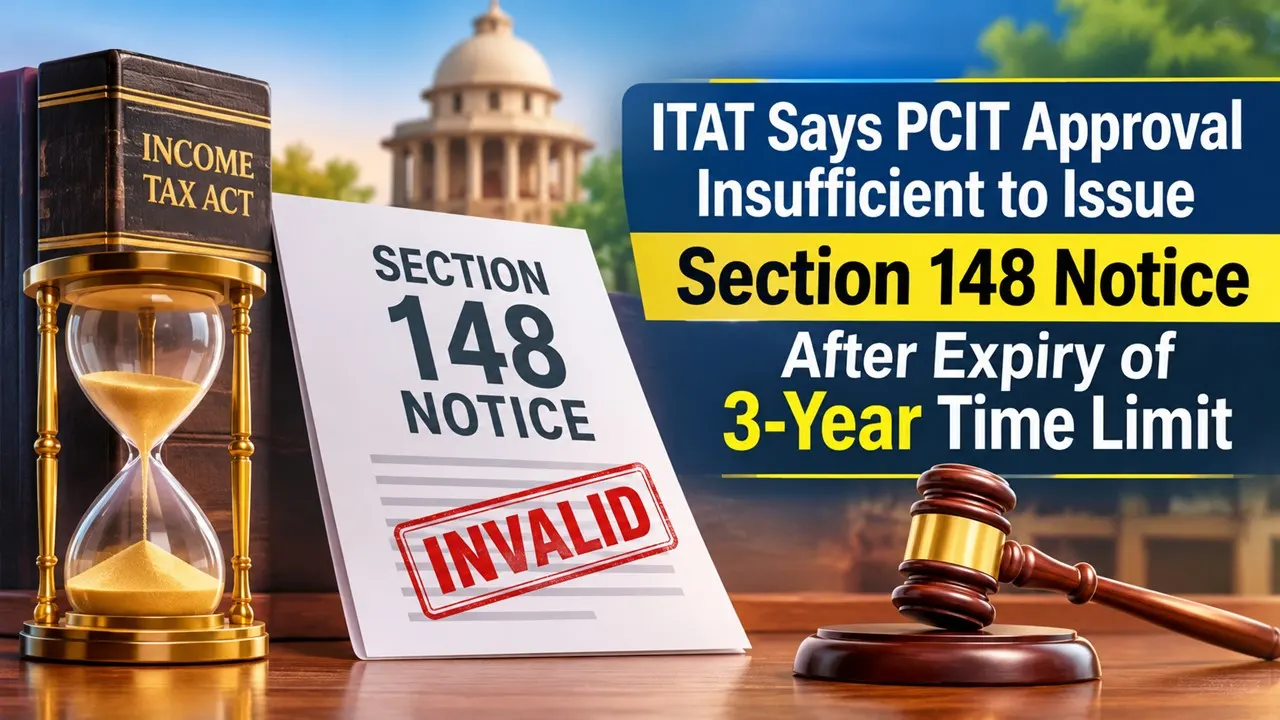
The ITAT clarified that when a Section 148 notice is issued after the expiry of 3 years time limit, it becomes mandatory to seek approval from the relevant authority specified under Section 151(ii).
ITAT Quashes Reassessment for Lack of Mandatory Approval Under Section 151(ii)
 Saloni Kumari
 Nov 17, 2026

The Income Tax Appellate Tribunal (ITAT), Chennai Bench, invalidated the entire reassessment proceedings when the Assessing Officer (AO) failed to obtain approval to issue a notice under Section 148 from the relevant authority specified under Section 151(ii) of the Income Tax Act, as the time limit of three years from the end of the relevant assessment year had already expired.
The present dispute pertains to Ashokan Ramasamy, who challenged an order dated March 9, 2026, passed by the Commissioner of Income Tax (Appeals) [CIT(A)], National Faceless Appeal Centre (NFAC), Delhi, for Assessment Year 2018-19, before the ITAT, Chennai Bench, contending that the AO had issued a notice under Section 148 on April 6, 2022, after obtaining approval from the Principal Commissioner of Income Tax (PCIT), Chennai-3.

Since the relevant assessment year ended on March 31, 2019, more than three years had elapsed by the time the notice was issued. Therefore, ideally, the approval should have been obtained from the Principal Chief Commissioner of Income Tax or another authority specified under Section 151(ii), rather than the Principal Commissioner.
To support the aforementioned claim, the assessee cited an earlier decision of the Madras High Court in the case of Chokkalingam Thangavel, based on a similar issue, which clarified that obtaining approval from the authority specified under Section 151(ii) is mandatory when more than three years have elapsed. Failure to meet this requirement makes the reassessment proceedings without jurisdiction.

When the tribunal considered all the relevant submissions and arguments, it held that in the present case, since time period of three years from the year under consideration to issue a notice under Section 148 had already escaped, the AO should have taken relevant approval from the Principal Chief Commissioner of Income Tax or another authority specified under Section 151(ii). However, in the present case, the approval was obtained from the PCIT, which is legally invalid. Accordingly, it declared the notice dated April 6, 2022, invalid and quashed the consequential reassessment order dated March 9, 2024.
About Author


Saloni Kumari
Content Writer
 StudyCafe
 Delhi, Delhi, India
 3059
My Recent Articles
- Man Earning Rs 15,000 Monthly Shocked as Rs 350 Crore Transactions Made in His Name Using Fake Documents
- Cyber Criminals Defraud 72-Year-Old Retired Bank Employee of Rs 1.42 Crore Through Digital Arrest Scam
- ITAT Deletes Rs 1.5 Crore Addition, Says Alleged Accommodation Entry Cannot Automatically Be Treated as Taxpayer's Income
- Mahadev Betting App Case: CBI Conducts Searches at 33 Locations Across 6 States, Dismantles Live Panels
- Kerala Businessman Loses Rs 1.45 Crore in Investment Scam Using AI-Generated Video Featuring Finance Minister
Loading suggestions…


Recent Posts


All Posts
Recent Posts
All Posts