ITR Filing 2025 Made Super Easy: Do It Yourself in Minutes:
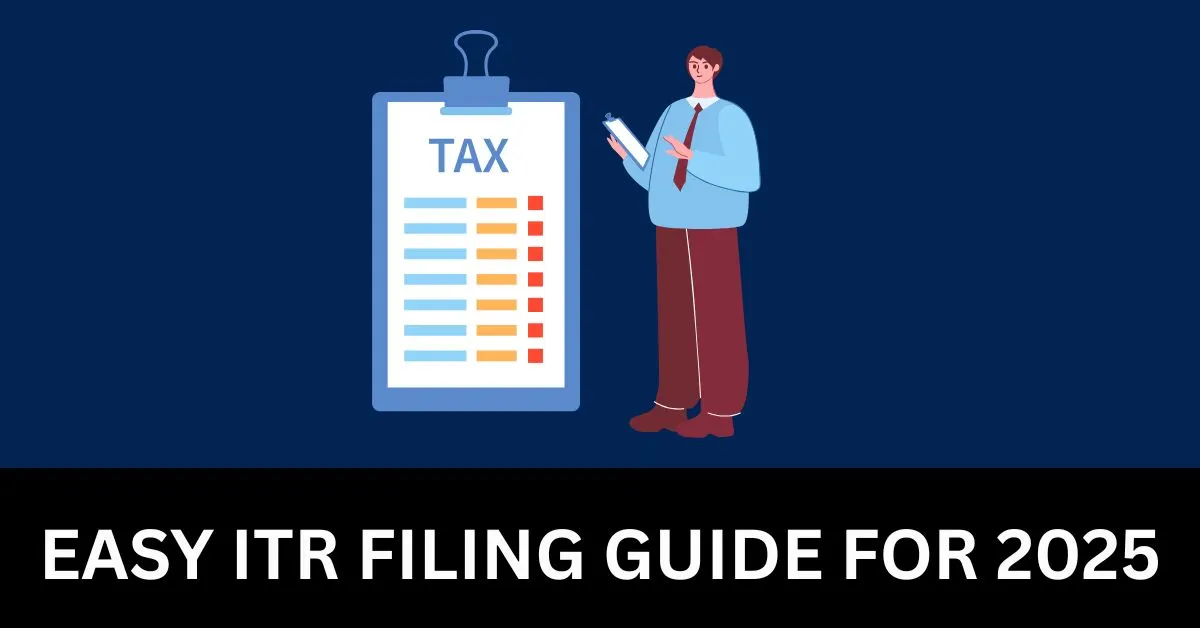
Simple and easy guide to file your ITR correctly for AY 2025-26. Know tax rules, regime choice, deductions, new slabs, and deadlines.
Simple ITR Filing Tips
 Anisha Kumari
 Jun 24, 2025
Table of Contents

ITR Filing 2025 Made Super Easy: Do It Yourself in Minutes
You can file your ITR without any mistake and in correct manner if you follow these steps properly:
Standard Deduction for Salaried Taxpayers (New Regime)
Salaried individual under the New Regime will be able to claim a standard deduction of Rs. 75,000. So, with the rebate and this deduction the income up to Rs. 12.75 lakh becomes tax fee.
Old Tax Regime Slabs (No Change)
The Old Regime still follows the same tax rates:
Higher Limits for TDS and TCS
The limit for the Interest on deposits for senior citizens is increased from Rs. 50,000 to Rs. 1,00,000. The monthly TDS limit for rent has been increased to Rs. 50,000 .
TCS on foreign remittances under LRS is increased to Rs. 10 lakh. TCS is now removed for education loans taken from specified banks.
More Time to File Updated Returns
Taxpayers are provided up to 4 years from the end of AY, so that they can file an updated return if made any mistake earlier.
- Start with Form 16 or 16A: A salaried person or someone receiving income with TDS, they should start with Form 16 or 16A. Make these forms are downloaded only from the Traces website to make sure they are not fake.
- Always cross-check: Always compare the TDS written in your Form 16/16A with your Form 26AS or AIS before filing. This will help you prevent from the mismatches.
- Use the right form: You should choose your ITR form correctly, example ITR-1 (SAHAJ) is for salaried individuals with income up to Rs. 50 lakh and no business income while ITR-4 is for individuals with business income. Make sure you read the eligibility rules first.
- Check everything before filing: Keep a pre-filing checklist ready. This includes PAN, Aadhaar, bank details, TDS forms, investment proofs and more.
- Avoid common mistakes: Double-check your personal info, income details, deductions and bank account numbers.
- Try the tax calculator: You can easily use free calculator on the income tax website to compare your old and new tax regime. You are only required to select your taxpayer type and get your instant tax estimation without any need to login.
- Validate your bank account: A verified bank account is very important to receive your tax refund. You can also add or update your bank account on the e-filing portal. You just need to log in and go to the profile where you have to select Add or Update Bank Account and then validate it.
- If refund failed: If you don't get your refund then you should check if your bank account is validated or not. If not, validate or re-validate it. After doing this, submit a “Refund Reissue Request” online to get your refund.
Demystifying Income Tax Filing for 2025
The time for preparing filing ITR is getting near for the taxpayers in India as the FY 2024-25 ends on March 31, 2025. It is important for taxpayers to understand how to calculate income tax and also being aware of new changes took place this year for filing the ITR correctly and on time. The Indian tax system provides taxpayers two choices to taxpayers, the Old Tax Regime and the New Tax Regime. The default option is now the New Tax Regime but having the details of both will help you decide which one suits you better.
Key Changes for Financial Year 2024-25 (AY 2025-26)
Higher Rebate under Section 87A (New Tax Regime) The rebate under Section 87A has increased from Rs. 25,000 to Rs. 60,000 this year in the New Regime. If someone's taxable income is up to Rs. 12 lakh, you won't have to pay any tax under this regime. New Income Tax Slabs (New Tax Regime) The government has revised the tax slab rates for the New Regime:| Income Slab (Rs.) | Tax Rate |
|---|---|
| Up to 4,00,000 | NIL |
| 4,00,001 to 8,00,000 | 5% |
| 8,00,001 to 12,00,000 | 10% |
| 12,00,001 to 16,00,000 | 15% |
| 16,00,001 to 20,00,000 | 20% |
| 20,00,001 to 24,00,000 | 25% |
| Above 24,00,001 | 30% |
| Income Slab (Rs.) | Individuals <60 yrs | Senior Citizens (60–80) | Super Senior Citizens (>80) |
|---|---|---|---|
| Up to 2,50,000 | NIL | NIL | NIL |
| 2,50,001 to 5,00,000 | 5% | 5% | NIL |
| 5,00,001 to 10,00,000 | 20% | 20% | 20% |
| Above 10,00,000 | 30% | 30% | 30% |
Calculate Gross Total Income
Add all your income from these 5 sources:- Salary: Basic pay, HRA, LTA, bonuses etc.
- House Property: Rent earned or interest paid on home loan.
- Business or Profession: Income from your work or business.
- Capital Gains: Profits from selling shares, property etc.
- Other Sources: Bank interest, dividends, lottery winnings etc.

Claim Exemptions (Old Regime Only)
If you are selecting the Old Regime, you can reduce your income using exemptions such as:- House Rent Allowance (HRA)
- Leave Travel Allowance (LTA)
- Other specific allowances
Claim Deductions (Main Difference Between Regimes)
Old Tax Regime offers many deductions under Chapter VI-A:- Section 80C (up to Rs. 1.5 lakh): PPF, EPF, ELSS, life insurance, tuition fees, etc.
- Section 80D: Health insurance premiums
- Section 80E: Interest on education loans
- Section 80G: Donations
- Section 80TTA/TTB: Savings interest (Rs. 10,000 for individuals, Rs. 50,000 for senior citizens)
- Section 24(b): Home loan interest up to Rs. 2 lakh
- Standard Deduction: Rs. 50,000 for salaried individuals
Calculate Taxable Income
Old Regime: Gross Total Income – Exemptions – Deductions = Taxable Income New Regime: Gross Total Income – Standard Deduction (if applicable) = Taxable Income Apply Tax Rates Use the tax rates under your chosen regime to find your tax. Add Surcharge If your income is more than Rs. 50 lakh or Rs. 1 crore, extra tax (surcharge) will applicable. In the New Regime, the maximum surcharge is 25% (lower than 37% in the Old Regime). Add 4% Health and Education Cess A 4% of health and education cess is charged on the total tax amount (including surcharge). Subtract Rebate (Section 87A) Old Regime: if income is up to Rs. 5 lakh then rebate will be Rs. 12,500. New Regime: if income is up to Rs. 12 lakh then rebate will be Rs. 60,000.Old and New Tax Regimes
Your selection of tax regime totally depends on your personal financial situation. Old Regime is better if: You invest a lot in tax-saving schemes, pay home loan interest and have other deductions. New Regime is better if: You don’t claim many deductions and want a simple system. It is useful for incomes between Rs. 7 lakh and Rs. 12 lakh where tax is zero due to the higher rebate. Use online tax calculators which are available on bank websites or the Income Tax Department portal to compare your tax under both regimes before deciding.Important Date to File ITR for AY 2025-26
September 15, 2025 will be the last date for filing ITR for individuals and HUFs who don't need audit. Taxpayers should file their ITR early so that they can avoid errors, system issues or penalties. Keep all documents ready such as Form 16, Form 26AS, AIS (Annual Information Statement), Bank statements, Proofs of investments and deductions. By knowing the rules and planning ahead, you can file your ITR easily and accurately for AY 2025-26.About Author


Anisha Kumari
Content Writer
Anisha is a finance content writer at StudyCafe, writing on domains like mutual funds, stock market trends, GST, income tax, and SIPs. With a knack for breaking down complex financial topics, Anisha delivers clear and insightful articles that keep readers informed and empowered. She can be reached at [email protected].
Anisha is a finance content writer at StudyCafe, writing on domains like mutual funds, stock market trends, GST, income tax, and SIPs. With a knack for breaking down complex financial topics, Anisha delivers clear and insightful articles that keep readers informed and empowered. She can be reached at [email protected].
 Studycafe
  Bokaro, Jharkhand, India
 321
321My Recent Articles
- AI Tools Catch Rs. 68 Lakh Capital Gains Tax Fraud in Hyderabad
- Bank of Baroda Chief Manager’s Suicide Raises Concerns Over Work Pressure
- CA in Trouble: ED Seizes Rs. 6.8 Cr Assets in ERDC Trust Fraud Case
- Gujarat Ambuja Exports Receives GST Demand Order of Rs. 33 Lakh
- GST AAR: Exchange of Silverscrap for finished ornaments Supply
Up Next
Loading suggestions…


Recent Posts


All Posts

Tags
Recent Posts
All Posts