ITR Filing 2026: Top 10 Things First-Time Taxpayers Must Know Before Filing Returns:
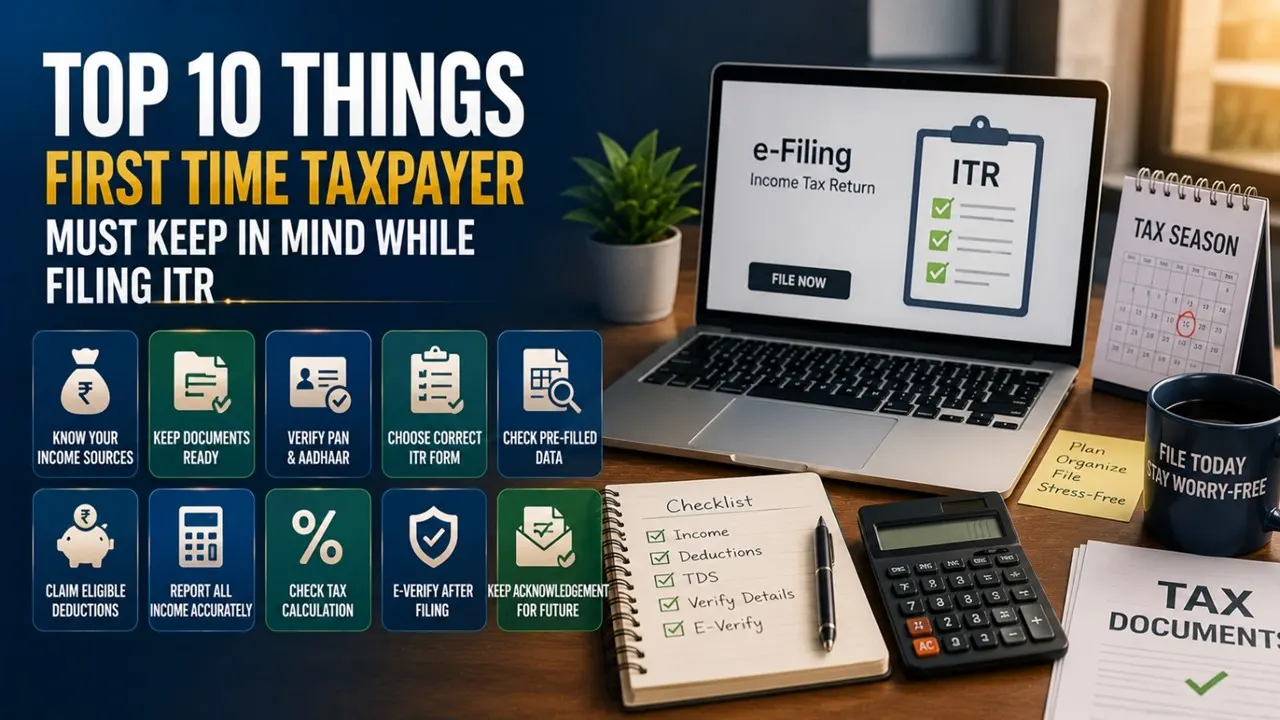
Filing your ITR for the first time? Here's everything you need to know - from choosing the right form to meeting the deadline.
New to ITR? 10 Things to Know Before Filing
 Vanshika verma
 Jul 20, 2026
Table of Contents

It is confusing for people filing their income tax return for the first time. The e-filing system over the years has become a lot simpler, but it still helps to know which ITR form you need, keep all the required documents ready and know the basic steps before you begin.
In this guide, we will talk about the documents you will need, how to select the correct ITR form and other important points first time taxpayers should keep in mind to make the filing process smooth and hassle-free.

Top 10 things first time taxpayers should know
1. Who needs to file an ITR?
You should file an ITR if any of these apply to you:
Your total income is above the basic tax exemption limit.

You own assets in India or abroad.
You have invested in shares, mutual funds, securities, or ESOPs.
Your total fixed deposits are above Rs 50 lakh.
Your total deposits in savings or current accounts exceed Rs1 crore.
Your annual electricity bill is more than Rs1 lakh.
You spent over Rs2 lakh on foreign travel during the financial year.
Your business turnover or sales exceed Rs 60 lakh, even if your taxable income is below the exemption limit.
2. What is the taxable income?
Taxable income is the income you pay tax on. It is calculated after subtracting the allowable deductions from your gross income.
You can claim deductions on investments in PPF, NPS, life insurance, some home loan payments, and eligible house rent.
3. Old or new tax regime - which regime to choose?
There is no one answer. It will depend on your income and what deductions you can take.
If you have many investments and deductions for tax saving, old regime is good. Otherwise the new regime could bring lower tax. You can compare the two using an online tax calculator, or you can ask for advice from a chartered accountant.
4. What is the last date to file ITR?
31st August 2026 is the Last date to file ITR without late fee for FY 2025-26 (AY 2026-27) However, if you miss this deadline you can file a belated return till 31 December 2026. But you may have to pay a late filing fee and interest depending upon your tax liability.
5. Which ITR form should be used?
The form varies depending on how you earn your income.
ITR-1: Salary, 1 house property and other income like interest.
ITR-2: Individual or HUFs not having any income from business.
ITR-3: For individuals and HUFs with income from business or profession.
ITR-4: Taxpayers opting for presumptive taxation scheme.
If you are confused, utilize the “Help Me Decide” option on Income Tax e-filing portal. It will suggest the right form for you based on your income and type of taxpayer.
6. What is Form 16 and Form 26AS?
You will get Form 16 from your employer. It displays your Salary , Tax deducted (TDS) and deductions claimed in the year .
The information of taxes deducted on your income and other financial transactions like bank interest, dividends, securities transactions and foreign remittances is present in the Form 26AS and Annual Information Statement (AIS). These records help to make sure your ITR is correct.
7. Is e-verification compulsory?
Yes. Just filing the return is not enough, you need to e-verify it within 30 days.
If you do not e-verify, your return may not be valid and your refund might be delayed.
You can verify your return through Aadhaar OTP, net banking or Electronic Verification Code (EVC).
8. Can you confirm you will go back offline?
Yes. , If you're e-verifying, then you can post the signed ITR-V acknowledgement to the Income Tax Department’s Centralised Processing Centre (CPC) in Bengaluru within 30 days of filing.
9. Which documents should be prepared?
Before filing your return, have the following documents available:
PAN card.
Aadhaar card (linked with PAN)
Your employer’s Form 16.
Statements of interest and bank statements
PPF, NPS, tax saving investments etc. - proof of investments
Home Loan Interest Certificate (if any)
Insurance premium receipts and other documents of deductions
For the current assessment year (AY 2026-27) you are required to file a normal ITR. If you miss the due date, you can file a belated return and pay the applicable late fee and interest, if any.
10. Do you accept returns for previous years?
Yes. If you have missed filing your return for any of the last four assessment years, you can file a revised return (ITR-U), subject to the rules that apply.
You should file the regular ITR for the current assessment year (AY 2026-27). If you miss the due date, you can file a belated return and pay the applicable late fee and interest, if any.
About Author


Vanshika verma
Content Writer
 Studycafe
 Delhi, Delhi, India
 2120
2120My Recent Articles
- SEBI Warns Investors Against Fake WhatsApp Groups Offering Stock Tips, Trading Advice and False Profit Claims
- Indo Amines Limited Under GST Department Scrutiny as Maharashtra Tax Officials Initiate Search and Inspection at Registered Office
- Park Medi World Says Income Tax Department’s Verification at Company-Linked Premises Had No Impact on Operations or Expansion Plans
- Rajasthan Launches Statewide GST Crackdown, Uncovers Suspected Tax Irregularities Worth Rs 2.85 Crore
- Centre to Invite Public Feedback on Revised GST Return Forms From November 1, Aims to Reduce Errors and Tax Notices
Loading suggestions…


Recent Posts

All Posts


Recent Posts
All Posts