ITR Filing: Tax Deductions and Exemptions Under Old vs New Tax Regime:
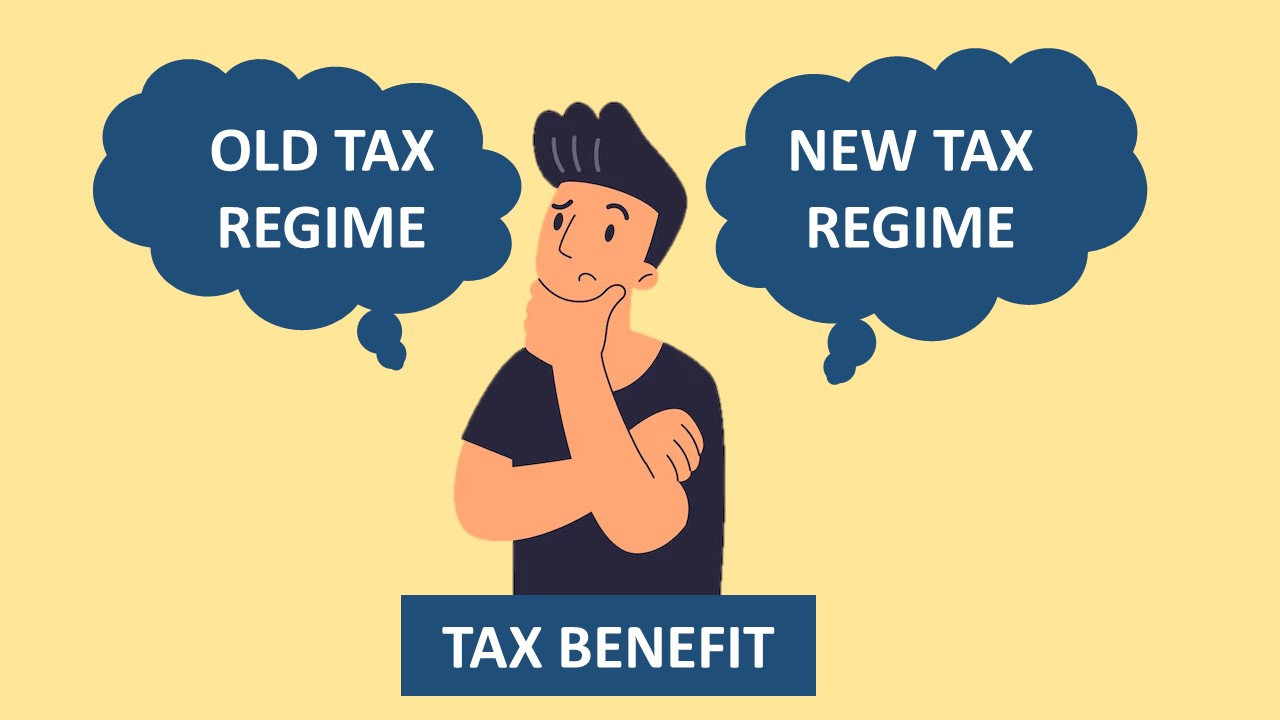
Know the income tax benefits and deductions under the New Tax Regime and the Old Tax Regime for FY 2024-25 and FY 25-26 as well
Tax Benefit Under Old and New Tax Regime
 Nidhi
Nidhi Jul 30, 2025
Table of Contents

ITR Filing: Tax Deductions and Exemptions Under Old vs New Tax Regime
During the Income Tax Return Filing, taxpayers can claim deductions, rebates, and exemptions allowed under the old tax regime and the new tax regime. Let us know about the income tax benefits and deductions under the New Tax Regime for FY 2025-26, the New Tax Regime for FY 2024-25, and the Old Tax Regime for FY 2024-25.
Rebate Under Section 87A
This rebate is allowed to taxpayers to provide them relief from the Income Tax if their income is below the rebate limit. The tax rebate is 100% if the tax amount is below the threshold value. For FY 2025-26 (New Regime), the tax-free income limit is increased to Rs 12,00,000, and for FY 2024-25 (New Regime), the tax-free limit is Rs 7,00,000. On the other hand, in FY 2024-25 (Old Regime), the tax-free limit is Rs 5,00,000.Rebate on STCG
Section 111A allows taxpayers to claim a rebate on short-term capital gains under the old tax regime for FY 2024-25. However, in the new regime, this rebate is not allowed.Rebate on LTCG
Section 112A allows taxpayers to claim a rebate on long-term capital gains. This rebate is not allowed in any of the tax regimes.Standard Deduction
Under the New Tax regime for FY 2024-25 and 2025-26, a standard deduction of up to Rs 75,000 is allowed. While under the old tax regime, the standard deduction is Rs 50,000.House Rent Allowance (HRA)
If you live in a rented house, you can claim House Rent Allowance (HRA), which you receive from your employer as a deduction in the old regime. In the new regime, this is not allowed.Leave Travel Allowance (LTA)
LTA is an allowance given to the employee by an employer to cover travel expenses. Taxpayers can claim an exemption on LTA only under the old tax regime.30% Additional Employee Cost (Section 80JJAA)
This benefit is for businesses hiring new employees. They can claim 30% of the additional employee cost for three years. It is available under both tax regimes.Food Allowance
Food allowances are allowed as a deduction only in the old regime and not in the new tax regime.Professional Tax
Employees paying professional tax can claim it as a deduction, but only under the old system.Reimbursement of Office Expenses
If an employer compensates their employee for office-related expenses like internet or travel, it is exempt from tax in all regimes.Home Loan Interest (for Rented Property)
If your house is rented out, the interest you pay on a home loan can be claimed as a deduction in both the new and old tax regimes.Home Loan Interest (for Self-Occupied House)
Interest paid on a home loan for your own residence can only be claimed under the old regime. It is not allowed in the new tax regime.LIC/PPF/PF/80CDeductions
This is the most popular deduction. You can claim up to Rs 1.5 lakh by investing in Life Insurance, Public Provident Fund, Employee PF, ELSS, tuition fees, etc. However, these deductions are only allowed under the old regime.NPS Employer's Contributions
If your employer contributes to your NPS, it can be claimed as an exemption. Govt employees get up to 14% exemption under the old tax regime for FY 2024-25, while non-Govt employees get up to 12% under the old regime for FY 2024-25. In the new regime for FY 2024-25 and FY 2025-26, everyone gets the 14% limit.NPS Employee Contribution
Contributions made by an employee towards the National Pension System (NPS) are tax-deductible only in the old regime and not in the new tax regime.Mediclaim under Section 80D
The payment towards the health insurance premium can be claimed as a deduction under section 80D only in the old tax regime.Disabled Individual Deduction
Under the old tax regime, if a taxpayer is disabled, they can claim deductions under 80U. However, this deduction is not allowed in the new tax regime.Education Loan
Under Section 80E, payments towards Interest on loans for higher education can be claimed as a deduction only in the old regime.Electric Vehicle Loan
Under Section 80EEB, if a taxpayer pays Interest on loans taken for buying an electric vehicle, then they can claim it as a deduction only in the old tax regime.Donations
Taxpayers can claim deductions on donations made to eligible charitable institutions and funds under section 80G. Similarly, if a donation is made toward political parties, then it can also be claimed under Section 80GGC. However, deduction under sections 80G and 80GGC can only be claimed in the old tax regime.Savings Bank Interest
Section 80TTA allows individuals and HUFs to claim a deduction on interest income earned from savings accounts held in banks, post offices, or cooperative societies. While Section 80TTB allows senior citizens to claim a deduction. Tax benefits under Section 80TTA and Section 80TTB can only be claimed under the old tax regime.
Family Pension Deduction
If you receive a family pension, you get a deduction on it for up to Rs 15,000 in the old tax regime. Under the new tax regime for FY 2024-25 and FY 2025-26, this limit has been increased to up to Rs 25,000.Voluntary Retirement Scheme
Voluntary Retirement Scheme (VRS) is a scheme designed to allow employees to retire early before the usual retirement age. Section 10(10C) allows employees to claim exemption on compensation received at the time of voluntary retirement under all tax regimes.Gratuity Exemption
Section 10(10) allows an exemption for gratuity received on retirement or resignation. This exemption is allowed in all tax regimes.Leave Encashment
When an employee is paid for unutilised leave at retirement, this amount is tax-exempt under Section 10(10AA), and this exemption is allowed under both tax regimes.Transport Allowance for Specially-Abled
Specially abled individuals who are blind, deaf, dumb, or orthopaedically handicapped can claim a deduction on transport allowance in both old and new regimes.Tax Benefit: Old Tax vs New Tax Regime Comparison Table
| Year | FY 2025-26 | FY 2024-25 | FY 2024-25 (No Change in FY 25-26 as well) |
| Particulars | New Tax Regime | New Tax Regime | Old Tax Regime |
| Rebate | 1200000 | 700000 | 500000 |
| Rebate on STCG 111A | Not Available | Not Available | Available |
| Rebate on LTCG 112A | Not Available | Not Available | Not Available |
| Standard Deduction | 75000 | 75000 | 50000 |
| House Rent Allowance (HRA) | Not Available | Not Available | Available |
| Leave Travel Allowance (LTA) | Not Available | Not Available | Available |
| 30% Additional Employee Cost (Section 80 JJAA) | Available | Available | Available |
| Food Allowance | Not Available | Not Available | Available |
| Professional Tax | Not Available | Not Available | Available |
| Reimbursement of Office Expense | Available | Available | Available |
| Home Loan Interest (Rent) | Available | Available | Available |
| Home Loan Interest (Self Occupied) | Not Available | Not Available | Available |
| LIC/ PF/ PPF (Section 80C) | Not Available | Not Available | Available |
| NPS Employee Contribution | Not Available | Not Available | Available |
| NPS Employer Contribution | Available (14% for all) | Available (14% for all) | Available (12% Non-Govt and 14% Govt) |
| Mediclaim (Section 80D) | Not Available | Not Available | Available |
| Disabled Individual (Section 80U) | Not Available | Not Available | Available |
| Education Loan (Section 80E) | Not Available | Not Available | Available |
| EV Loan (Section 80EEB) | Not Available | Not Available | Available |
| Political/Trust Donation (Section 80G/ 80GGC) | Not Available | Not Available | Available |
| Savings Bank Interest (Section 80TTA/ 80TTB) | Not Available | Not Available | Available |
| Family Pension Deduction | 25000 | 25000 | 15000 |
| VRS Exemption (Section 10(10C)) | Available | Available | Available |
| Gratuity Exemption (Section 10(10)) | Available | Available | Available |
| Leave Encashment (Section 10(10AA)) | Available | Available | Available |
| Transport for specially-abled | Available | Available | Available |
About Author


Nidhi
Content Writer
Nidhi is a skilled content writer specializing in personal finance. She creates clear, engaging articles on mutual funds, investments, insurance, and wealth-building strategies. With a passion for simplifying complex financial topics, Nidhi helps readers make informed money decisions with confidence. She can be reached at [email protected]
Nidhi is a skilled content writer specializing in personal finance. She creates clear, engaging articles on mutual funds, investments, insurance, and wealth-building strategies. With a passion for simplifying complex financial topics, Nidhi helps readers make informed money decisions with confidence. She can be reached at [email protected]
 Studycafe
 New Delhi, Delhi, India
 1832
1832My Recent Articles
- Karnataka High Court Gives Another Chance in GST Matter Due to Lack of Hearing
- Delay Should Be Condoned if Explanation is Unrefuted: ITAT
- Non-Service of Income Tax Notice, Ill health of taxpayer, ITAT condones Appeal filing delay
- Books of Accounts Cannot be Rejected Without Any Specific Defect: ITAT Kolkata
- Karnataka High Court Sends ITC Matter Back to GST Authorities for Reconsideration
Up Next
Loading suggestions…


Recent Posts

All Posts
Recent Posts
All Posts