Key Time Limit for Issuing GST Demand Notices Under Sections 73 and 74: Know Applicable GST Penalties:
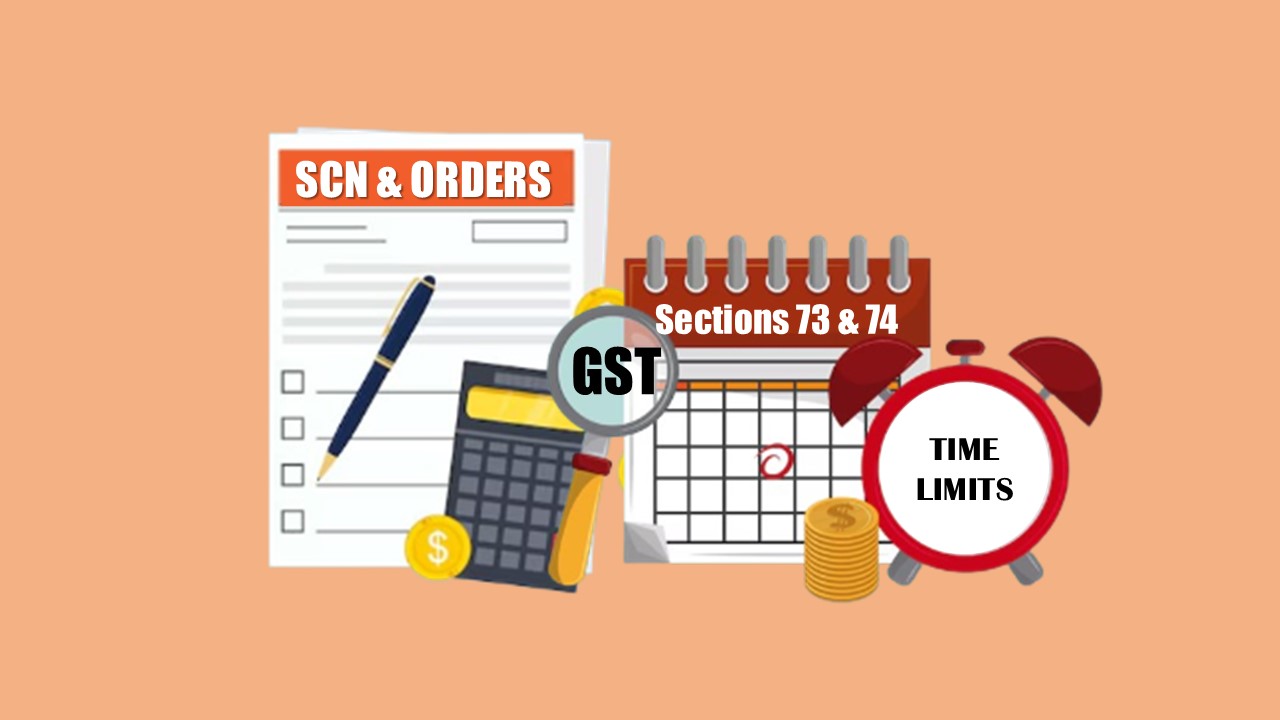
Here is detailed information about the key time limits for issuing GST demand notices or orders for different financial years under Sections 73 and 74.
Key Time Limit for Issuing GST Demand Notices
 Saloni Kumari
 Jul 11, 2025
Table of Contents

Key Time Limit for Issuing GST Demand Notices Under Sections 73 and 74: Know Applicable GST Penalties
Here is detailed information about the key time limits for issuing GST demand notices or orders for different financial years, mainly under Sections 73 and 74, and penalties applicable in different situations. These rules mainly apply when tax has not been paid, has been short paid, or has been wrongly claimed (like excess Input Tax Credit or a refund you should not have taken). The time limits and penalties vary depending on whether the issue involves fraud or no fraud.
What are Sections 73 and 74?
- Section 73 is for Non-fraud Cases: Where the tax problem occurred by mistake or without dishonest intent.
- Section 74 is for Fraud or Intentional Evasion Cases: Where the taxpayer intentionally does not pay or wrongly claims tax benefits.
Time Limits to Issue SCN and Order:
Every year, the GST department is awarded certain deadlines to issue SCN (show cause notice) and orders. These deadlines are separate for Sections 73 and 74: For Section 73 (No Fraud Cases) Timelines (Examples by Financial Year):| Financial Year | GSTR-9 Due Date | Last Date to Issue SCN | Last Date to Pass Final Order |
| 2017-18 | 05-Feb-20 | 30-Sep-23 | 31-Dec-23 |
| 2018-19 | 31-Dec-20 | 31-Jan-24 | 30-Apr-24 |
| 2019-20 | 31-Mar-21 | 31-May-24 | 31-Aug-24 |
| 2020-21 | 28-Feb-22 | 30-Nov-24 | 28-Feb-25 |
| 2021-22 | 31-Dec-22 | 30-Sep-25 | 31-Dec-25 |
| 2022-23 | 31-Dec-23 | 30-Sep-26 | 31-Dec-26 |
| 2023-24 | 31-Dec-24 | 30-Sep-27 | 31-Dec-27 |
- Key Point: SCN must be issued 3 months before the order is passed.
| Financial Year | GSTR-9 Due Date | Last Date to Issue SCN | Last Date to Pass Final Order |
| 2017-18 | 05-Feb-20 | 05-Aug-24 | 05-Aug-24 |
| 2018-19 | 31-Dec-20 | 30-Jun-25 | 30-Jun-25 |
| 2019-20 | 31-Mar-21 | 30-Sep-25 | 30-Sep-25 |
| 2020-21 | 28-Feb-22 | 31-Aug-26 | 31-Aug-26 |
| 2021-22 | 31-Dec-22 | 30-Jun-27 | 30-Jun-27 |
| 2022-23 | 31-Dec-23 | 30-Jun-28 | 30-Jun-28 |
| 2023-24 | 31-Dec-24 | 30-Jun-29 | 30-Jun-29 |
- Key Point: For fraud cases, the time limit to pass the final order is 5 years from the GSTR-9 due date.
- Section 76-Tax Collected but Not Paid: If you collected tax from customers but did not pay it to the government, there is no time limit. The department can recover it anytime.
- Court or Tribunal Stay: If a court or tribunal puts a stay on proceedings, that stay period is excluded from the calculation of time limits. So, the department gets more time in such cases.
- Erroneous Refunds: If you received a wrong refund, the time limit is 3 years (under Section 73) or 5 years (under Section 74) from the date of the refund order, not from the GSTR-9 due date.
| Situation | Penalty (Section 73 – No Fraud) | Penalty (Section 74 – With Fraud) |
| Tax paid before SCN is issued | No penalty | 15% of tax amount |
| Tax paid within 30 days after SCN | No penalty | 25% of tax amount |
| Tax paid within 30 days after final order | 10% of tax or Rs. 10,000 (whichever is higher) | 50% of tax amount |
| Tax paid after 30 days of final order | 10% of tax or Rs. 10,000 (whichever is higher) | 100% of tax amount |
- Paying early can save a huge amount of penalty, especially in fraud cases.
Final Advice
- Always try to act early on the deadlines to avoid massive penalties.
- Track your GSTR-9 filing dates; they affect when the department can act.
- If you have received a notice or order, always check your deadlines to respond or appeal, and try not to miss that deadline, as this can further lead to an increase in the penalty amount.
About Author


Saloni Kumari
Content Writer
Saloni is a Content Writer with 2+ years of experience at studycafe.in. She writes legal, taxation, and finance related content including GST, Income Tax etc. Skilled in translating complex judicial pronouncements and regulatory developments into clear, and reader-friendly articles. Experienced in covering judgements of ITAT, High Court, GSTAT, and news related to Income Tax, GST, and corporate law. She can be reached at [email protected].
Saloni is a Content Writer with 2+ years of experience at studycafe.in. She writes legal, taxation, and finance related content including GST, Income Tax etc. Skilled in translating complex judicial pronouncements and regulatory developments into clear, and reader-friendly articles. Experienced in covering judgements of ITAT, High Court, GSTAT, and news related to Income Tax, GST, and corporate law. She can be reached at [email protected].
 StudyCafe
 Delhi, Delhi, India
 2922
2922My Recent Articles
- GSTN Introduces New E-Invoicing Facility for Self-Invoices Under Reverse Charge Mechanism
- Flexi Cap vs Multi Cap Funds: What's the Real Difference?
- IBA Recommends Public Sector Banks to Reduce Ambit of Physical Branch Audits to 50% of Total Business
- ITAT Directs AO to Reconsider Rs 16.44 Lakh Capital Gains and Rs 25.87 Lakh Stamp Duty Value Addition
- ITAT Remands Rs 3.33 Crore Demonetisation Cash Deposit Case to AO, Directs Rs 10,000 Relief Fund Payment
Up Next
Loading suggestions…


Recent Posts

All Posts

Tags
Recent Posts
All Posts