New WhatsApp Fraud Alert! Can Replying ‘NO’ Put Your Bank Account at Risk? CA Allegedly Loses Rs 1.70 Lakh :
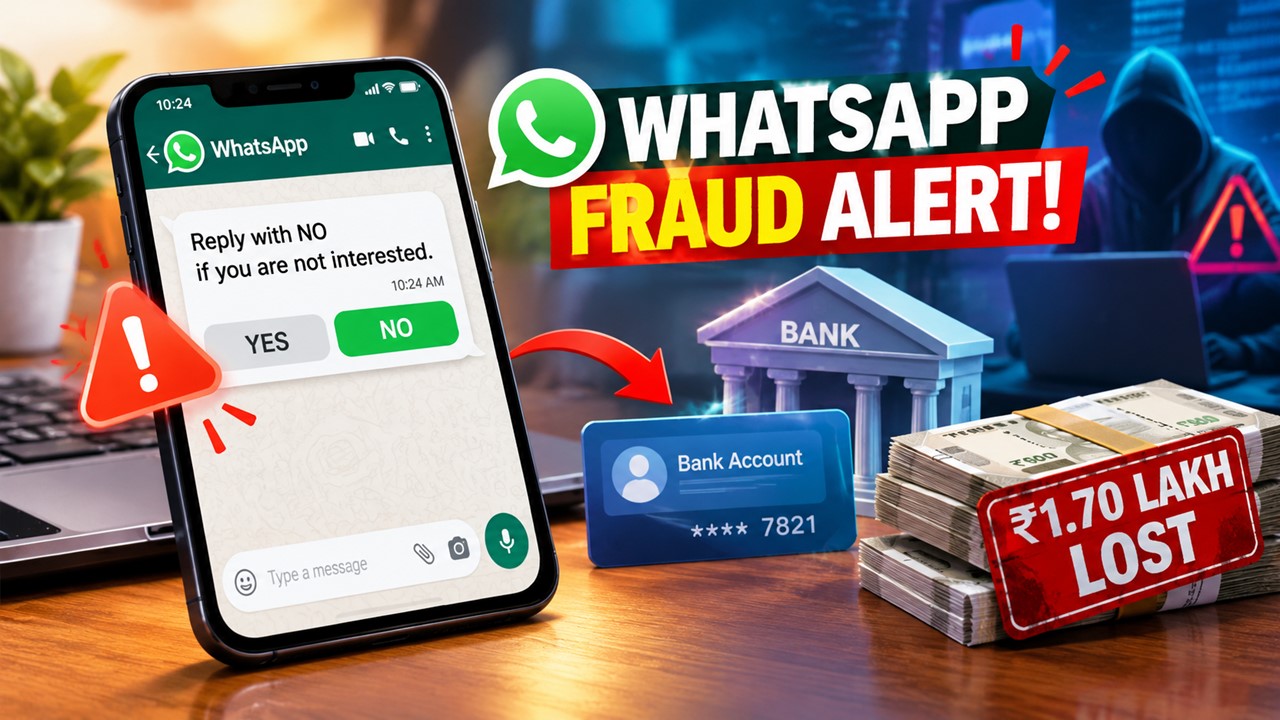
A CA has allegedly lost Rs. 1.70 lakh in a suspected banking fraud linked to a WhatsApp debit alert, highlighting the need to verify suspicious messages and follow essential cybersecurity precautions.
Replying ‘NO’ to WhatsApp Message Can Lead to Bank Fraud
 Saloni Kumari
 Oct 15, 2026
Fraudsters have discovered a new way to defraud people. Now, you can also be defrauded by just replying 'No' to a text message; there's no need to even click on a link or share OTPs (One-Time Passwords).
Recently, a case of a Chartered Accountant (CA) named Vishnu Kumar has been unearthed, wherein he has allegedly lost Rs 1.70 lakh from his ICICI Bank and IndusInd Bank accounts by just replying "No" to a WhatsApp message reading, "Rs. 90,000 has been debited from your ICICI Bank account. If you did not make this transaction, please reply NO."
The CA had neither shared any OTP with the number nor opened any link; still, the amount discussed in the message was directly debited from his bank account and transferred to the account of the fraudster by simply replying 'NO' to the message.

Once 'NO' is typed in reply to such messages, the reply comes back as "Thank you. Our team will get back to you." Thereafter, the amount discussed in the message is directly deducted from the concerned bank account(s). Now, let us understand how fraud works and what all the different precautions that can be taken to be safe from such fraud are.
How Does This Fraud Work?

1. A person receives a fake text message saying that a certain amount (for instance, Rs 1 lakh) has been debited from their bank account.
2. After this, the person is sent a second message asking for confirmation, saying, 'If you have not debited this amount, then type "No".'
3. Such messages consist of a hidden auto-execution file.
4. When the person replies 'No' to such messages, the file gets activated, and complete access to your mobile phone goes to the hackers.
Precautions to Take
1. Avoid Replying: Whenever you interact with such messages where you receive a debit alert from an unknown number on WhatsApp, try not to reply and delete them immediately.
2. Verify First: Do not trust unknown numbers, and first verify by checking your bank account statement from the bank's official application if the amount has actually been deducted.
3. Do Not Trust Unofficial Sources: Only trust messages delivered from official sources and verified customer care numbers.
4. Point to Note: Banks never ask their customers to reply, Yes or No to any text messages sent via WhatsApp.
About Author


Saloni Kumari
Content Writer
 StudyCafe
 Delhi, Delhi, India
 2915
2915My Recent Articles
- Good News! ICAI Opens One-Day Window for Submission of MEF Form 2026-27 at meficai.org
- Income Tax Dept Releases Data for Direct Tax Collection for FY 2026-27 as of October 14, 2026
- CBI Apprehends MIL Executive Director for Demanding Bribe in Exchange for Extending Official Favours
- Canara Bank Fraud Case: CBI Court Sentences 11 Accused to 4 Years’ Rigorous Imprisonment, Imposes Rs. 19.75 Lakh Penalty
- India-Mauritius DTAA Amended to Prevent Tax Avoidance and Treaty Abuse: New Article 27B Introduces Anti-Abuse Rules
Loading suggestions…


Recent Posts



All Posts



Recent Posts
All Posts