RBI releases report of working group on digital lending through online platforms and mobile apps
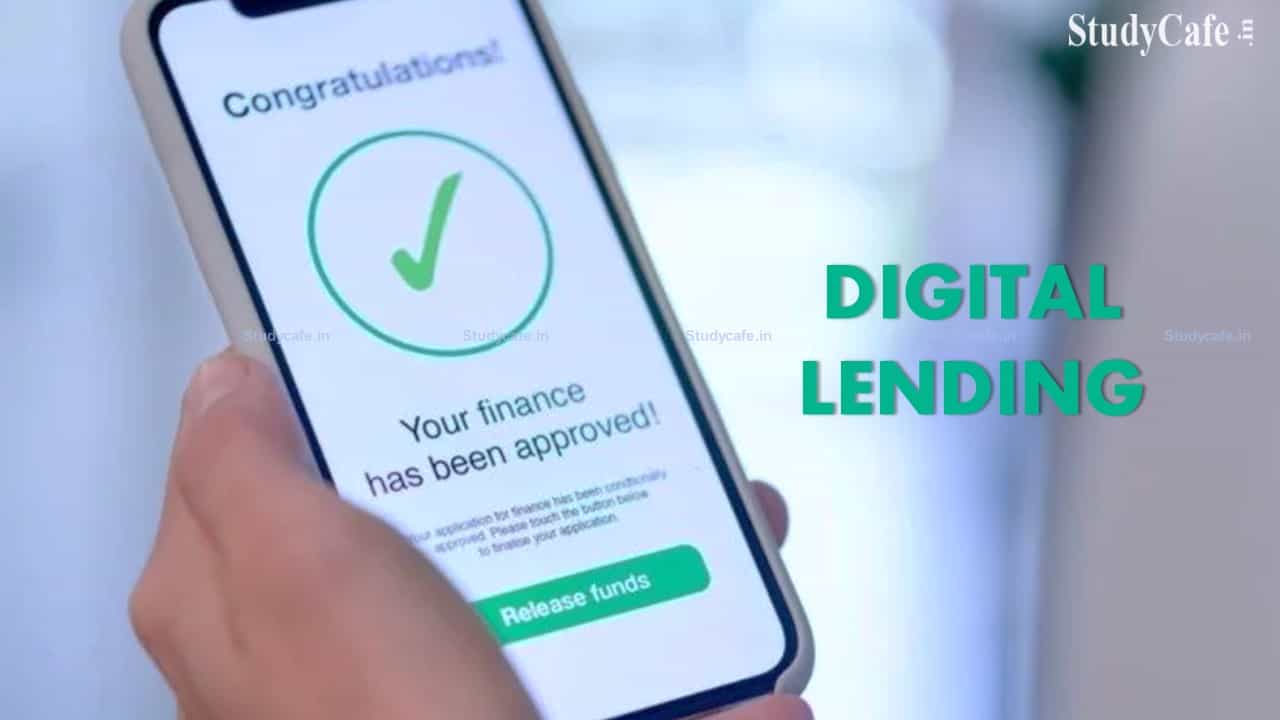
RBI releases report of working group on digital lending through online platforms and mobile apps The Reserve Bank of India's working group on digital…
 CA Deepak Gupta
 Nov 19, 2021
RBI releases report of working group on digital lending through online platforms and mobile apps
The Reserve Bank of India's working group on digital lending using online platforms and mobile apps has presented its report. The goal of this paper is to improve customer safety and make the digital lending ecosystem more secure while also fostering innovation.
The working group (WG) was established on January 13, 2021, with RBI Executive Director Jayant Kumar Dash as its Chairman. The group suggests that digital financing applications be subjected to a verification process by a nodal body, which may be established in conjunction with stakeholders.
In addition, the group suggests that a Self-Regulatory Organization (SRO) be established to cover all participants in the digital lending ecosystem. Each lender may develop an anti-predatory lending policy based on the features to be outlined by RBI/proposed SRO.
The organization suggests that the Central Government consider enacting legislation to curb illicit lending activities in the medium term, such as the 'Banning of Unregulated Lending Activities Act.' According to the working group's research, 600 of the 1100 loan apps now accessible are 'illegal.'
When it comes to digital lending apps, some baseline technical standards should be defined, and compliance with those standards should be a requirement before providing digital lending solutions. Every activity a user does on the app should be auditable, and every financial app should be signed/verified in a secure manner, according to the organization.
According to the group's assessment, data should be gathered from borrowers/potential borrowers with advance notice of the data's purpose, usage, and implications, as well as the borrower's explicit consent in an auditable manner. It goes on to say that all data should be stored on servers in India.
In terms of loan servicing, the group recommends that all loan servicing, repayments, and other similar operations be performed directly in a bank account of the balance sheet lender, with disbursements always made to the borrower's bank account.
Other suggestions include:
1. The documentation of algorithmic characteristics employed in digital lending should offer the essential transparency. 2. Each digital lender must submit a key fact statement in a standardized manner, which must include the Annual Percentage Rate. 3. The proposed SRO will establish a Code of Conduct for the use of unsolicited commercial communications for digital loans. 4. The proposed SRO will keep a 'negative list' of Lending Service Providers. 5. The proposed SRO will draught a standardized code of conduct for recovery in cooperation with the RBI. To Read Press Release Download PDF Given Below:About Author


CA Deepak Gupta
Co Founder
CA Deepak Gupta,is Co-founder of Studycafe. He is Microsoft Office Specialist and Corporate Trainer of AI Tools, Microsoft Excel.
He is Finance Influencer having more than 250K followers on Social Media. CA Deepak Gupta, is Having more than 14 plus years of experience, and he has Worked with best brands Like, Hero, Wipro, Ericsson before Starting Studycafe. He has Trained more than 20000 Persons in Microsoft Excel, PowerPoint, Power BI, Google Sheet, Google Forms and Other Tools.
CA Deepak Gupta,is Co-founder of Studycafe. He is Microsoft Office Specialist and Corporate Trainer of AI Tools, Microsoft Excel.
He is Finance Influencer having more than 250K followers on Social Media. CA Deepak Gupta, is Having more than 14 plus years of experience, and he has Worked with best brands Like, Hero, Wipro, Ericsson before Starting Studycafe. He has Trained more than 20000 Persons in Microsoft Excel, PowerPoint, Power BI, Google Sheet, Google Forms and Other Tools.
 StudyCafe
 Delhi, Delhi, India
 3423
3423My Recent Articles
- UltraTech Cement slapped with Rs. 808.78 Cr Income Tax Demand
- GST: High Court upheld constitutional validity of Section 16(2)(c), asks government to address ITC issues of genuine purchasers
- Old vs New Tax Regime for Tax Year 2026-27
- High court criticizes Income Tax Department for not releasing ITR Utilities despite 11 years of directions
- Fino Payments Bank CEO Rishi Gupta Gets Bail in GST Case, Bank Clarifies No Direct Link
Up Next
Loading suggestions…


Recent Posts

All Posts
Recent Posts
All Posts