SC: Redeemable Preference Shareholders Not Financial Creditors Under Section 7 IBC:
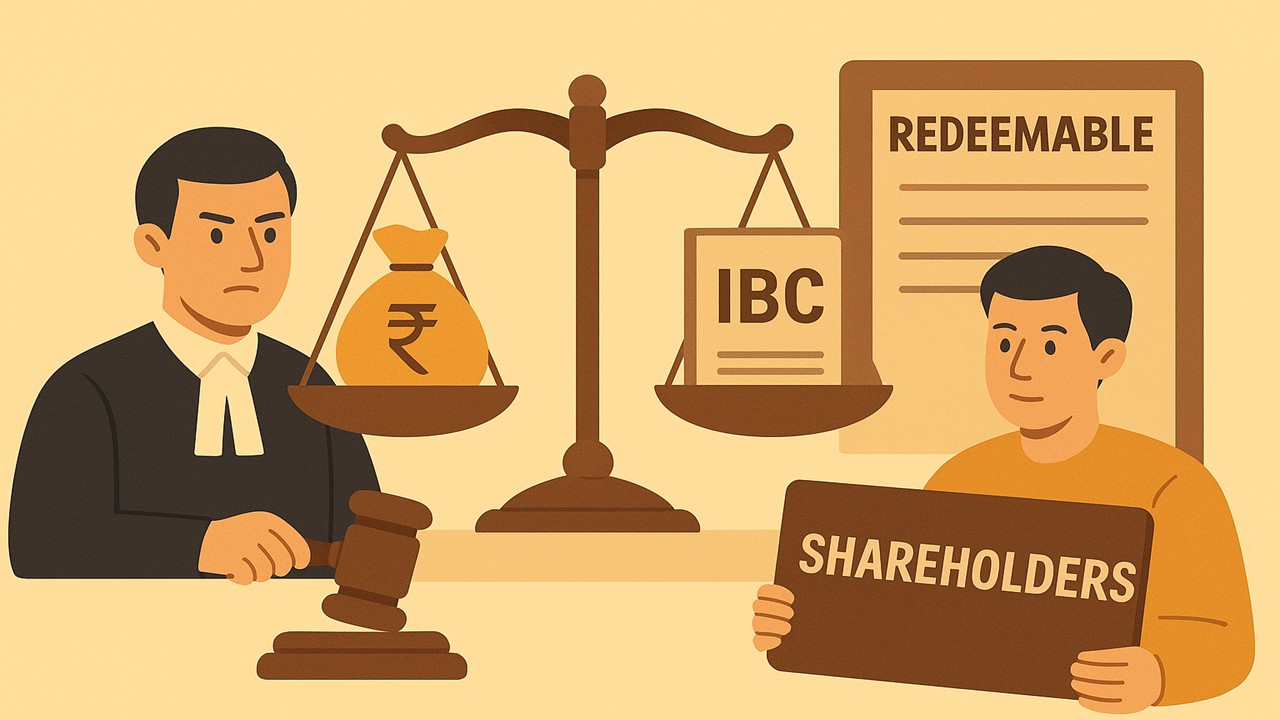
SC upheld the NCLAT’s ruling that holders of Cumulative Redeemable Preference Shares cannot initiate insolvency proceedings as financial creditors u/S. 7 of the Insolvency and Bankruptcy Code, 2016
SC Rules Redeemable Preference Shareholders Are Not Financial Creditors Under IBC
 Meetu Kumari
 Nov 1, 2025
SC: Redeemable Preference Shareholders Not Financial Creditors Under Section 7 IBC
The appeal arose from the NCLAT judgment affirming Kolkata’s decision dismissing EPC Constructions India Limited’s Section 7 IBC petition against M/s Matix Fertilisers and Chemicals Ltd. EPC, formerly Essar Projects India Ltd., had converted Rs. 250 crore of outstanding dues into 8% Cumulative Redeemable Preference Shares (CRPS) of Matix in 2015. When Matrix failed to redeem these shares after maturity, EPC, through its liquidator, filed insolvency proceedings alleging default. Both NCLT and NCLAT rejected the application, holding that CRPS represented investment, not debt.
EPC contended that the CRPS were a disguised form of borrowing that satisfied the definition of “financial debt” under Section 5(8)(f) IBC, having the commercial effect of borrowing. It argued that the transaction was intended to assist Matix in maintaining its debt-equity ratio and that the redemption obligation created a financial liability. Matix countered that preference shares form part of the company’s share capital, not debt, and that dividends or redemption payments depend solely on profits or fresh issue proceeds under Section 55 of the Companies Act, 2013.
Issue Raised: Whether holders of redeemable preference shares can be treated as “financial creditors” entitled to initiate proceedings under Section 7 of the Insolvency and Bankruptcy Code.
SC Held: The Hon'ble Apex Court held that preference shares, even when redeemable and cumulative, constitute share capital and not a loan or debt. Their redemption or dividend payments depend on profits or proceeds from a fresh issue, not on a contractual debt obligation. The Court emphasised that non-redemption does not convert preference shareholders into creditors. It relied on Lalchand Surana v. Hyderabad Vanaspathy Ltd. and Radha Exports (India) Pvt. Ltd. v. K.P. Jayaram, holding that an unredeemed preference shareholder remains a shareholder and cannot invoke Section 7 IBC.
Dismissing the appeal, the Court ruled that CRPS holders are investors, not lenders, and cannot maintain insolvency petitions under Section 7 IBC. It clarified that entries in books of accounts or accounting classifications cannot alter the true legal nature of the transaction. The judgment reaffirmed that “financial debt” must involve disbursal against consideration for time value of money, which is absent in the case of preference share capital.
To Read Full Judgment, Download PDF Given Below
About Author


Meetu Kumari
Content Manager
Meetu Kumari is an Experienced Advocate and Content Writer with 4+ years of demonstrated history of working in the law practice industry. Skilled in Developing Content, Researching, and Drafting. Strong professional with a Bachelor of Science (B.Sc.) focused on Law from Gujarat National Law University.
Meetu Kumari is an Experienced Advocate and Content Writer with 4+ years of demonstrated history of working in the law practice industry. Skilled in Developing Content, Researching, and Drafting. Strong professional with a Bachelor of Science (B.Sc.) focused on Law from Gujarat National Law University.
 Studycafe
 Jodhpur, Rajasthan, India
 2264
2264My Recent Articles
- ITAT Condones 302-Day Delay, Restores Salary Assessment for Fresh VerificationPremium
- ITAT Condones Delay After Tax Consultant's Death, Restores Appeals for Fresh HearingPremium
- ITAT Remands Salary Addition, Says Taxability Depends on Salary Becoming Due, Not Mere ReceiptPremium
- ITAT Deletes TP Royalty Adjustment, Orders Fresh Review of Commission BenchmarkingPremium
- ITAT Quashes Reassessment Over Unsigned Section 148 Notice Issued to AssesseePremium
Up Next
Loading suggestions…


Recent Posts



All Posts


Tags
Recent Posts
All Posts