Tax Recovery Must First Target Company: High Court Finds Existing Protection Sufficient and Dismisses Plea:
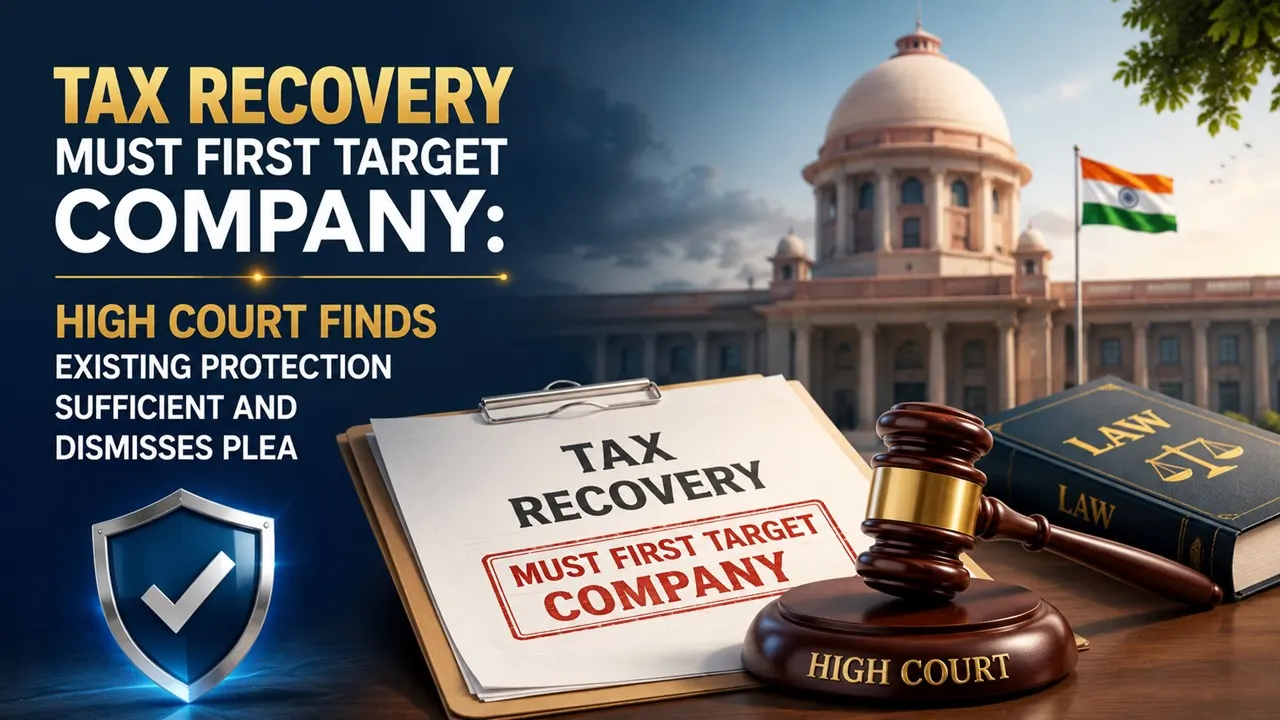
The HC dismissed a writ petition challenging personal tax recovery under Section 179, holding that adequate protection had already been granted by directing authorities to first recover dues from the company.
HC Says Adequate Protection Already Granted
 Saloni Kumari
 Jun 30, 2026
Tax Recovery Must First Target Company: High Court Finds Existing Protection Sufficient and Dismisses Plea
The Bombay High Court, in a recent significant ruling, dismissed a writ petition filed by Madhavi Kerkar, finding no merit in it. The court says that the petitioner has already been granted enough protection in the present matter.
In the present case, the petitioner, Madhavi Kerkar, had filed a writ petition in the Bombay High Court, challenging an order passed under Section 179 of the Income Tax Act, 1961. According to the said order, the petitioner was liable for making payment of all outstanding dues of M/s. Vaidehi Akash Housing Private Limited. The tax demand pertaining to the Assessment Years 2006-07 to 2011-12. It was undisputed that she was working as a director of the company during the year under consideration.
Along with the aforesaid order, the petitioner had also challenged another order passed by the Principal Commissioner of Income Tax (PCIT) under Section 264, which was issued in response to her revision petition. She argued that the tax department should first recover the outstanding dues from the company before initiating recovery against her personally.
It was observed that the revisional authority had already taken the issue into consideration. The authority had directed the Assessing Officer (AO) and the Tax Recovery Officer to first make all possible efforts to recover the tax from the company. It further directed that recovery proceedings should not be initiated against the petitioner if the entire tax amount could not be recovered from the company.
The court noted that "this is adequate protection to the Petitioner, who submits that recovery proceedings should first be exhausted against the Company." Accordingly, the court did not find any merit in the present writ petition; consequently, the case was dismissed. However, the Court did not impose any costs on either party.
About Author


Saloni Kumari
Content Writer
Saloni is a Content Writer with 2+ years of experience at studycafe.in. She writes legal, taxation, and finance related content including GST, Income Tax etc. Skilled in translating complex judicial pronouncements and regulatory developments into clear, and reader-friendly articles. Experienced in covering judgements of ITAT, High Court, GSTAT, and news related to Income Tax, GST, and corporate law. She can be reached at [email protected].
Saloni is a Content Writer with 2+ years of experience at studycafe.in. She writes legal, taxation, and finance related content including GST, Income Tax etc. Skilled in translating complex judicial pronouncements and regulatory developments into clear, and reader-friendly articles. Experienced in covering judgements of ITAT, High Court, GSTAT, and news related to Income Tax, GST, and corporate law. She can be reached at [email protected].
 StudyCafe
 Delhi, Delhi, India
 2948
2948My Recent Articles
- Maharashtra Govt Eases Registration of Jointly Owned Land Sales, ‘KA’ Copy Can Replace Co-Owners’ NOC
- No Separate Section 69C Unexplained Expenditure Addition Allowed After Accepting Section 44AD Income Without Supporting Evidence: ITAT
- RBI Imposes Restrictions on Puducherry Co-operative Urban Bank for Six Months, Caps Cash Withdrawals at Rs 5,000
- ICAI Opens Application Window for Empanelment of Members to Act as Observer at CA January 2027 Exams
- ICAI CA Inter Sept 2026 Result OUT at caresults.icai.org, Check Steps to Download
Up Next
Loading suggestions…


Recent Posts


All Posts


Recent Posts
All Posts