TDS Not required on Year-End Expense Provisions Where Payees Are Not Identified, Says ITAT:
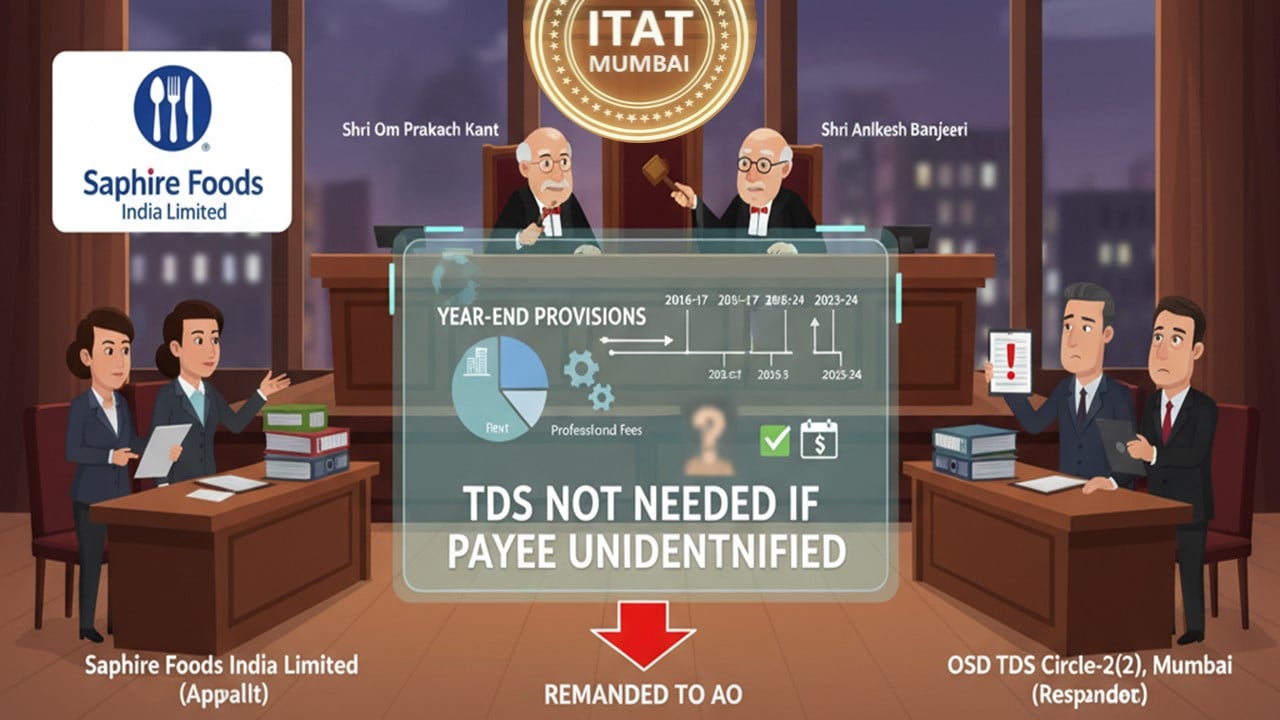
The ITAT Mumbai held that TDS is not required on year-end expense provisions when payees are not identified and directed the Assessing Officer to verify if TDS was later deducted and paid.
TDS Not Applicable on Unidentified Year-End Provisions
 Saloni Kumari
 Nov 10, 2025
TDS Not required on Year-End Expense Provisions Where Payees Are Not Identified, Says ITAT
A company was wrongly treated as a TDS defaulter for year-end expense provisions. The ITAT said TDS is not required on provisional entries if the payee is not identified, provided TDS is deducted when payments are actually made. Therefore, the tribunal allowed the appeal and remanded the case to the assessing officer (AO) to verify the facts again.
The present appeals have been filed by a company named Saphire Foods India Limited (Appellant) against the OSD TDS Circle-2(2), Mumbai (Respondent), in the Income Tax Appellate Tribunal (ITAT) Mumbai Bench “C”, Mumbai. Before Shri Om Prakash Kant (Accountant Member) and Shri Anikesh Banerjee (Judicial Member). The case is related to the assessment years 2016-17, 2018-19, 2019-20, 2020-21, 2021-22 and 2022-23, 2023-24.
This group of appeals was filed by the assessee challenging an order dated May 24, 2025, passed by the CIT(A) under Section 250 of the Income-tax Act, 1961, for the assessment years 2016-17 to 2023-24.
The assessee filed multiple appeals against the Income Tax Department’s decision to treat it as an “assessee in default” under Section 201(1) for not deducting TDS on year-end expense provisions. The issue was the same for all the financial years from 2016-17 to 2023-24; hence, the tribunal thought to hear them all simultaneously and issue a common order for them all.
The assessee is involved in the business of Hotels, Restaurants and Hospitality services (KFC and Pizza Hut).
Facts in Brief
The company had made year-end provisions (estimated expenses like rent, contractor payments, professional fees, etc.) in its accounts. TDS was not deducted at that stage because invoices were not received, and the exact payees were not identified. The company later deducted and paid TDS in the next financial year once the bills were received.
It also disallowed 30% of these expenses in its tax computation under Section 40(a)(ia) according to law for non-deduction of TDS. The tax officer, however, still held the assessee in default and imposed tax and interest under Sections 201(1) and 201(1A), amounting to Rs. 64.5 lakh.
Assessee dissatisfied with the action of the assessing officer, thereafter approached the CIT(A). However, the CIT(A) upheld the decision made by the assessing officer (AO).
Assessee's Arguments:
- The assessee argued that no TDS is needed on year-end provisions, as no specific income was credited to any party.
- Payees were also not identified at that time; hence, the TDS rules did not apply.
- TDS was later deducted and paid when actual payments were made, avoiding any revenue loss.
- Double taxation would occur if TDS were paid again.
- Interest under Section 201(1A) should only be charged until the date of actual TDS payment.
- The Department said disallowing expenses under Section 40(a)(ia) does not stop the officer from treating the assessee as in default under Section 201(1).
- TDS provisions apply only when income is credited to a known payee.
- If the liability is uncertain or the provision is just an estimate, TDS is not required until the expense crystallises.
- However, the factual part, whether the company actually deducted and paid TDS in the next year, needed to be verified.
- Therefore, the tribunal remands the case to the assessing officer (AO) to check the facts and confirm that TDS was indeed deducted and paid later. Interest under Section 201(1A) will apply only up to the actual TDS payment date.
- The appeal was allowed for statistical purposes. The same ruling applies to all assessment years (2016-17 to 2023-24).
About Author


Saloni Kumari
Content Writer
Saloni is a Content Writer with 2+ years of experience at studycafe.in. She writes legal, taxation, and finance related content including GST, Income Tax etc. Skilled in translating complex judicial pronouncements and regulatory developments into clear, and reader-friendly articles. Experienced in covering judgements of ITAT, High Court, GSTAT, and news related to Income Tax, GST, and corporate law. She can be reached at [email protected].
Saloni is a Content Writer with 2+ years of experience at studycafe.in. She writes legal, taxation, and finance related content including GST, Income Tax etc. Skilled in translating complex judicial pronouncements and regulatory developments into clear, and reader-friendly articles. Experienced in covering judgements of ITAT, High Court, GSTAT, and news related to Income Tax, GST, and corporate law. She can be reached at [email protected].
 StudyCafe
 Delhi, Delhi, India
 2924
2924My Recent Articles
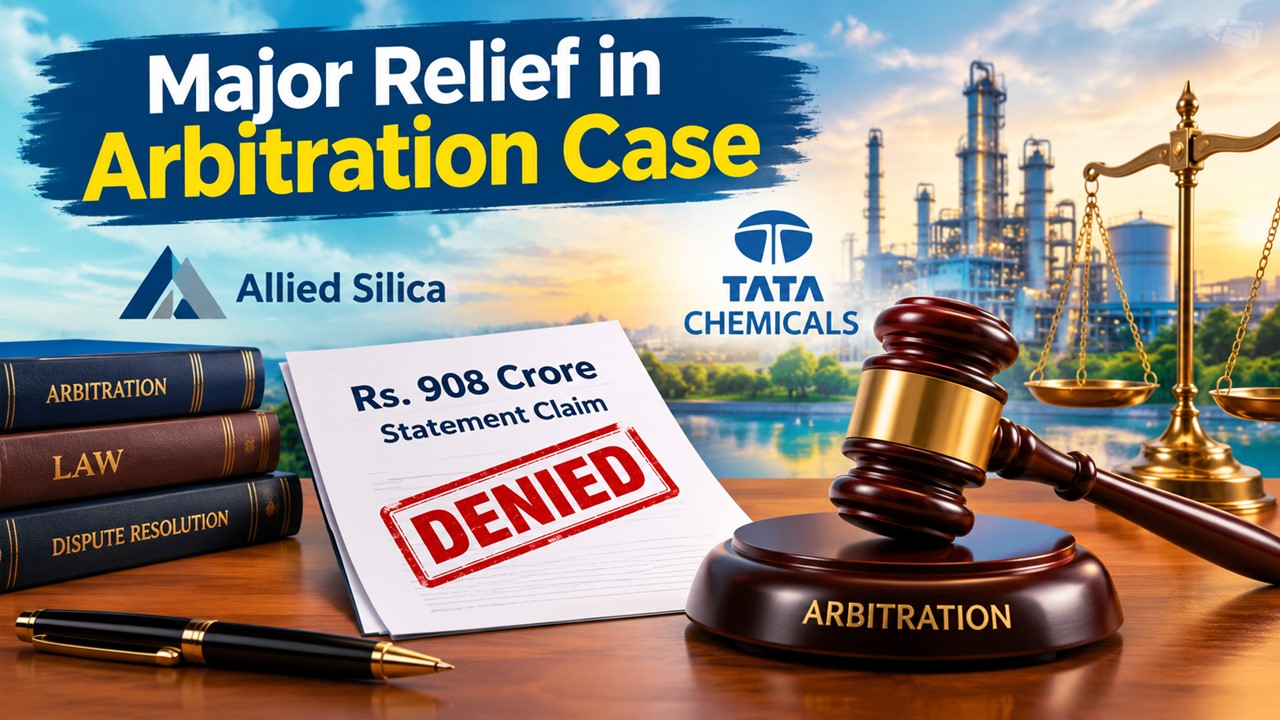
- Major Relief in Arbitration Case: MCIA Denies Rs 908 Crore Statement Claim Made by Allied Silica Against Tata Chemicals
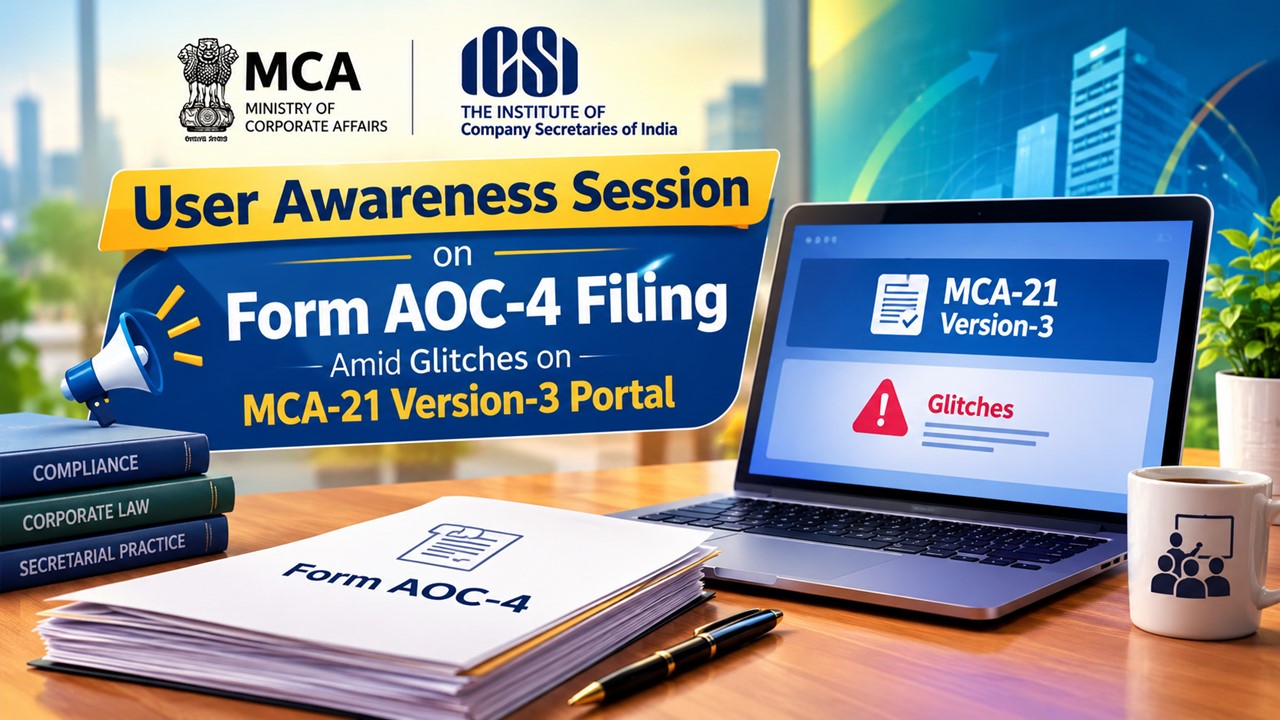
- MCA and ICSI to Hold User Awareness Session on Form AOC-4 Filing Amid Glitches on MCA-21 Version-3 Portal
- GSTN Introduces New E-Invoicing Facility for Self-Invoices Under Reverse Charge Mechanism
- Flexi Cap vs Multi Cap Funds: What's the Real Difference?
- IBA Recommends Public Sector Banks to Reduce Ambit of Physical Branch Audits to 50% of Total Business
Up Next
Loading suggestions…


Recent Posts
All Posts
Tags
Recent Posts
All Posts