TDS on Payments to Foreign Entities Cannot Exceed 10% as per DTAA Provisions: Supreme Court:
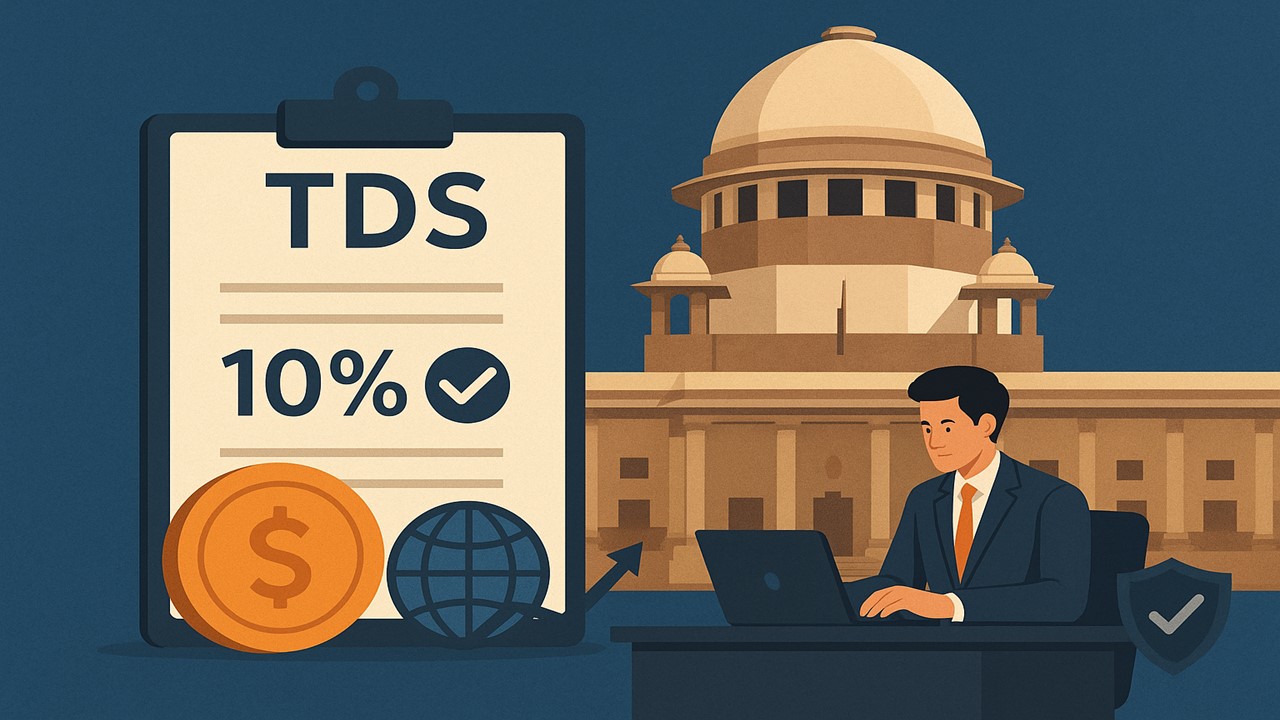
The Supreme Court, agreeing with the order of the Karnataka High Court, said that the tax rate in the DTAA signed by these companies, which is 10% in some cases, would prevail over Section 206AA.
Income Tax Act Cannot Override DTAA: SC
 Nidhi
Nidhi Nov 26, 2025
TDS on Payments to Foreign Entities Cannot Exceed 10% as per DTAA Provisions: Supreme Court
The Supreme Court has ruled that when making remittance to a Non-Resident Company or Individual, the tax deducted at source (TDS) cannot be more than 10%, as specified under the provisions of Double Tax Avoidance Agreements (DTAA).
The court rejected the appeal of the Income Tax Department, which demanded that the Information Technology companies like Mphasis, Wipro, and Manthan Software Services deduct 20% TDS on payments to entities outside India. The court highlighted that the TDS rules under the Income Tax Act, 1961, must be read with the DTAA for calculating the tax liability. If the foreign recipient qualifies for treaty benefits, the tax deducted cannot be more than 10%, which is the maximum limit outlined by the DTAA. The Court clarified that if the income tax department raises a demand beyond this rate, then the same would be inconsistent with the treaty.
The revenue claimed that the company was found to have made remittances to foreign entities without deducting the TDS during a survey conducted under section 133A(2A)A. The revenue contended that since the foreign payees did not provide a Permanent Account Number (PAN), the tax rate should be 20%, as per Section 206-AA(1)(iii) of the Income Tax Act.
The company argued that they had made the payment for the technical services to several recipients across different countries as per the DTAA.
The Supreme Court, agreeing with the order of the Karnataka High Court, said that the tax rate in the DTAA signed by these companies, which is 10% in some cases, would prevail over Section 206AA. The High Court had already ruled that if the tax department charges more than 10%, the same would be invalid. Additionally, the Supreme Court in 2023 had decided that the provisions of Section 206AA cannot override the DTAA's Provisions.
About Author


Nidhi
Content Writer
Nidhi is a skilled content writer specializing in personal finance. She creates clear, engaging articles on mutual funds, investments, insurance, and wealth-building strategies. With a passion for simplifying complex financial topics, Nidhi helps readers make informed money decisions with confidence. She can be reached at [email protected]
Nidhi is a skilled content writer specializing in personal finance. She creates clear, engaging articles on mutual funds, investments, insurance, and wealth-building strategies. With a passion for simplifying complex financial topics, Nidhi helps readers make informed money decisions with confidence. She can be reached at [email protected]
 Studycafe
 New Delhi, Delhi, India
 1832
1832My Recent Articles
- Karnataka High Court Gives Another Chance in GST Matter Due to Lack of Hearing
- Delay Should Be Condoned if Explanation is Unrefuted: ITAT
- Non-Service of Income Tax Notice, Ill health of taxpayer, ITAT condones Appeal filing delay
- Books of Accounts Cannot be Rejected Without Any Specific Defect: ITAT Kolkata
- Karnataka High Court Sends ITC Matter Back to GST Authorities for Reconsideration
Up Next
Loading suggestions…


Recent Posts
All Posts


Tags
Recent Posts
All Posts