Ways to Save Income Tax in India under the New and Old Tax Regime for FY 2025-26:
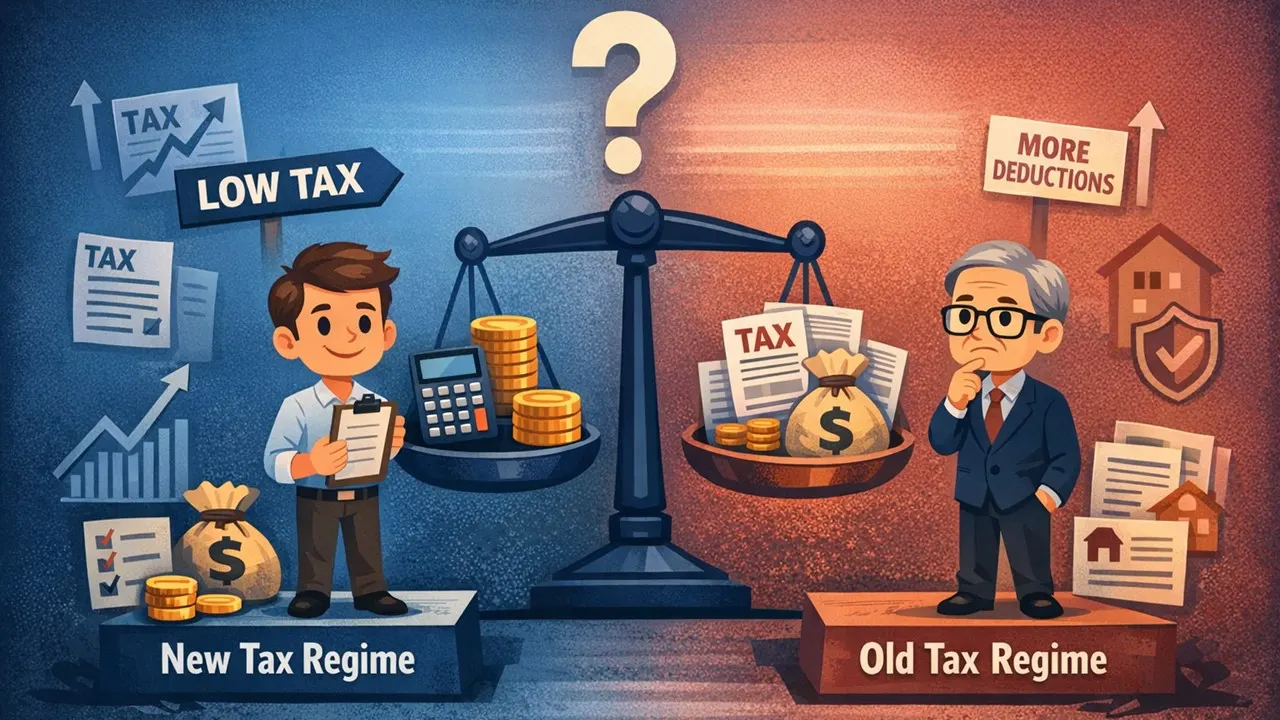
A simple comparison of the New and Old Income Tax Regimes for FY 2025–26 to help taxpayers choose the option that saves the most tax based on their income and deductions.
Key Benefits Under Old and New Tax Regime
 Saloni Kumari
 Jan 12, 2026
Ways to Save Income Tax in India under the New and Old Tax Regime for FY 2025-26
Selecting between the New Tax Regime and the Old Tax Regime is not about personal preference; it's about numbers and mathematical operations. Every regime has its own benefits; it depends on your income level, existing investments, deductions available to you, and long-term financial goals. However, choosing a regime early in the financial year can significantly enhance your post-tax income.
There are lower tax slab rates and higher rebates under the New Tax Regime; however, fewer deductions and exemptions are allowed under this regime. The regime has been developed keeping in mind fewer compliance requirements. This regime is perfect for the taxpayers who have smaller tax-saving investments or claims.
On the other hand, the Old Tax Regime allows a wider range of deductions and exemptions, such as Section 80C investments, house rent allowance (HRA), home loan interest, and education loan interest. In this regime, there are higher tax slab rates, and those who claim deductions may end up paying less tax under this regime.
Section 3 of the Income Tax Act lists tax slab rates under the New Tax Regime for the financial year 2025-26:
The key benefit of this regime is that it offers lower rates with fewer conditions.
Section 6 of the Income Tax Act lists tax slab rates under the Old Tax Regime for the financial year 2025-26:
A few important deductions are allowed under the New Tax Regime. Salaried employees can claim the standard deduction. Employer contribution to NPS under Section 80CCD(2) is allowed and can be a major tax saver, especially for higher-income individuals. Contributions to the Agniveer Corpus Fund are fully exempt. Certain allowances, such as transport allowance for differently abled persons, are also permitted. Additionally, retirement-related benefits like gratuity, leave encashment (within limits), and VRS compensation continue to receive exemptions as per rules.
A major relief under the New Regime is the rebate offered under Section 87A. Under the new tax regime for the Financial Year 2025-26, a resident individual can claim a tax rebate under Section 87A of up to Rs. 60,000 if their total taxable income is up to Rs. 12 lakh. This effectively makes income up to Rs. 12 lakh tax-free for such individuals.
While traditional slab rates are followed under the old tax regime, flexible deductions are offered under the same. This regime is particularly more beneficial for individuals who invest regularly or have fixed expenses such as home loan EMIs or rent. Taxpayers can reduce taxable income substantially by using available sections wisely.
Key deductions under the Old Regime include:
| Income Slab (Rs.) | Tax Rate |
| Up to 4,00,000 | Nil |
| 4,00,001 - 8,00,000 | 5% |
| 8,00,001 - 12,00,000 | 10% |
| 12,00,001 - 16,00,000 | 15% |
| 16,00,001 - 20,00,000 | 20% |
| 20,00,001 - 24,00,000 | 25% |
| Above 24,00,000 | 30% |
| Income Slab (Rs.) | < 60 yrs / NRI | 60-80 yrs | 80+ yrs |
| Up to 2.5 lakh | Nil | Nil | Nil |
| 2.5 - 3 lakh | 5% | Nil | Nil |
| 3 - 5 lakh | 5% | 5% | Nil |
| 5 - 10 lakh | 20% | 20% | 20% |
| Above 10 lakh | 30% | 30% | 30% |

- Section 80C, which allows up to Rs. 1.5 lakh of maximum deduction.
- Section 80CCD(2), for employer NPS contributions.
- Section 80D, which allows up to Rs. 1 lakh of maximum deduction.
- Section 80E deduction for education loan interest. There is no limit on deduction under this section.
- Gratuity
- Leave Encashment
- PF Withdrawals
- Retrenchment Compensation
- Pension Withdrawals
About Author


Saloni Kumari
Content Writer
Saloni is a Content Writer with 2+ years of experience at studycafe.in. She writes legal, taxation, and finance related content including GST, Income Tax etc. Skilled in translating complex judicial pronouncements and regulatory developments into clear, and reader-friendly articles. Experienced in covering judgements of ITAT, High Court, GSTAT, and news related to Income Tax, GST, and corporate law. She can be reached at [email protected].
Saloni is a Content Writer with 2+ years of experience at studycafe.in. She writes legal, taxation, and finance related content including GST, Income Tax etc. Skilled in translating complex judicial pronouncements and regulatory developments into clear, and reader-friendly articles. Experienced in covering judgements of ITAT, High Court, GSTAT, and news related to Income Tax, GST, and corporate law. She can be reached at [email protected].
 StudyCafe
 Delhi, Delhi, India
 2948
2948My Recent Articles
- Maharashtra Govt Eases Registration of Jointly Owned Land Sales, ‘KA’ Copy Can Replace Co-Owners’ NOC
- No Separate Section 69C Unexplained Expenditure Addition Allowed After Accepting Section 44AD Income Without Supporting Evidence: ITAT
- RBI Imposes Restrictions on Puducherry Co-operative Urban Bank for Six Months, Caps Cash Withdrawals at Rs 5,000
- ICAI Opens Application Window for Empanelment of Members to Act as Observer at CA January 2027 Exams
- ICAI CA Inter Sept 2026 Result OUT at caresults.icai.org, Check Steps to Download
Up Next
Loading suggestions…


Recent Posts


All Posts

Tags
Recent Posts
All Posts