What if you don’t file your ITR before the due date: Issues other than Late Fees:

You cannot carry forward any Loss except Loss under the head House Property if you don't File your return on Time.
ITR Filing Late Fees
 CA Pratibha Goyal
 Jul 23, 2023
What if you don’t file your ITR before the due date: Issues other than Late Fees
The Due Date for Filing Income Tax Return (ITR) for FY 2022-23/AY 2023-24 is 31st July 2023. The Government is continuously educating and requesting the Taxpayers to file their returns on time and giving the warning that this time the due date will not be extended.
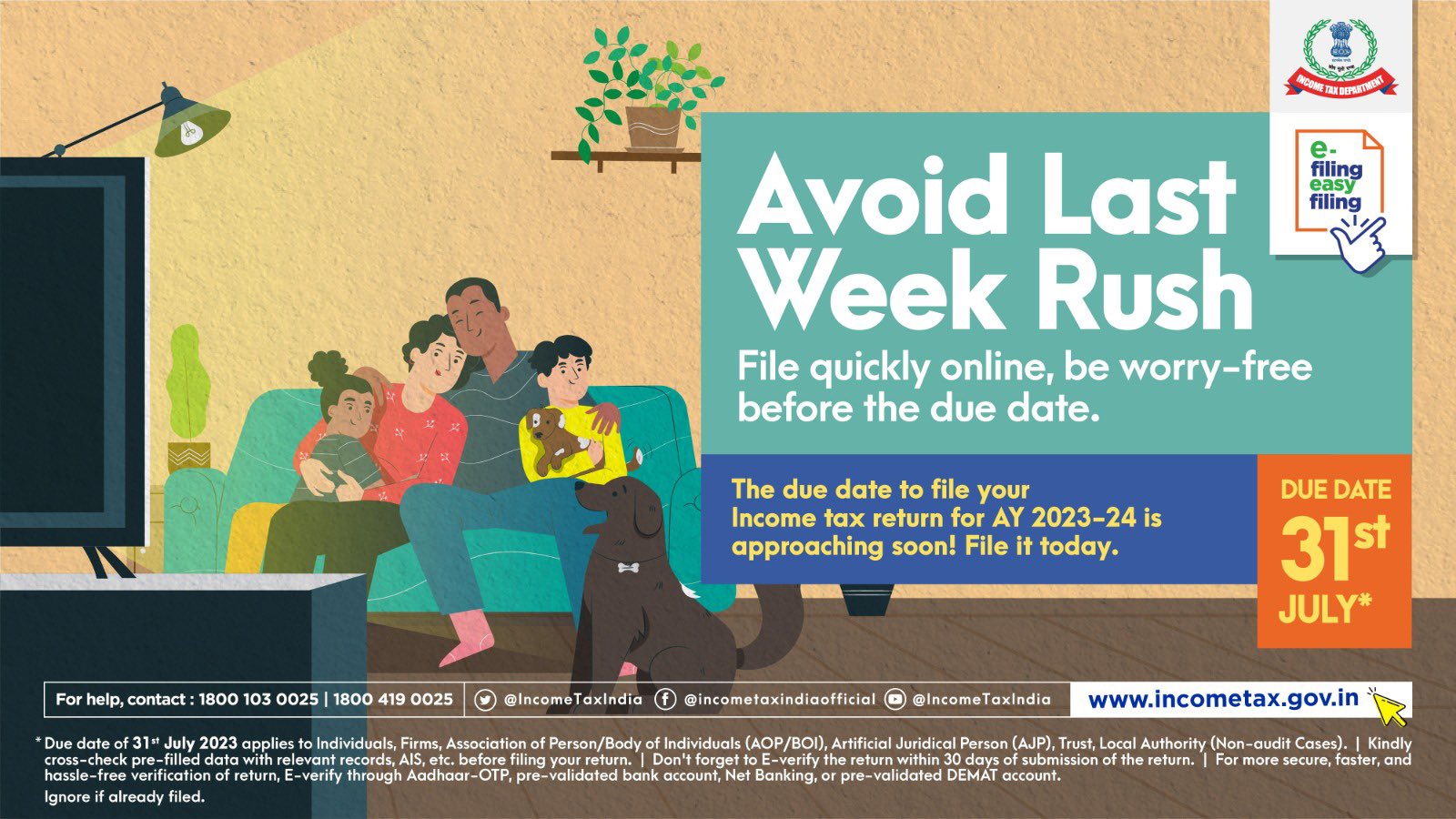 The due date of 31st July for filing ITR applies to the Individual, Hindu Undivided Family (HUF), Association of Persons (AOP), Body of Individuals (BOI), Artificial Juridical Person (AJP), Trust, or Local Authority. This date applies to them if they are not having a Tax Audit of Audit under any provisions of the Law.
So let's see what are the consequences of not filing the return of Income on or before the due date.
Late Fees of Rs. 5000/ Rs. 1000 Applicable:
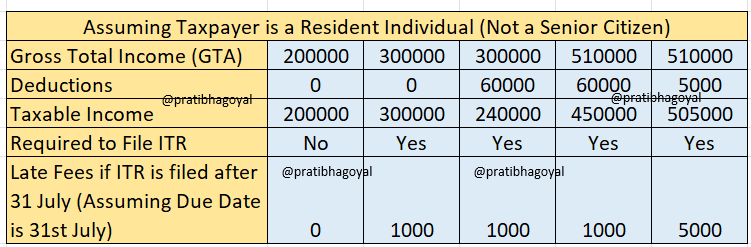
Late Fees u/s 234F of Rs. 5000 is applicable if you don't file your return on time. This Late fee is restricted to Rs. 1000 if your income is upto Rs. 5000.
This Late Fee is Applicable only if you were required to file ITR as per Law. The same is not applicable if you are filing the ITR without applicability as per Law on a voluntary basis. The same is explained by the mentioned chart:
The due date of 31st July for filing ITR applies to the Individual, Hindu Undivided Family (HUF), Association of Persons (AOP), Body of Individuals (BOI), Artificial Juridical Person (AJP), Trust, or Local Authority. This date applies to them if they are not having a Tax Audit of Audit under any provisions of the Law.
So let's see what are the consequences of not filing the return of Income on or before the due date.
Late Fees of Rs. 5000/ Rs. 1000 Applicable:
Late Fees u/s 234F of Rs. 5000 is applicable if you don't file your return on time. This Late fee is restricted to Rs. 1000 if your income is upto Rs. 5000.
This Late Fee is Applicable only if you were required to file ITR as per Law. The same is not applicable if you are filing the ITR without applicability as per Law on a voluntary basis. The same is explained by the mentioned chart:
 Carry forward of Losses:
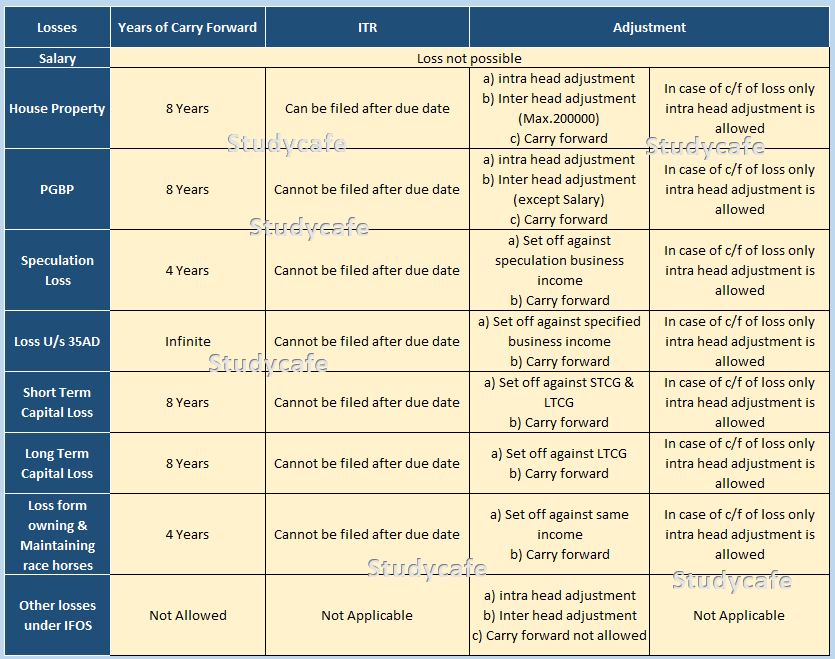
You cannot carry forward any Loss except Loss under the head House Property if you don't File your return on Time. However, Set-Off of Losses is allowed even in the case of Belated ITR.
Carry forward of Losses:
You cannot carry forward any Loss except Loss under the head House Property if you don't File your return on Time. However, Set-Off of Losses is allowed even in the case of Belated ITR.
 Interest on Late Payment of Tax:
Interest @1% per month or part of the month u/s 234A is applicable after the due date of Filing the Income Tax Return.
For Example, Tax Liability comes out to be Rs. 100,000. The Due Date for Filing ITR was 31st July, but the Taxpayer filed it on 2nd August, then an Interest u/s 234A for Rs. 1000 will be applicable.
Delay in Receiving Refunds:
If you File your ITR Late, then your return will be late processed and as a result, your ITR Refund will be delayed.
Benefits of New Tax Regime
Taxpayers opting for New Tax Regime have to file the ITR before the due date. New Tax Regime cannot be opted for in ITR filing, once due date is expired.
Deductions under Chapter VI-A not available
Further, as per section 80AC, deductions in respect of certain incomes under Chapter VI-A [Heading C- Deduction in respect of certain incomes] would not be available.
Interest on Late Payment of Tax:
Interest @1% per month or part of the month u/s 234A is applicable after the due date of Filing the Income Tax Return.
For Example, Tax Liability comes out to be Rs. 100,000. The Due Date for Filing ITR was 31st July, but the Taxpayer filed it on 2nd August, then an Interest u/s 234A for Rs. 1000 will be applicable.
Delay in Receiving Refunds:
If you File your ITR Late, then your return will be late processed and as a result, your ITR Refund will be delayed.
Benefits of New Tax Regime
Taxpayers opting for New Tax Regime have to file the ITR before the due date. New Tax Regime cannot be opted for in ITR filing, once due date is expired.
Deductions under Chapter VI-A not available
Further, as per section 80AC, deductions in respect of certain incomes under Chapter VI-A [Heading C- Deduction in respect of certain incomes] would not be available.
The due date of 31st July for filing ITR applies to the Individual, Hindu Undivided Family (HUF), Association of Persons (AOP), Body of Individuals (BOI), Artificial Juridical Person (AJP), Trust, or Local Authority. This date applies to them if they are not having a Tax Audit of Audit under any provisions of the Law.
So let's see what are the consequences of not filing the return of Income on or before the due date.
Late Fees of Rs. 5000/ Rs. 1000 Applicable:
Late Fees u/s 234F of Rs. 5000 is applicable if you don't file your return on time. This Late fee is restricted to Rs. 1000 if your income is upto Rs. 5000.
This Late Fee is Applicable only if you were required to file ITR as per Law. The same is not applicable if you are filing the ITR without applicability as per Law on a voluntary basis. The same is explained by the mentioned chart:
Carry forward of Losses:
You cannot carry forward any Loss except Loss under the head House Property if you don't File your return on Time. However, Set-Off of Losses is allowed even in the case of Belated ITR.
Interest on Late Payment of Tax:
Interest @1% per month or part of the month u/s 234A is applicable after the due date of Filing the Income Tax Return.
For Example, Tax Liability comes out to be Rs. 100,000. The Due Date for Filing ITR was 31st July, but the Taxpayer filed it on 2nd August, then an Interest u/s 234A for Rs. 1000 will be applicable.
Delay in Receiving Refunds:
If you File your ITR Late, then your return will be late processed and as a result, your ITR Refund will be delayed.
Benefits of New Tax Regime
Taxpayers opting for New Tax Regime have to file the ITR before the due date. New Tax Regime cannot be opted for in ITR filing, once due date is expired.
Deductions under Chapter VI-A not available
Further, as per section 80AC, deductions in respect of certain incomes under Chapter VI-A [Heading C- Deduction in respect of certain incomes] would not be available.About Author


CA Pratibha Goyal
Co Founder
CA Pratibha Goyal is Chartered Accountant qualified in 2016, is a Member of The Institute of Chartered Accountants of India having wide experience in the field of Auditing, Taxation, ROC, GST and Secretarial matters etc.
She has written over a thousand articles & has made several videos on topics related to Auditing & Taxation. As a Speaker she has delivered various sessions on various branches of NIRC of ICAI.
CA Pratibha Goyal is Chartered Accountant qualified in 2016, is a Member of The Institute of Chartered Accountants of India having wide experience in the field of Auditing, Taxation, ROC, GST and Secretarial matters etc.
She has written over a thousand articles & has made several videos on topics related to Auditing & Taxation. As a Speaker she has delivered various sessions on various branches of NIRC of ICAI.
 Studycafe
 New Delhi, Delhi, India
 1486
1486My Recent Articles
- Biggest Labour Reform in Indian History: 4 Labour Codes Effective from today
- Tax Audit and ITR Due date not extended in this case: Know More
- Government notifies Agreement and Protocol between India and Qatar [Read Notification]
- CA Breaking: Results of ICAI Examination to be announced soon, Know probable Date
- Breaking: GSTR-3B Due Date for September 2025 extended by CBIC amid Diwali Festivities
Up Next
Loading suggestions…


Recent Posts


All Posts



Tags
Recent Posts
All Posts