Everything you need to know about legal cash limits, fines, and using digital payments to stay safe from income tax issues.
Vanshika verma | Oct 23, 2025 |
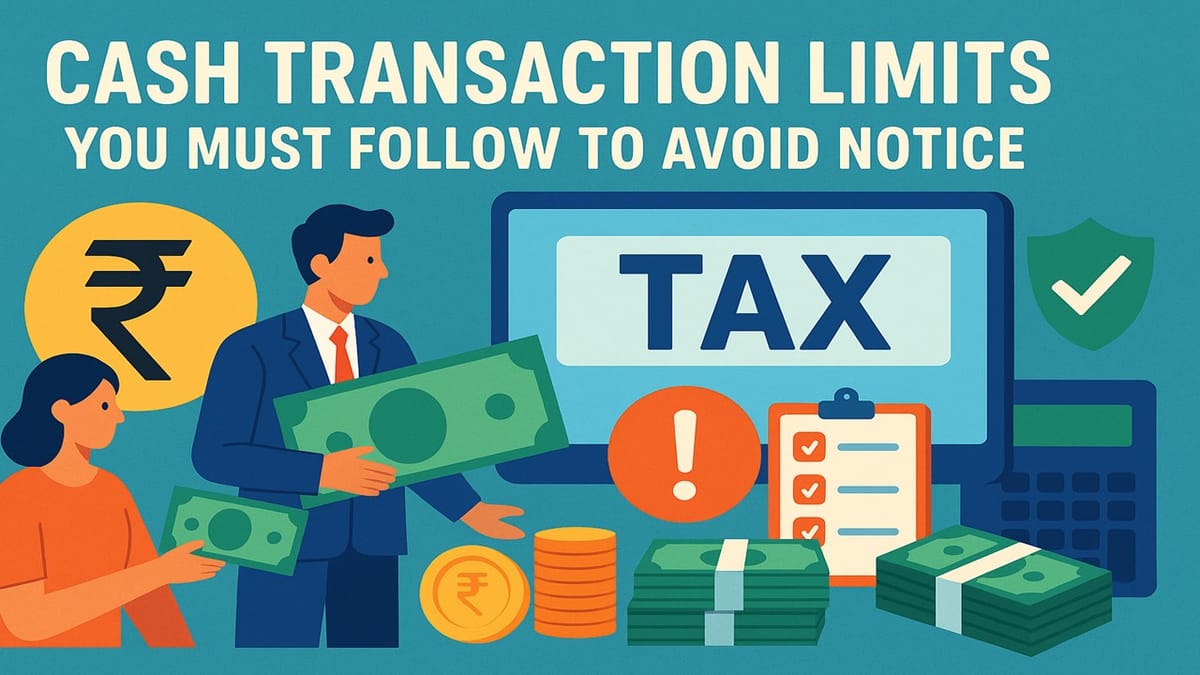

Cash Transaction Limits You Must Know to Avoid Income Tax Trouble
These days, as digital payments become more popular, the government and the Income Tax Department are keeping a close watch on cash transactions. The main aim is to promote transparency in the financial system and prevent the flow of black money or cases of tax evasion.
It’s important to know the cash transaction limits in detail to avoid penalties or serious consequences in the future because sometimes people unknowingly transfer huge amounts of cash, which can violate income tax rules.

You can use cash for transactions up to Rs. 2 lakh in a day. If you receive more than Rs. 2 lakh in cash from one person on the same day, it goes against the rules. This limit is applicable to all kinds of cash dealings, such as gifts, loans, business payments, or any other type of cash you receive, as per section 269ST of the Income Tax Act.
Example: If you give or take Rs. 3 lakh in cash from someone, the Income Tax Department can take that money away. After that, you might get a notice from them asking you to explain where the money came from and why it was in cash.
The income tax department monitors multiple types of cash transactions, such as:
However, in case someone breaks Section 269ST of the Income Tax Act, they can be fined the same amount as the cash they received. For example, if you take Rs. 2.5 lakh in cash, you may have to pay a Rs. 2.5 lakh fine. This rule applies to everyone no matter if you are a salaried person, a business owner, or a professional. Tax experts warn that even simple cash dealings can attract attention from the Income Tax Department if they go over the limit.
The government is consistently moving towards a Digital India and promoting a cashless economy. This helps reduce tax evasion and makes it easier to track the flow of money. When most transactions happen online or through banks, it becomes simple to monitor black money and maintain transparency. Digital payments also make it easier for people and businesses to keep records and file their income tax returns smoothly in the future.
To avoid getting an income tax notice, it’s important to follow some simple rules:
Businesses also need to be careful while managing their accounts. If a shopkeeper or trader accepts more than Rs. 2 lakh in cash from a customer, it breaks the income tax rules. Similarly, banks and NBFCs are required to report any large cash transactions to the authorities.

In case of any Doubt regarding Membership you can mail us at [email protected]
Join Studycafe's WhatsApp Group or Telegram Channel for Latest Updates on Government Job, Sarkari Naukri, Private Jobs, Income Tax, GST, Companies Act, Judgements and CA, CS, ICWA, and MUCH MORE!"







![Govt bars vehicle to get more than 200 Litre Diesel [Read Notification]](/cdn-cgi/image/width=320,height=195,fit=contain,format=webp,gravity=auto,metadata=none,quality=75/wp-content/uploads/2026/06/Centre-Restricts-Bulk-Diesel-Purchases-at-Petrol-Pumps-Amid-Global-Fuel-Supply-Concerns.jpg)