Meetu Kumari | May 6, 2026 |
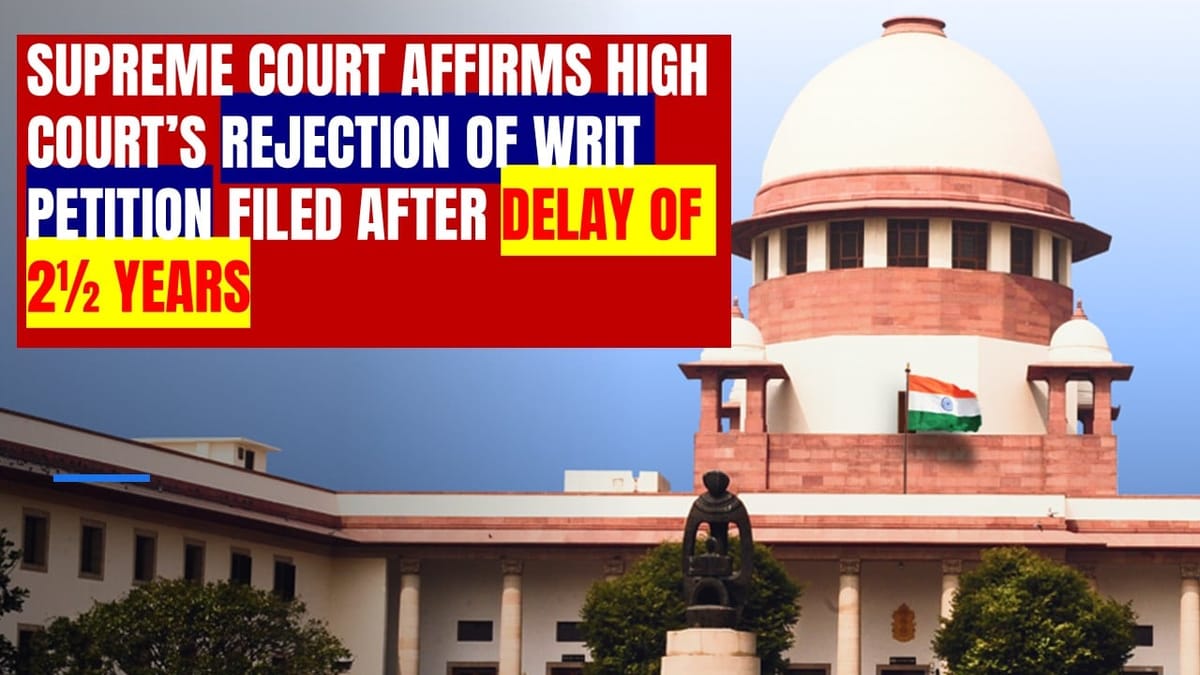

Supreme Court Affirms Rejection of Belated Writ Petition Filed After 2½ Years
The assessee, Sri Prashanth Kumar Poddaturi, questioned an order passed under the Income Tax Assessment dated 10.07.2023 and further recovery proceedings against him in a petition filed in the writ court of the High Court. It is pertinent to note that the petition was filed in the year 2026, after a delay of more than two and a half years from the date of the order passed.

The petitioner alleged initiation of coercive recovery proceedings by the department through a threat of attaching the bank accounts and prayed for either setting aside the assessment order or at least allowing him to go before the appellate forum despite the delay.
Central Issue: Whether it is possible to move a writ petition challenging the order of assessment after a considerable delay and without utilising the available alternatives under the statute?
SC’s Ruling: By declining to hear the writ petition, the High Court has made it clear that a discretionary remedy cannot be considered an alternative to statutory carelessness. In doing so, the High Court refused to exercise its powers conferred by Article 226 on account of two reasons: first, the principle of laches, and second, there exists an effective alternative remedy for the petitioner. While dealing with tax-related disputes, the judiciary tends to be reluctant to deviate from the special remedies provided by law, particularly if the individual intends to avoid the statutes of limitations.

On the one hand, the petition submitted by the petitioner was construed as an irregular approach to revive a case that had been time-barred. It must be emphasised here that the writ jurisdiction should only be exercised when it relates to manifest injustice or a flaw in the process of administration. It cannot be used as a backdoor entry for litigants who fail to comply with legislative provisions. The Supreme Court has rejected the SLP submitted by the petitioner.
To Read Full Judgment, Download PDF Given Below.

In case of any Doubt regarding Membership you can mail us at [email protected]
Join Studycafe's WhatsApp Group or Telegram Channel for Latest Updates on Government Job, Sarkari Naukri, Private Jobs, Income Tax, GST, Companies Act, Judgements and CA, CS, ICWA, and MUCH MORE!"