A New Era for Tenants and Landlords: Key Changes Under the Model Tenancy Act, 2021:

The government of India has undertaken a major revision in the nation's rental housing framework as states are increasingly adopting rules based on the Model Tenancy Act (MTA), 2021.
Know How Model Tenancy Act Is Reshaping Housing Rules
 Saloni Kumari
 Dec 5, 2025
A New Era for Tenants and Landlords: Key Changes Under the Model Tenancy Act, 2021
The government of India has undertaken a major revision in the nation's rental housing framework as states are increasingly adopting rules based on the Model Tenancy Act (MTA), 2021.
Let us discuss what the Model Tenancy Act (MTA), 2021, is. Basically, it is a central blueprint developed to form rental agreements, protect the rights of tenants, and ensure transparency among tenants and landlords.
The new law includes provisions related to security deposits, mandatory written agreements, and clear protocols for entry, inspection, repairs, and eviction. Most of these provisions are consumer-friendly. The rules have been framed keeping in mind fairness for both tenants and landlords.
Under the aforesaid act, one of the major reforms introduced is that the government has made it compulsory that all digitally stamped rent agreements must be registered online and reported to the District Rent Authority within two months of signing.
Tamil Nadu, Uttar Pradesh, Andhra Pradesh, and Assam were the first states to adopt these reforms; now Maharashtra and Karnataka have also aligned their rules with the MTA, contributing to a major shift of the country’s heavily informal rental market to a formal platform.
Security deposits
If we discuss the most tenant-friendly revision, it relates to the security deposits. As per the new rental rules, landlords cannot demand tenants' rent for more than two months as a deposit, while commercial locations are allowed to collect up to six months' rent. This reform will ultimately reduce the financial burden on tenants, especially those living in metro areas. Landlords have been required to return the complete security deposit the same day when the tenant moves out. The law says that when a tenant moves out, the landlord must return the security deposit the same day, after subtracting any valid charges.
90-Day Prior Notice and Dispute Resolution
As per the new renting rules of 2025, it has been directed to all landlords to issue a 90-day advance written notice before making any revisions to the rent amount. Importantly, they are not allowed to make any changes to the rental price for 12 months. Any disputes related to the rent will be resolved by dedicated rent courts and tribunals. The authorities have been directed to resolve the case within 60 days.
Now landlords will be able to seek eviction through the Rent Authority only on specific grounds like nonpayment of rent for two consecutive months, misuse of property, or structural alterations without consent. Eviction will no longer be a discretionary act. As per the new rental rules, a tenant cannot be evicted by the landlord without issuing a proper eviction order from the Rent Tribunal.
About Author


Saloni Kumari
Content Writer
Saloni is a Content Writer with 2+ years of experience at studycafe.in. She writes legal, taxation, and finance related content including GST, Income Tax etc. Skilled in translating complex judicial pronouncements and regulatory developments into clear, and reader-friendly articles. Experienced in covering judgements of ITAT, High Court, GSTAT, and news related to Income Tax, GST, and corporate law. She can be reached at [email protected].
Saloni is a Content Writer with 2+ years of experience at studycafe.in. She writes legal, taxation, and finance related content including GST, Income Tax etc. Skilled in translating complex judicial pronouncements and regulatory developments into clear, and reader-friendly articles. Experienced in covering judgements of ITAT, High Court, GSTAT, and news related to Income Tax, GST, and corporate law. She can be reached at [email protected].
 StudyCafe
 Delhi, Delhi, India
 2920
2920My Recent Articles
- IBA Recommends Public Sector Banks to Reduce Ambit of Physical Branch Audits to 50% of Total Business
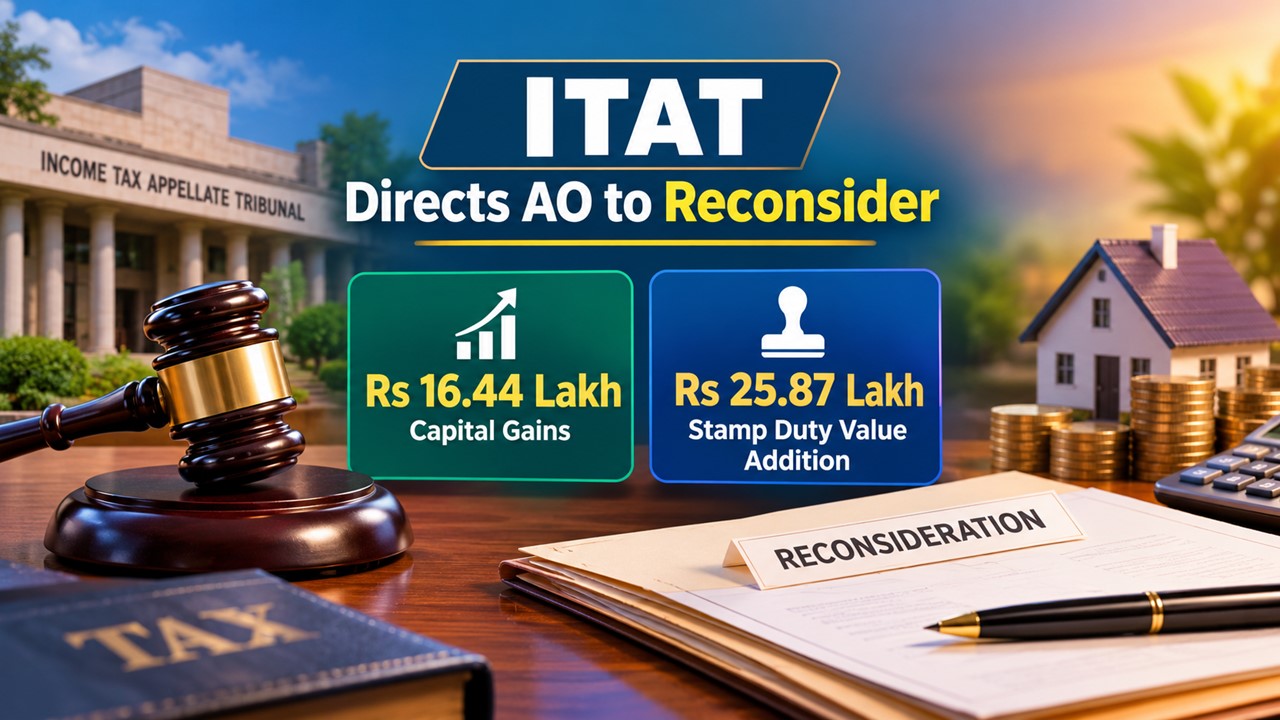
- ITAT Directs AO to Reconsider Rs 16.44 Lakh Capital Gains and Rs 25.87 Lakh Stamp Duty Value Addition
- ITAT Remands Rs 3.33 Crore Demonetisation Cash Deposit Case to AO, Directs Rs 10,000 Relief Fund Payment
- Income Tax Dept Increases Scope for Saksham Nudge Initiative to Further Include Professional Insuring Timely Compliance
- Vedanta Subsidiary ESL Steel Receives GST SCN for Rs. 2.76 Lakh IGST Demand Over Alleged RCM Short Payment
Up Next
Loading suggestions…


Recent Posts


All Posts

Tags
No tags yet.
Recent Posts
All Posts
Tags
No tags yet.