Assessee Not in Default for TDS Non-Deduction Under Court Directions:
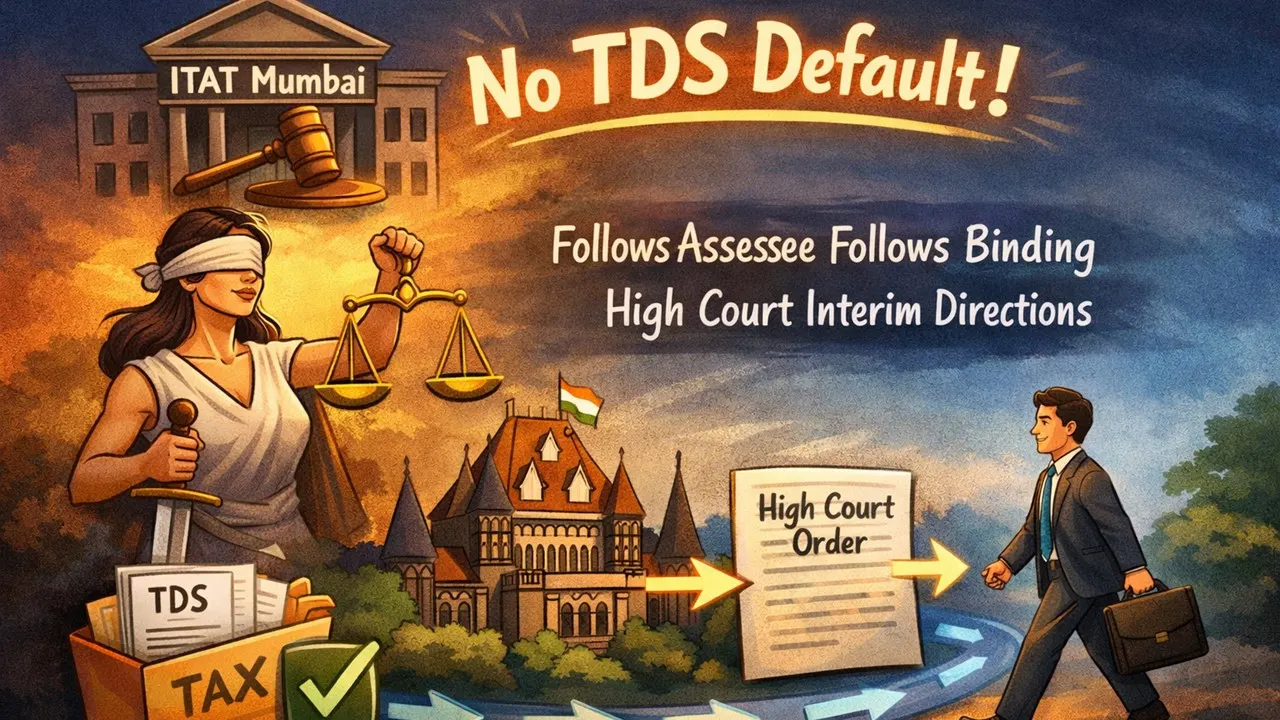
The ITAT rules no TDS default where the assessee followed binding High Court interim directions.
Compliance With Court Orders Overrides TDS Obligation Under Section 192
 Meetu Kumari
 Apr 13, 2026
Assessee Not in Default for TDS Non-Deduction Under Court Directions
The assessee, State Bank of India (Bhavnagar Para Branch), provided Leave Fare Concession (LFC) benefits to its employees and treated the same as exempt under Section 10(5) while computing TDS under Section 192. During the assessment, the Assessing Officer observed that certain employees undertook travel involving a foreign leg and no tax was deducted on such payments.
The assessee contended that LFC claims were allowed only where the designated destination was within India, and reimbursement was restricted to the shortest route. It also relied on interim orders of the Madras High Court, which had directed that LFC payments would not be treated as income for TDS purposes during the pendency of writ proceedings. However, the Assessing Officer, relying on the Supreme Court ruling dated 04.11.2022, held that the exemption under Section 10(5) is not available where travel includes a foreign leg and treated the assessee as “assessee in default” under Section 201(1), raising demand along with interest under Section 201(1A). The CIT(A) upheld this view.
Central Issue: Whether the assessee can be treated as an “assessee in default” under Section 201(1) for non-deduction of TDS on LFC payments where it acted in compliance with the interim directions of a High Court.
Tribunal's Ruling: The Tribunal held that although the issue of exemption under Section 10(5) stands settled against the assessee by the Supreme Court, the crucial question was whether TDS default could be alleged for the relevant period. It observed that the interim orders of the Madras High Court were binding on the assessee during the relevant year and explicitly directed that LFC payments would not be treated as income for TDS purposes. Therefore, the assessee was legally bound to follow such directions and could not have deducted tax without risking contempt of court.
Relying on the judgement of the Kerala High Court, the Tribunal held that when an assessee is restrained by judicial orders from deducting tax, it cannot be treated as an assessee in default under Section 201(1). The obligation to deduct tax stands overridden by binding court directions. Therefore, the Tribunal held that the assessee could not be treated as an assessee in default and directed the deletion of the demand under Section 201(1) and interest under Section 201(1A).
To Read Full Judgment, Download PDF Given Below
About Author


Meetu Kumari
Content Manager
Meetu Kumari is an Experienced Advocate and Content Writer with 4+ years of demonstrated history of working in the law practice industry. Skilled in Developing Content, Researching, and Drafting. Strong professional with a Bachelor of Science (B.Sc.) focused on Law from Gujarat National Law University.
Meetu Kumari is an Experienced Advocate and Content Writer with 4+ years of demonstrated history of working in the law practice industry. Skilled in Developing Content, Researching, and Drafting. Strong professional with a Bachelor of Science (B.Sc.) focused on Law from Gujarat National Law University.
 Studycafe
 Jodhpur, Rajasthan, India
 2264
2264My Recent Articles
- ITAT Condones 302-Day Delay, Restores Salary Assessment for Fresh VerificationPremium
- ITAT Condones Delay After Tax Consultant's Death, Restores Appeals for Fresh HearingPremium
- ITAT Remands Salary Addition, Says Taxability Depends on Salary Becoming Due, Not Mere ReceiptPremium
- ITAT Deletes TP Royalty Adjustment, Orders Fresh Review of Commission BenchmarkingPremium
- ITAT Quashes Reassessment Over Unsigned Section 148 Notice Issued to AssesseePremium
Up Next
Loading suggestions…


Recent Posts


All Posts

Recent Posts
All Posts