Banks Responsible for Fraudulent Transactions if Customer Reports Promptly: Supreme Court:
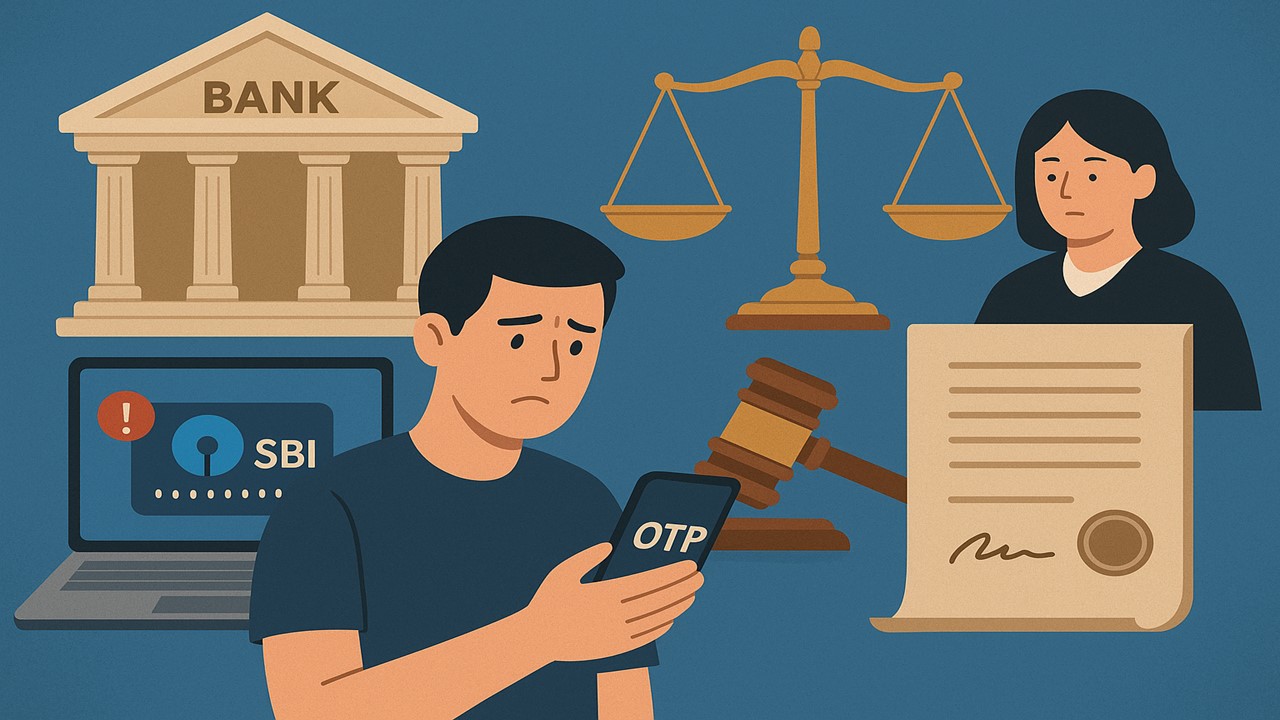
The SC held that the transactions were fraudulent and that the bank had advanced technology, using which it should have detected and prevented such transactions.
SC Holds SBI Responsible for Fraudulent Transaction; Dismisses Bank's Petition
 Nidhi
Nidhi Nov 29, 2025
Banks Responsible for Fraudulent Transactions if Customer Reports Promptly: Supreme Court
The Supreme Court dismissed an appeal filed by the State Bank of India (SBI), challenging the order of the Gauhati High Court regarding the fraudulent online transactions. The Supreme Court ruled that an online transaction, which was fraudulently made from the bank account of the respondent, Pallabh Bhowmick, was unauthorised, and that SBI was responsible for the loss.
Some online transactions were made from the bank account (State Bank of India) of the respondent, Pallabh Bhowmick, on 18.10.2021, which were unauthorised and fraudulent. The same was reported by the respondent to the bank within 24 hours. However, SBI took no action and argued that the transactions were made through a third-party app, not recommended by the bank.
When the matter reached the Gauhati High Court, it ruled in favour of Pallabh Bhowmick, holding that he was not negligent in any way. The bank was held responsible for the unauthorised and fraudulent transactions. SBI was criticised for not taking action even though the customer reported the fraud promptly. It also cited RBI guidelines, which establish customer liability based on when they report the transactions.
As per the RBI Circular dated 06.07.2017, the customer is not liable if an unauthorised transaction is due to a bank's negligence or a third-party breach if they report it to the bank on time. Since the SBI could not establish any negligence on the part of the customer, the High Court ruled in favour of the Account Holder. Aggrieved by this order, the Bank filed a Special Leave Petition before the Supreme Court.
The Supreme Court upheld the High Court's decision, saying that the transactions were fraudulent and that the bank had advanced technology, using which it should have detected and prevented such transactions. The Supreme Court held that the bank should be more vigilant.
The Supreme Court also said that the customer, or the account holder, must be vigilant and make sure that One-Time Passwords (OTPs) are not shared with any third-party app. Based on these findings, the Supreme Court dismissed the petition filed by SBI.
About Author


Nidhi
Content Writer
Nidhi is a skilled content writer specializing in personal finance. She creates clear, engaging articles on mutual funds, investments, insurance, and wealth-building strategies. With a passion for simplifying complex financial topics, Nidhi helps readers make informed money decisions with confidence. She can be reached at [email protected]
Nidhi is a skilled content writer specializing in personal finance. She creates clear, engaging articles on mutual funds, investments, insurance, and wealth-building strategies. With a passion for simplifying complex financial topics, Nidhi helps readers make informed money decisions with confidence. She can be reached at [email protected]
 Studycafe
 New Delhi, Delhi, India
 1832
1832My Recent Articles
- Karnataka High Court Gives Another Chance in GST Matter Due to Lack of Hearing
- Delay Should Be Condoned if Explanation is Unrefuted: ITAT
- Non-Service of Income Tax Notice, Ill health of taxpayer, ITAT condones Appeal filing delay
- Books of Accounts Cannot be Rejected Without Any Specific Defect: ITAT Kolkata
- Karnataka High Court Sends ITC Matter Back to GST Authorities for Reconsideration
Up Next
Loading suggestions…


Recent Posts
All Posts


Recent Posts
All Posts