Budget 2026 Income Tax Expectations: Top 4 Demands of Individual Taxpayers:
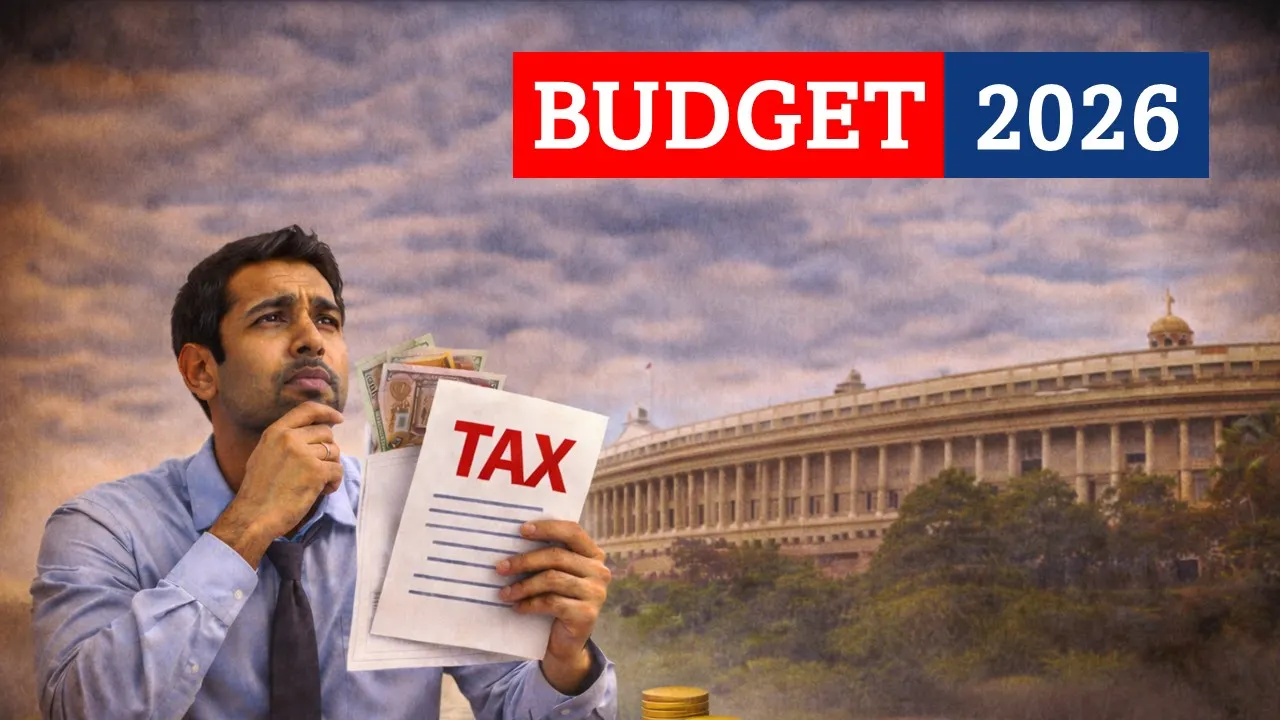
As India transitions to the new Income-tax Act from April 1, 2026, individual taxpayers expect targeted relief rather than sweeping changes
Budget 2026 Income Tax Expectations: What Individual Taxpayers Are Hoping For
 Meetu Kumari
 Jan 26, 2026
Budget 2026 Income Tax Expectations: Top 4 Demands of Individual Taxpayers
Finance Minister Nirmala Sitharaman will present the Union Budget 2026 at a time when very little feels predictable. Global markets remain jittery, regulatory frameworks are in constant change, and India itself is preparing for a paradigm shift with the new Income-tax Act scheduled to come into force from 1 April 2026.
In a year like this, few expect major tax reforms. The focus is more likely to be on keeping the system steady and ensuring that the transition to the new law is as smooth as possible. Yet, for individual taxpayers, especially salaried and middle-income earners, the Budget still carries hope. Not for sweeping changes, but for small, sensible reliefs that actually make a difference to monthly finances and day-to-day compliance.
What practical income-tax reliefs are individual taxpayers expecting from the Union Budget 2026 as India prepares for the new Income-tax Act?
With April 2026 approaching fast, it is clear that this Budget is more about preparation than reinvention. That said, some long-pending issues affecting individual taxpayers have remained unresolved for years, and many believe this is the right moment to address them, before the new law resets the system altogether.
Despite all the macroeconomic noise like the geopolitical tensions, oil price swings, and currency pressures, the core concern of salaried taxpayers remains unchanged, which is that take-home pay is under strain, and the tax system still feels more complicated than it needs to be.
A few expectations stand out.
Standard Deduction: Time for a Reality Check
The standard deduction has been stuck at Rs. 50,000 under the old tax regime and Rs. 75,000 under the new regime for some time now. In an environment where rent, school fees, healthcare, and daily expenses have all climbed sharply, these numbers feel increasingly outdated.
Many salaried employees believe that a meaningful increase i.e., closer to Rs. 1 lakh, would provide immediate relief without creating new compliance burdens. It is one of the simplest ways to put more money in employees’ hands, and therefore one of the most frequently raised demands ahead of every Budget.
Electric Vehicles and Perquisites: Rules That Don’t Fit the Reality
Electric vehicles are no longer a niche choice. Employers are actively promoting EVs under company lease programmes, often as part of broader sustainability initiatives. The problem is that the tax rules haven’t quite caught up.
Perquisite valuation for company cars is still linked to engine capacity, a concept that makes little sense in the context of electric vehicles. Both employers and employees are hoping for a separate, EV-specific valuation framework that shows how these vehicles actually function. Clear rules may reduce disputes, improve certainty, and support the broader push towards cleaner transport.
Housing Loan Interest Under the New Regime
One of the biggest psychological barriers to adopting the new tax regime is the complete denial of housing loan interest deduction, even for self-occupied properties. For many middle-class families, home loans are the single largest financial commitment they carry.
With property prices remaining high and home ownership still being actively encouraged, taxpayers are hoping the government will reconsider this position, at least to a limited extent. Allowing interest deduction for self-occupied homes could make the new regime far more palatable for genuine end-users.
More Time for Revised Returns
The 31 December deadline for filing revised or belated returns has become a pressure point, particularly for individuals with overseas income, foreign investments or cross-border employment histories.
In many cases, foreign tax filings conclude much later, leaving taxpayers with little time to reconcile numbers and report income accurately in India. Extending the revision window would reduce accidental non-compliance and reflect the realities of an increasingly global workforce.
Higher deductions, clearer valuation rules and more flexible timelines may sound modest, but for salaried taxpayers, these are the changes that matter the most. As India moves closer to the rollout of a new Income tax Act, Union Budget 2026 may not be the place for bold tax experiments. But it can still clean up long-standing hurdles and make the system a little fairer and easier to live with.

About Author


Meetu Kumari
Content Manager
Meetu Kumari is an Experienced Advocate and Content Writer with 4+ years of demonstrated history of working in the law practice industry. Skilled in Developing Content, Researching, and Drafting. Strong professional with a Bachelor of Science (B.Sc.) focused on Law from Gujarat National Law University.
Meetu Kumari is an Experienced Advocate and Content Writer with 4+ years of demonstrated history of working in the law practice industry. Skilled in Developing Content, Researching, and Drafting. Strong professional with a Bachelor of Science (B.Sc.) focused on Law from Gujarat National Law University.
 Studycafe
 Jodhpur, Rajasthan, India
 2264
2264My Recent Articles
- ITAT Condones 302-Day Delay, Restores Salary Assessment for Fresh VerificationPremium
- ITAT Condones Delay After Tax Consultant's Death, Restores Appeals for Fresh HearingPremium
- ITAT Remands Salary Addition, Says Taxability Depends on Salary Becoming Due, Not Mere ReceiptPremium
- ITAT Deletes TP Royalty Adjustment, Orders Fresh Review of Commission BenchmarkingPremium
- ITAT Quashes Reassessment Over Unsigned Section 148 Notice Issued to AssesseePremium
Up Next
Loading suggestions…


Recent Posts



All Posts



Recent Posts
All Posts