Common Reasons Why Salaried Employees Receive Income Tax Notices:
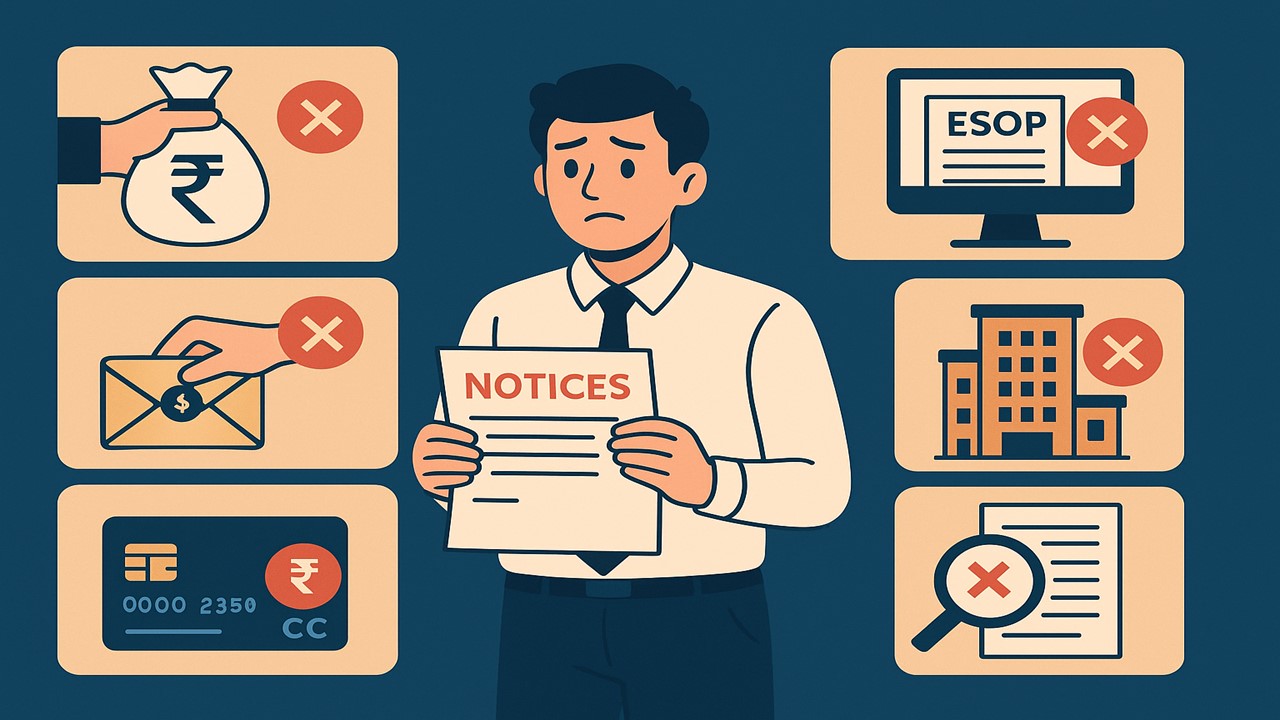
Know the common reasons why salaried taxpayers often receive income tax notices.
Here's Why Salaried Taxpayers Get Income Tax Notices
 Vanshika verma
 Dec 3, 2025
Common Reasons Why Salaried Employees Receive Income Tax Notices
Many salaried employees believe they’re unlikely to receive an income tax notice since tax is deducted at source. But in reality, even small mismatches or missed details can lead to a notice. Following are the reasons why salaried taxpayers often receive income tax notices.
Claim of Incorrect Deduction
Incorrect or Exaggerated deduction claims are a very common reason for salaried taxpayers to receive an income tax notice. With the Income Department's use of technology such as AI, mismatches between your claims and the data available from various sources such as Form 16, Form 26AS, and AIS are automatically flagged.
Donation to Political Parties
Notices are often issued to taxpayers who claimed deductions for donations made to political parties that are registered with the Election Commission (EC) but not "recognised".
ESOP from Foreign Company, FA Schedule not disclosed in ITR
If you get ESOPs (Employee Stock Options) from a foreign company and don’t report them in the ‘Foreign Assets’ section of your income tax return, the tax department may send you a notice. This is because foreign ESOPs count as foreign assets, and people who are Resident and Ordinarily Resident (ROR) must report all such assets.
Incorrect HRA, TDS not deducted on Rent paid
If you claim House Rent Allowance (HRA) but your landlord’s PAN wasn’t given or TDS wasn’t deducted when it should have been, the tax department may think your HRA claim is incorrect. This is one of the most common reasons people get an income tax notice. The Income Tax Department uses data analytics to cross-verify HRA claims with TDS records, and mismatches automatically trigger a notice.
High Value Credit Card Payment not backed by sufficient Income
High-value credit card payments that are not proportionate to your declared income are a very common reason for the Income Tax (IT) department to issue a notice or initiate scrutiny.
Mismatch in 26AS and ITR, Moonlighting and Income not shown in ITR
A mismatch between your Income Tax Return (ITR) and Form 26AS, as well as failure to declare all sources of income, such as from moonlighting, are very common reasons for salaried taxpayers to receive an income tax notice.
About Author


Vanshika verma
Content Writer
Vanshika Verma is a Content Writer with 1+ year of experience at Studycafe.in. A B.Com graduate from Delhi University, She writes articles on Finance, Tax, ICAI, GST, and the latest financial news, with a focus on making complex topics easy for readers and professionals.
Vanshika Verma is a Content Writer with 1+ year of experience at Studycafe.in. A B.Com graduate from Delhi University, She writes articles on Finance, Tax, ICAI, GST, and the latest financial news, with a focus on making complex topics easy for readers and professionals.
 Studycafe
 Delhi, Delhi, India
 2027
2027My Recent Articles
- CBI Court Jails Ex-Bank Manager 7 Years in Rs 3.61 Crore Loan Fraud Case
- Income Tax Department Imposes Rs 57.74 Crore Penalties on Emcure Pharmaceuticals for Seven Financial Years
- ICAI Releases Revised Handbook on E-Way Bill Under GST, Covering Latest Legal Changes, Portal Updates and Key Judicial Decisions
- CBI Arrests 5 in Mumbai Bribery Case After CPWD Engineer Allegedly Demanded Rs 70 Lakh for Wadala Land NOC
- CBI Registers Rs 93.44 Crore PNB Bank Fraud Case, Searches Mumbai Premises Linked to Company Directors
Up Next
Loading suggestions…


Recent Posts



All Posts



Recent Posts
All Posts