Complete, Structured Guide on the CGTMSE (Credit Guarantee Fund Trust for Micro & Small Enterprises) Scheme in India:
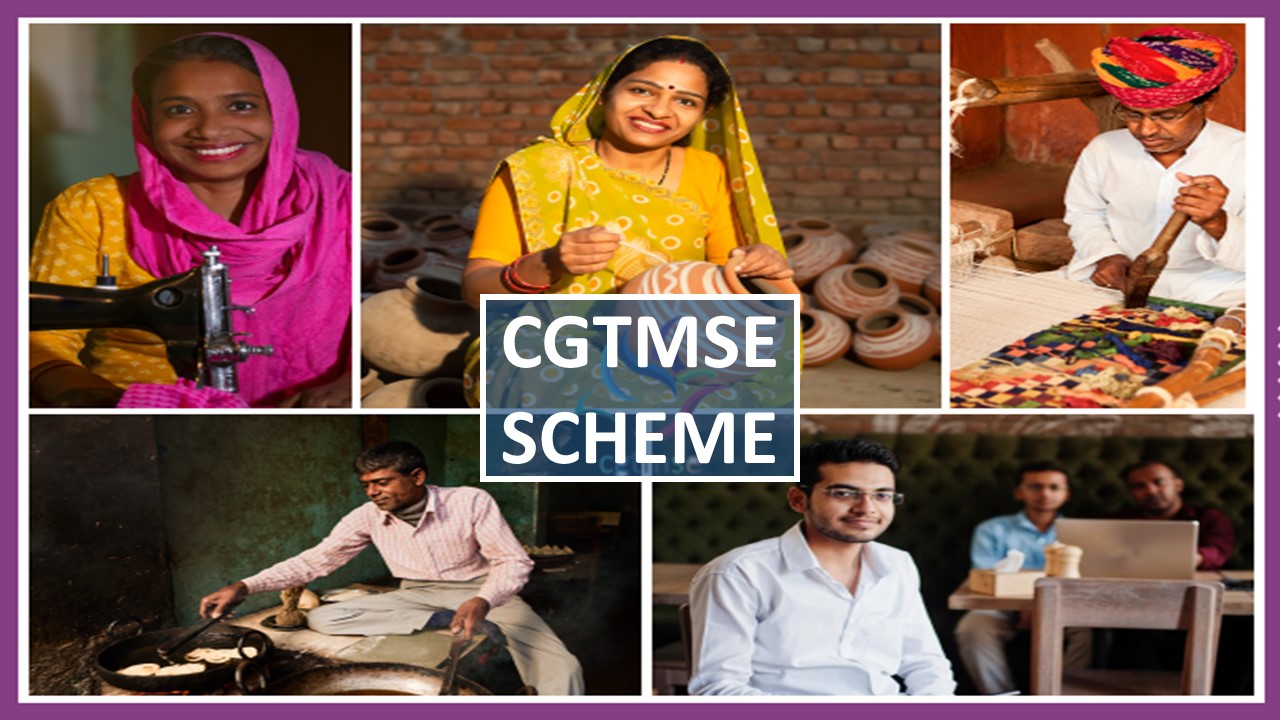
Know the detailed guide on the Credit Guarantee Fund Trust for Micro & Small Enterprises in India.
CGTMSE Scheme: Know Meaning, Objectives, Advantages and More
 CA Deepak Gupta
 Oct 8, 2025
Table of Contents

Complete, Structured Guide on the CGTMSE (Credit Guarantee Fund Trust for Micro & Small Enterprises) Scheme in India
1. Introduction & Background
- CGTMSE stands for Credit Guarantee Fund Trust for Micro & Small Enterprises.
- It was set up jointly by Ministry of MSME, Government of India and SIDBI (Small Industries Development Bank of India) in 2000 to operationalize a credit guarantee scheme for micro & small enterprises (MSEs).
- The main idea: To facilitate access to institutional credit for MSMEs, especially those which lack collateral or third-party guarantees, by providing a guarantee cover on loans extended by lending institutions (banks, NBFCs, etc.).
- Over time, the scheme has been revised, ceilings increased, and additional benefits introduced.
2. Objectives / Purpose
- Promote collateral-free credit: To reduce the dependence on security (collateral / third-party guarantee) for obtaining credit by MSMEs.
- Encourage credit flow to underserved / unserved MSMEs: Especially new enterprises, first-generation entrepreneurs, units in remote or backward regions.
- Mitigate risk for lenders: By providing a partial cover against defaults, thus incentivizing banks to lend more freely to small units.
- Support rehabilitation of stressed MSMEs: Through schemes like the “Credit Guarantee Scheme for Subordinate Debt (CGSSD)” for stressed or restructured MSMEs.
3. Key Features / Highlights
Here are the main features and recent updates:| Feature | Description / Notes |
|---|---|
| Credit Guarantee Coverage / Ceiling | The scheme provides guarantee cover for credit facilities extended by Member Lending Institutions (MLIs), without requiring collateral or third-party guarantee. |
| Ceiling of Guarantee / Credit facility | Initially, lower ceilings; over time enhanced. From 1 April 2025, the scheme allows guarantee for credit support up to ₹ 10 crore to MSEs. |
| Extent / Percentage of Guarantee | The percentage of cover (i.e. how much portion of the loan the trust will guarantee) depends on several factors (loan amount, type of enterprise, location, category). E.g.: up to ₹5 lakh – 85%, above ₹5 lakh & up to ₹50 lakh – 75%, etc. For special categories (women entrepreneurs, NE region, SC/ST, etc.), higher percentage coverage is provided. |
| Guarantee Tenure / Period | The guarantee runs through the agreed tenure of the term / composite loan. For working capital facilities alone, the cover is typically for up to 5 years (or as specified). |
| Annual Guarantee Fee (AGF) / Charges | Borrowers / lending institutions must pay an annual guarantee fee. The rate depends on the amount, risk profile, and other parameters. There are discounts for special categories or good performance. |
| Hybrid Security / Partial Collateral Option | In cases where the lending institution wants some security, a portion may be secured, and part may be covered under CGTMSE (hybrid model). |
| No double guarantees | A credit facility already backed by another guarantee / insurance / scheme is not eligible under CGTMSE. |
4. Eligibility Criteria
4.1 Eligible Borrowers (MSE Units)- Both new and existing Micro & Small Enterprises (MSEs) engaged in manufacturing or service activities (as defined under MSMED Act / relevant notifications) are eligible.
- Excluded / not eligible: agricultural activities; Self-Help Groups (SHGs); Joint Liability Groups (JLGs) (unless specified) are generally excluded.
- Borrowers must be assessed as viable / creditworthy by the lending institution.
- The borrower must not be a defaulter with any bank / financial institution.
- It is mandatory (for certain credit limits) to obtain PAN (Permanent Account Number); for credit facilities above ₹5 lakh, PAN is required.
- Udyam Registration: The borrower must have Udyam registration and the Udyam number should be provided at the time of application.
- Scheduled Commercial Banks (public, private, foreign) are eligible.
- Regional Rural Banks (RRBs) classified as “sustainable viable” by NABARD.
- NBFCs, Small Finance Banks (SFBs), etc., as per scheme guidelines. (In recent updates, more types of financial institutions have been included)
- Institutions like NSIC, NEDFi, SIDBI also allowed.
5. Coverage / Extent of Guarantee & Recent Updates
5.1 Basic Coverage Rules- The scheme guarantees a certain percentage of the amount in default up to a maximum limit.
- For micro enterprises and small credit amounts, the coverage is higher (e.g. up to 85%).
- For larger amounts, the coverage percentage may be lower.
- For special categories (women-led enterprises, SC/ST entrepreneurs, enterprises in NE region, aspirational districts, ZED certified units, persons with disability), the scheme provides higher guarantee coverage (for example 90%, or some extra %).
- For MSEs in identified credit-deficient districts (ICDD), additional 5% cover over the base cover (i.e. uplift) from Dec 15, 2023.
- Ceiling (maximum credit facility / guarantee) has been raised. As of April 1, 2025, credit guarantee up to ₹10 crore is allowed. (DCMSME)
- For guarantees above ₹1 crore, the annual guarantee fee has been reduced in the revised scheme.
- Benefit enhancements: For example, guarantee coverage for women entrepreneurs has been enhanced (from 85% to 90%) in certain cases.
- The scheme also provides for a Credit Guarantee Scheme for Subordinate Debt (CGSSD) to support promoters of stressed / restructured MSMEs (SMA-2, NPA).
6. Documents Required & Process / Steps to Avail Credit Under CGTMSE
6.1 Documents & Pre-requisites Some common documents / requirements:- Udyam registration certificate / Udyam number. (cgtmse.in)
- PAN of the enterprise / promoter (especially for credit above ₹5 lakh).
- KYC documents – identity proof, address proof of applicants / promoters.
- Business registration / incorporation documents (proprietary, partnership deed, LEI, certificate of commencement, etc.)
- Project report / business plan, financial statements, projections
- Loan application to MLI with details of amount, purpose, security (if partial), repayment schedule, etc.
- Any additional documents required by the bank / financial institution or scheme guidelines.
- Approach a Member Lending Institution (MLI): The MSE approaches a bank or eligible institution registered under CGTMSE.
- Loan appraisal / evaluation: The lender carries out credit appraisal, viability study, etc.
- Apply for guarantee cover: Once the lender sanctions or approves in-principle, a guarantee application is submitted to CGTMSE through the prescribed system / portal.
- Payment of guarantee fee: The applicant (or as per scheme, MLI / borrower) pays the required guarantee / service fee.
- Disbursement: The loan is disbursed by the MLI to the borrower.
- Monitoring / servicing: The borrower makes repayments as per schedule.
- Default / invocation: In case of default, the MLI may invoke the guarantee (subject to terms), and CGTMSE will pay the guaranteed portion.
- Settlement / claim: The MLI submits the claim to CGTMSE, and after verification, the guaranteed portion is paid to the MLI.
7. Advantages / Benefits & Risks / Limitations
7.1 Benefits- Collateral-free / security-free lending: Helps startups / small units that don’t have fixed assets.
- Encourages lending: Bank / lenders get a cushion, reducing risk, thus more willing to lend to MSMEs.
- Better access to formal finance: Reduces dependence on informal, expensive lenders.
- Inclusive development: Helps credit reach remote / backward / underserved areas and special categories (women, SC/ST, PwD).
- Boost to entrepreneurship & MSME growth: Facilitates expansion, modernization, technology upgrade, etc.
- Risk sharing: The risk of default is partially borne by CGTMSE.
- Partial coverage only: The guarantee is not for 100% of the loan; the residual risk remains with the lender.
- Default / invocation issues: Verification and claim settlement processes can delay recovery.
- Moral hazard: Lenders may become lax in credit appraisal, relying on guarantee cover.
- Awareness / reach: Many MSMEs don’t know about or avail the scheme.
- Administrative / procedural delays: Documentation, processing, scrutiny can be cumbersome.
- Premium / guarantee fee: Although relatively nominal, it adds to the cost of credit.
- Exclusion: Some activities, groups (like agriculture, SHG) are excluded.
- Cap / ceiling limits: Even with increased ceiling, very large enterprises or high credit demands may exceed the limit.
8. Recent / Upcoming Changes & Special Schemes Under CGTMSE
- As per the MSME / DCMSME official guidelines, effective 01 April 2025, the ceiling for credit guarantee has been increased to ₹10 crore.
- Annual Guarantee Fees have been revised / reduced for guarantees above ₹1 crore.
- Additional benefits for special categories (women, SC/ST, etc.), and higher coverage in identified credit-deficient districts.
- The CGSSD (Credit Guarantee Scheme for Subordinate Debt) is a scheme under CGTMSE to provide guarantee cover for subordinate debt given to promoters of stressed MSMEs (i.e. accounts in SMA-2 or NPA, being restructured) as quasi-equity funding.
9. Important Terms / Definitions
- MLI (Member Lending Institution): A bank or financial institution registered under CGTMSE to extend loans and avail guarantee cover.
- Credit facility: The sanctioned loan / credit line (could be term loan, working capital, composite).
- Guaranteed portion / extent of cover: The portion (percentage) of the loss / default amount that CGTMSE will pay to the lender, subject to maximum caps.
- Guarantee fee / Annual Guarantee Fee (AGF): The fee charged for providing the guarantee cover.
- Invocation / claim: The process by which the lender claims the guaranteed amount from CGTMSE in the event of borrower default.
- Tenure / guarantee period: The period for which the guarantee cover is valid (for term / composite or working capital).
- Hybrid security / partial collateral: When part of the loan is secured by collateral / guarantee, and part is unsecured (covered by CGTMSE).
- SMA-2: Special Mention Account – category used in banking for loans showing incipient stress. (Used in context of stressed MSMEs)
- Subordinate debt / quasi-equity: Debt that ranks below other debts in a company's capital structure, often used for restructuring.
10. Case / Example (Hypothetical)
Suppose an MSME approaches Bank X for a term loan of ₹50 lakh. The bank assesses viability and sanctions ₹50 lakh. Under CGTMSE:- Let’s say for ₹50 lakh, the guarantee cover is 75%. (The exact coverage depends on scheme rules, special categories, etc.)
- The borrower (or as per scheme, the combination of borrower and lender) pays a guarantee fee (say 0.6% annually, for example).
- Over the loan tenure, the borrower repays. If the borrower defaults (say defaults ₹10 lakh), the bank can invoke the guarantee and get 75% of ₹10 lakh = ₹7.50 lakh from CGTMSE, reducing the bank’s loss.
- The remaining portion (i.e. 25% of default or beyond the cap) is borne by the bank / lender.
11. Key Challenges, Observations & Effectiveness
- The success of CGTMSE depends heavily on efficient claim settlement, minimal delays, and clarity in rules.
- Over time, periodic adjustments to ceilings, fees, categories are needed to keep the scheme relevant.
- The scheme has helped many MSMEs access finance which would otherwise be difficult.
- Issues remain in awareness, exclusion errors, processing bottlenecks, and moral hazard.
- It must be complemented with other support measures (skill, marketing, technology) for MSME growth.
About Author

CA Deepak Gupta
Co Founder
CA Deepak Gupta,is Co-founder of Studycafe. He is Microsoft Office Specialist and Corporate Trainer of AI Tools, Microsoft Excel.
He is Finance Influencer having more than 250K followers on Social Media. CA Deepak Gupta, is Having more than 14 plus years of experience, and he has Worked with best brands Like, Hero, Wipro, Ericsson before Starting Studycafe. He has Trained more than 20000 Persons in Microsoft Excel, PowerPoint, Power BI, Google Sheet, Google Forms and Other Tools.
CA Deepak Gupta,is Co-founder of Studycafe. He is Microsoft Office Specialist and Corporate Trainer of AI Tools, Microsoft Excel.
He is Finance Influencer having more than 250K followers on Social Media. CA Deepak Gupta, is Having more than 14 plus years of experience, and he has Worked with best brands Like, Hero, Wipro, Ericsson before Starting Studycafe. He has Trained more than 20000 Persons in Microsoft Excel, PowerPoint, Power BI, Google Sheet, Google Forms and Other Tools.
 StudyCafe
 Delhi, Delhi, India
 3423
3423My Recent Articles
- UltraTech Cement slapped with Rs. 808.78 Cr Income Tax Demand
- GST: High Court upheld constitutional validity of Section 16(2)(c), asks government to address ITC issues of genuine purchasers
- Old vs New Tax Regime for Tax Year 2026-27
- High court criticizes Income Tax Department for not releasing ITR Utilities despite 11 years of directions
- Fino Payments Bank CEO Rishi Gupta Gets Bail in GST Case, Bank Clarifies No Direct Link
Up Next
Loading suggestions…


Recent Posts
All Posts

Tags
No tags yet.
Recent Posts
All Posts
Tags
No tags yet.