Delhi HC Dismisses GST Plea: No Violation of Natural Justice or Parallel Proceedings Found:
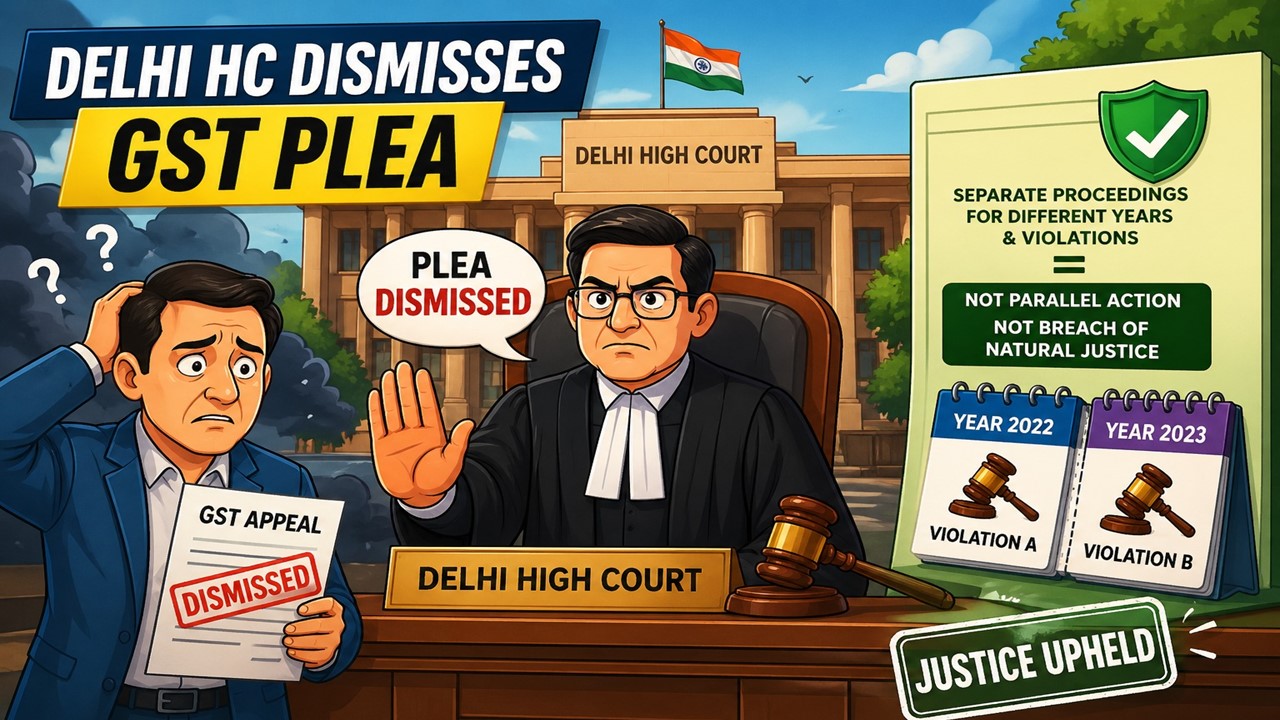
The Delhi HC dismissed the GST plea, holding that separate proceedings for different years and violations do not amount to parallel action or breach of natural justice.
High Court Rejects ‘Parallel Proceedings’ Argument
 Saloni Kumari
 Apr 27, 2026
Delhi HC Dismisses GST Plea: No Violation of Natural Justice or Parallel Proceedings Found
The Delhi High Court has dismissed a petition of the company filed on the grounds of contravention of the principles of natural justice and provisions of initiating parallel proceedings. The court did not find any of these claims valid during the verification of the case.
The dispute in the present case revolves around two separate tax proceedings. In the first one, a show cause notice (SCN) dated May 22, 2024, was issued to the petitioner, M/S Ramada Engineering Industry, under the State Goods and Services Tax (GST) Act for the Financial Year 2019-20, proposing a demand amounting to Rs 15.72 lakh on the grounds of incorrect declaration of tax liabilities by the petitioner in its annual return in Form GSTR-9.
In the second one, the tax authorities issued another show cause notice (SCN), dated June 27, 2025, passed under Section 74 of the Central Goods and Services Tax Act, 2017, for the Financial Year 2018-19, alleging fraudulent ITC claims using fake invoices from a non-existent firm, with a demand of Rs 12.11 lakh.
Before the high court, the petitioner argued that the second proceedings were unfair and illegal because, as per the law, tax authorities cannot run parallel proceedings on a common issue. Further claimed that it was not granted a proper opportunity for a hearing.
However, when the court analysed the case, it rejected the petitioner's arguments, clarifying that both cases concerned different issues. Both pertained to different financial years and flagged different violations (Section 73 deals with non-fraud cases like errors, while Section 74 applies to serious cases involving fraud or misrepresentation). Since both cases were related to different concerns and time periods, the argument of parallel proceedings cannot be considered.
On the issue of no fair chance of hearing, the court noted that the reply of the petitioner was considered by the tax authorities; consequently, there was no violation of the principles of natural justice. Accordingly, the writ petition was dismissed.
About Author


Saloni Kumari
Content Writer
Saloni is a Content Writer with 2+ years of experience at studycafe.in. She writes legal, taxation, and finance related content including GST, Income Tax etc. Skilled in translating complex judicial pronouncements and regulatory developments into clear, and reader-friendly articles. Experienced in covering judgements of ITAT, High Court, GSTAT, and news related to Income Tax, GST, and corporate law. She can be reached at [email protected].
Saloni is a Content Writer with 2+ years of experience at studycafe.in. She writes legal, taxation, and finance related content including GST, Income Tax etc. Skilled in translating complex judicial pronouncements and regulatory developments into clear, and reader-friendly articles. Experienced in covering judgements of ITAT, High Court, GSTAT, and news related to Income Tax, GST, and corporate law. She can be reached at [email protected].
 StudyCafe
 Delhi, Delhi, India
 2918
2918My Recent Articles
- ITAT Remands Rs 3.33 Crore Demonetisation Cash Deposit Case to AO, Directs Rs 10,000 Relief Fund Payment
- Income Tax Dept Increases Scope for Saksham Nudge Initiative to Further Include Professional Insuring Timely Compliance
- Vedanta Subsidiary ESL Steel Receives GST SCN for Rs. 2.76 Lakh IGST Demand Over Alleged RCM Short Payment
- Good News! ICAI Opens One-Day Window for Submission of MEF Form 2026-27 at meficai.org
- New WhatsApp Fraud Alert! Can Replying ‘NO’ Put Your Bank Account at Risk? CA Allegedly Loses Rs 1.70 Lakh
Up Next
Loading suggestions…


Recent Posts


All Posts


Recent Posts
All Posts