Delhi High Court Gives Relief to Taxpayer by Deleting 20% Deposit Condition in TDS Issue:
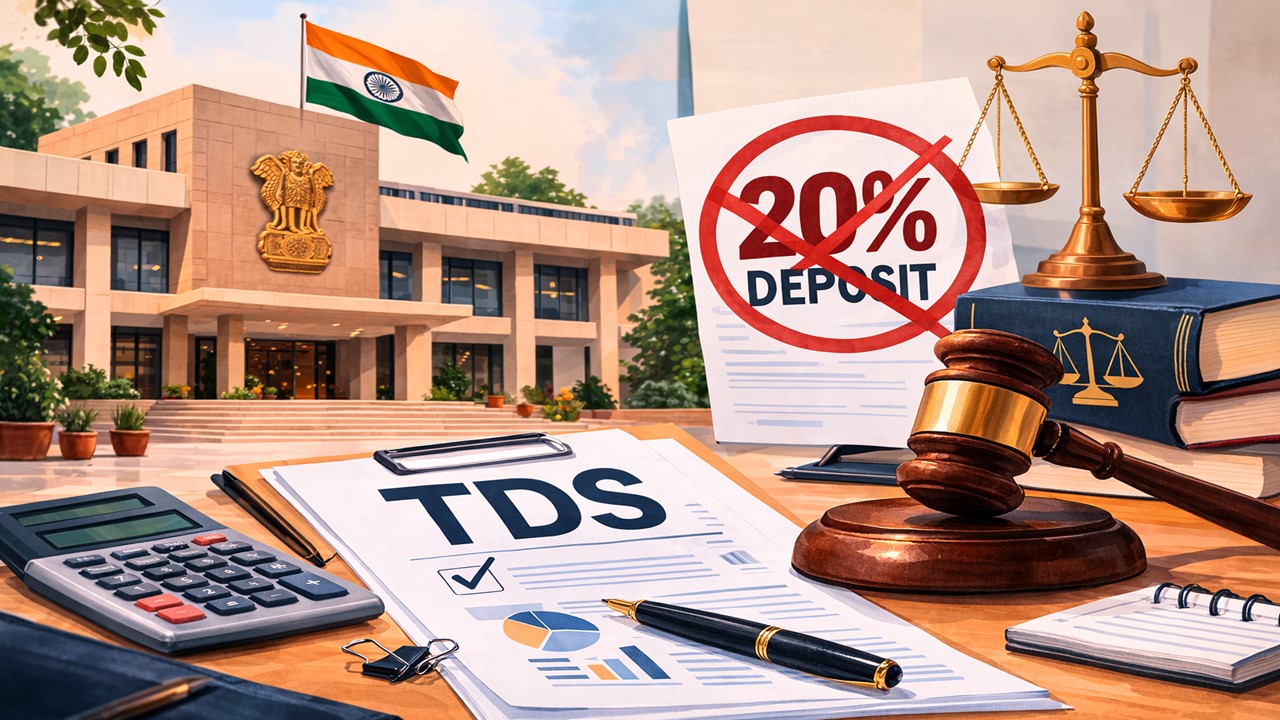
The Delhi High Court noted that the ITAT had already held that the petitioner was not required to deduct TDS in such a situation, and such a finding should have been considered by the AO.
Delhi High Deletes 20% Deposit Condition in TDS Issue
 Nidhi
Nidhi Mar 15, 2026
Delhi High Court Gives Relief to Taxpayer by Deleting 20% Deposit Condition in TDS Issue
The Delhi High Court has set aside an order that required the assessee to deposit 20% of the tax demand as a condition for granting a stay during the appeal process.
The tax department had earlier passed an order against the petitioner, treating the company as an "assessee in default" for allegedly not deducting TDS on certain payments. Therefore, the department issued a tax order raising a demand and interest under Section 201(1A) of the Income Tax Act.
The petitioner argued that in its own case for assessment years 2018-19 and 2019-2020, the petitioner was not held to be in default. Further, in its own case for the very same assessment year, the tribunal has held that the assessee was not required to deduct TDS.
The appellate authority had disposed of the stay application filed by the assessee but imposed a condition that the petitioner must deposit 20% of the total outstanding demand for the remaining demand to remain stayed.
The petitioner approached the Delhi High Court, arguing that the authorities ignored the ITAT's ruling and earlier orders that had already held the petitioner not to be in default.
The Delhi High Court noted that the ITAT had already held that the petitioner was not required to deduct TDS in such a situation, and such a finding should have been considered by the AO.
Therefore, the High Court ruled that the petitioner could not be forced to deposit 20% of the demand. It therefore quashed the orders dated and granted a full stay on the tax demand during the pendency of the appeal.
About Author


Nidhi
Content Writer
Nidhi is a skilled content writer specializing in personal finance. She creates clear, engaging articles on mutual funds, investments, insurance, and wealth-building strategies. With a passion for simplifying complex financial topics, Nidhi helps readers make informed money decisions with confidence. She can be reached at [email protected]
Nidhi is a skilled content writer specializing in personal finance. She creates clear, engaging articles on mutual funds, investments, insurance, and wealth-building strategies. With a passion for simplifying complex financial topics, Nidhi helps readers make informed money decisions with confidence. She can be reached at [email protected]
 Studycafe
 New Delhi, Delhi, India
 1832
1832My Recent Articles
- Karnataka High Court Gives Another Chance in GST Matter Due to Lack of Hearing
- Delay Should Be Condoned if Explanation is Unrefuted: ITAT
- Non-Service of Income Tax Notice, Ill health of taxpayer, ITAT condones Appeal filing delay
- Books of Accounts Cannot be Rejected Without Any Specific Defect: ITAT Kolkata
- Karnataka High Court Sends ITC Matter Back to GST Authorities for Reconsideration
Up Next
Loading suggestions…


Recent Posts

All Posts

Tags
Recent Posts
All Posts