Delhi High Court Quashes Time-Barred GST Order Passed Under Section 74:
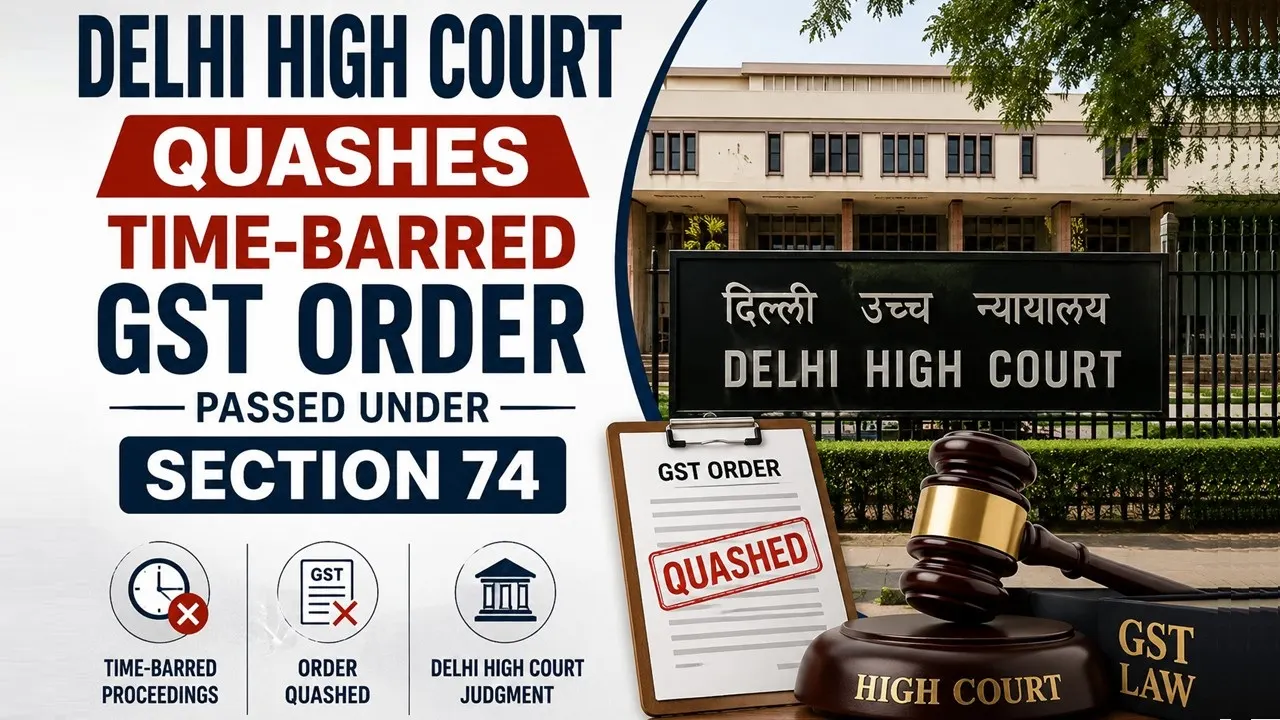
Delhi High Court quashes GST adjudication order passed beyond mandatory limitation under Section 74(10).
Petitioner argued adjudication order was barred by statutory limitation period
 Meetu Kumari
 May 19, 2026
The High Court of Delhi, in Deepak Sharma vs. Commissioner, Department of Trade and Taxes, Govt. of NCT of Delhi [W.P.(C) 6449/2026], delivered its judgment on May 12, 2026. The Court quashed a GST demand order passed under Section 74 of the CGST Act after holding that the adjudication order was issued beyond the mandatory statutory limitation period prescribed under Section 74(10).
“The mandate of limitation under Section 74(10) is mandatory and cannot be relaxed.”
The petitioner challenged the Order-in-Original dated December 30, 2025 along with Form GST DRC-07 issued for FY 2017-18, whereby a total demand of Rs.27.13 lakh was confirmed against his proprietorship concern, M/s Days Trading Co. The proceedings arose from a show cause notice dated September 22, 2021 alleging wrongful availment of Input Tax Credit and non-compliance with discrepancies communicated through ASMT-10.

Before the High Court, the petitioner contended that the impugned order was barred by limitation under Section 74(10) of the CGST Act. It was argued that the provision mandates passing of adjudication order within five years from the due date of furnishing annual return for the relevant financial year. Since the due date for filing annual return for FY 2017-18 had been extended to February 5, 2020, the outer limitation for passing the adjudication order expired on February 5, 2025.

The petitioner submitted that the adjudication order dated December 30, 2025 had been passed more than eleven months beyond the statutory limitation period, rendering the authority functus officio and devoid of jurisdiction to proceed further.
Significantly, the Revenue also fairly admitted before the Court that the impugned order had indeed been passed beyond the limitation period prescribed under Section 74(10) of the CGST Act. The Court pointed out that:
The Division Bench observed that once the statutory limitation period expires, the adjudicating authority loses jurisdiction to pass any order under Section 74 of the CGST Act.
After examining Section 74(10), the Court held that the statutory timeline prescribed for adjudication is mandatory in nature and cannot be diluted. Since the due date for annual return for FY 2017-18 stood extended till February 5, 2020, the last permissible date for passing the order was February 5, 2025. The adjudication order passed on December 30, 2025 was therefore clearly time-barred.
Holding that the impugned order suffered from lack of jurisdiction on account of statutory limitation, the High Court allowed the writ petition and quashed the Order-in-Original along with Form GST DRC-07.
The Court further held that once limitation under Section 74(10) lapses, the proper officer becomes functus officio and cannot legally sustain adjudication proceedings thereafter.
To Read Full Judgment, Download PDF Given Below.
About Author


Meetu Kumari
Content Manager
 Studycafe
 Jodhpur, Rajasthan, India
 2264
2264My Recent Articles
- ITAT Condones 302-Day Delay, Restores Salary Assessment for Fresh VerificationPremium
- ITAT Condones Delay After Tax Consultant's Death, Restores Appeals for Fresh HearingPremium
- ITAT Remands Salary Addition, Says Taxability Depends on Salary Becoming Due, Not Mere ReceiptPremium
- ITAT Deletes TP Royalty Adjustment, Orders Fresh Review of Commission BenchmarkingPremium
- ITAT Quashes Reassessment Over Unsigned Section 148 Notice Issued to AssesseePremium
Loading suggestions…


Recent Posts


All Posts

Recent Posts
All Posts