Directors Not Responsible for Tax Recovery After Liquidation: Madras High Court:
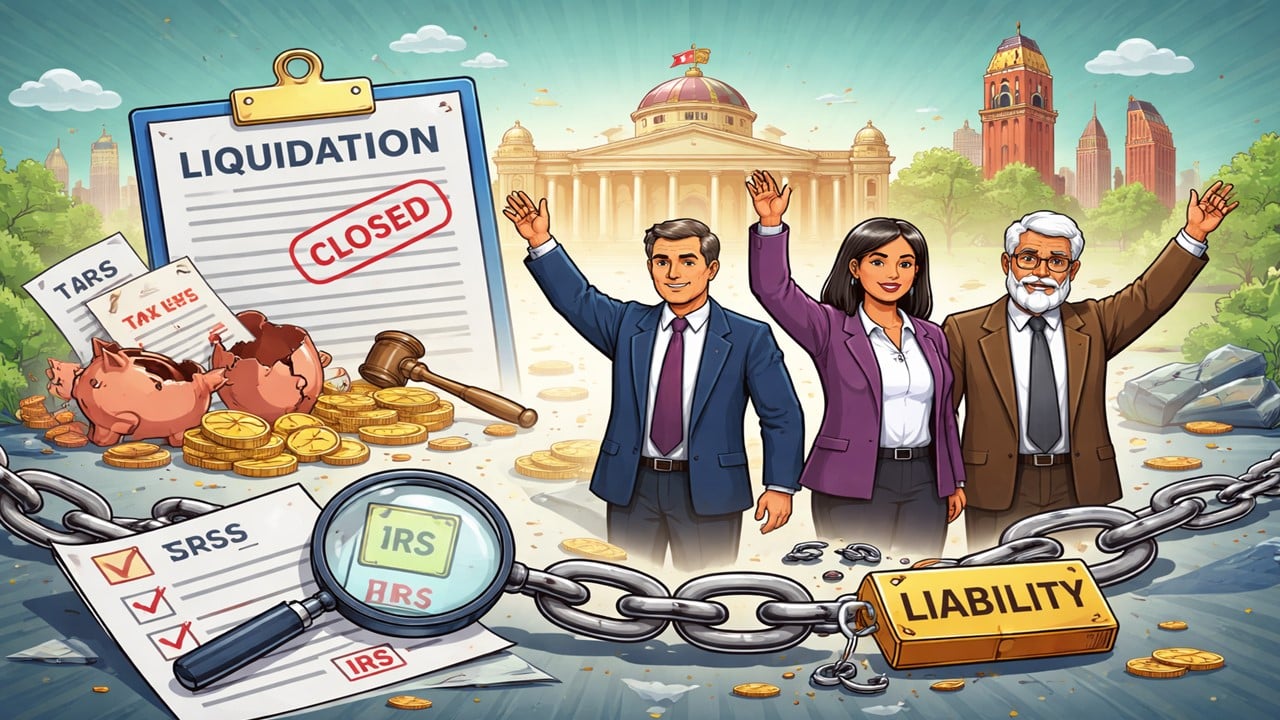
The Court allowed the petitioners to file an application with the tax authorities to remove themselves from the recovery order within 15 days.
Court Lifts Personal Bank Accounts of Directors in Case of Liquidation
 Nidhi
Nidhi Mar 12, 2026
Directors Not Responsible for Tax Recovery After Liquidation: Madras High Court
The Madras High Court has ruled that directors of a company under liquidation are not liable for tax recovery if the non-recovery was not due to their negligence
The company, Infinitas Energy Solutions Pvt. Ltd., and its director (petitioner) were under liquidation, and the company had entered insolvency proceedings under the Insolvency and Bankruptcy Code (IBC), 2016. Therefore, an Interim Resolution Professional (IRP) was appointed for the company. Later, the company was ordered to be liquidated, and the same professional was appointed as its liquidator.
The tax authorities initiated recovery proceedings by attaching the personal bank accounts of the directors, claiming that they were liable under Section 88(3) of the GST enactments. This was challenged by the directors in the Madras High Court.
The petitioners argued that they were no longer responsible for the company's affairs, as the liquidator was in charge.
The High Court observed that the tax had already been recovered from the company's credit ledger and said that there was no justification for attaching the directors' personal bank accounts.
Section 88 of the GST Act makes directors liable for the company's unpaid taxes, interest or penalties if the dues cannot be recovered from the company, unless they prove to the commissioner that non-recovery was not due to their negligence or misfeasance.
The Court allowed the petitioners to file an application with the tax authorities to remove themselves from the recovery order within 15 days. The authorities were directed to pass orders within 15 days, giving the petitioners an opportunity to be heard.
The court lifted the attachments, subject to the order to be passed.
About Author


Nidhi
Content Writer
Nidhi is a skilled content writer specializing in personal finance. She creates clear, engaging articles on mutual funds, investments, insurance, and wealth-building strategies. With a passion for simplifying complex financial topics, Nidhi helps readers make informed money decisions with confidence. She can be reached at [email protected]
Nidhi is a skilled content writer specializing in personal finance. She creates clear, engaging articles on mutual funds, investments, insurance, and wealth-building strategies. With a passion for simplifying complex financial topics, Nidhi helps readers make informed money decisions with confidence. She can be reached at [email protected]
 Studycafe
 New Delhi, Delhi, India
 1832
1832My Recent Articles
- Karnataka High Court Gives Another Chance in GST Matter Due to Lack of Hearing
- Delay Should Be Condoned if Explanation is Unrefuted: ITAT
- Non-Service of Income Tax Notice, Ill health of taxpayer, ITAT condones Appeal filing delay
- Books of Accounts Cannot be Rejected Without Any Specific Defect: ITAT Kolkata
- Karnataka High Court Sends ITC Matter Back to GST Authorities for Reconsideration
Up Next
Loading suggestions…


Recent Posts
All Posts

Recent Posts
All Posts