Do I Need to File ITR if My Tax Liability is Nil?:
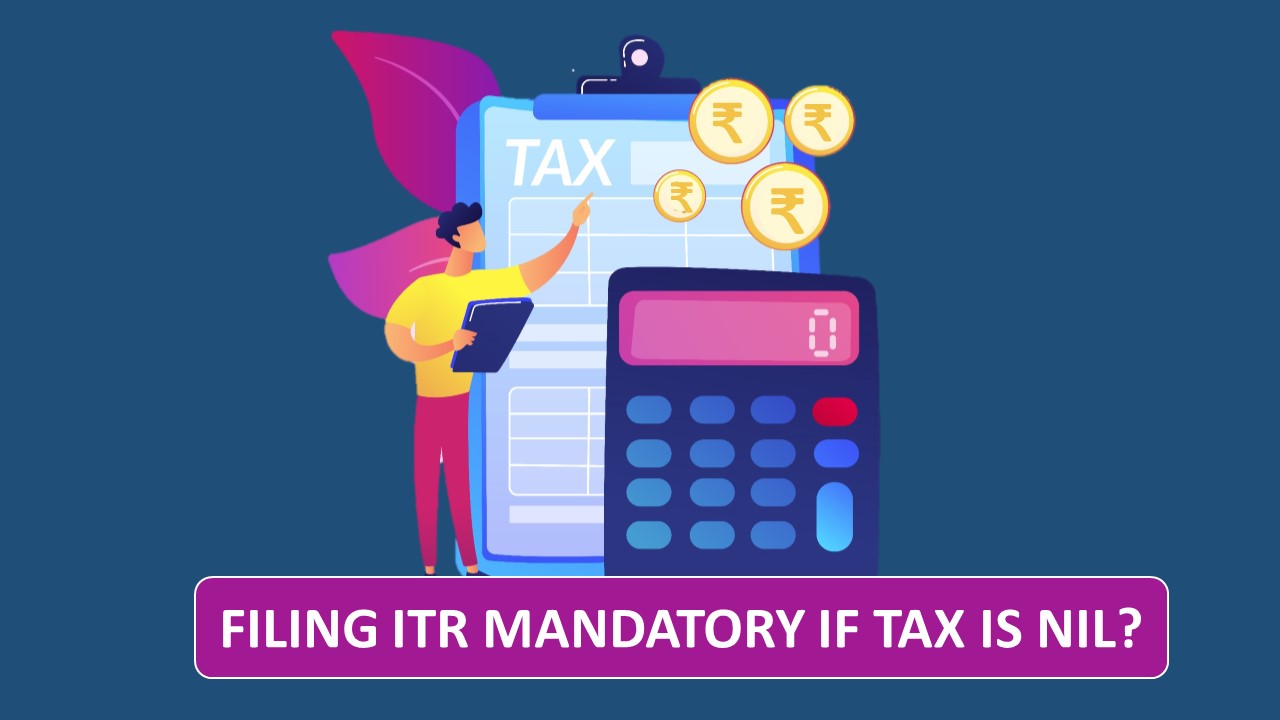
Even if your tax is zero after claiming the rebate under Section 87A, you may still have to file your ITR.
Is ITR Filing Mandatory with Zero Tax Liability?
 Nidhi
Nidhi Aug 21, 2025
Table of Contents

Do I Need to File ITR if My Tax Liability is Nil?
Income Tax Return (ITR) Filing is not just about paying taxes, but it is also about declaring your income. It is not a burden but a responsibility of all taxpayers to stay compliant with the law. If your income is above the basic exemption limit, then you are required to file an ITR. However, many Taxpayers skip ITR filing, thinking that they have no tax to pay. But the truth is that, even if your tax is zero after claiming the rebate under Section 87A, you may still have to file your ITR.
As mentioned earlier, ITR filing is mandatory if your income is more than the specified limit. The tax rebate under Section 87A is given only when you file your ITR. So even if your income is eligible for the rebate, your tax will not be considered zero until you actually file the return and claim it.
Who Needs to File ITR?
The requirement of ITR filing depends on your income and which tax regime you are opting for. If you are filing a return under the old tax regime, then you must file the ITR if your income is more than Rs 2.5 Lakh. However, under the new tax regime, ITR filing is required if the income is above Rs 3 lakh. So, if your total income (before deductions) is above these limits, you must file your ITR, even if your final tax payable is zero.What Is Section 87A Rebate?
Section 87A is a tax rebate offered to eligible taxpayers that aims to reduce the tax liability of taxpayers. The rebate limits under section 87A (before standard deduction) are as follows:- For Financial Year 2024-25, the rebate under Section 87A limit is Rs 7 lakh, which means that if your income is up to Rs 7 lakh, your tax liability will be nil.
- For Financial Year 2025-26, the tax 87A rebate is Rs 12 Lakh, which means that if you have income up to Rs 12 lakh, you do not have to pay any taxes on it.
Importance of ITR Filing
The ITR filing offers the following benefits for taxpayers:- It serves as genuine proof of your income.
- It allows you to claim TDS refunds, such as TDS on FDs, pensions, dividends, etc.
- The ITR Copy is required for applying for a Visa or to get loan approval.
- It allows you to carry forward losses.
What Happens If You Do Not File ITR on Time?
If an eligible taxpayer does not file ITR on time, they will have to face penalties and a Late Filing Fee (Sec 234F) of up to Rs 5,000 for filing a belated return. After the deadline for filing a belated return (usually 31st December of the AY), only an ITR-U (updated return) can be filed, but you may need to pay additional interest.Conclusion
All the eligible taxpayers whose income exceeds the basic exemption limit must file ITR even if their tax liability is zero after the rebate under section 87A. The rebate just reduces your tax liability and does not remove your filing responsibility. Taxpayers still have to file ITR before the ITR due date ends.About Author


Nidhi
Content Writer
Nidhi is a skilled content writer specializing in personal finance. She creates clear, engaging articles on mutual funds, investments, insurance, and wealth-building strategies. With a passion for simplifying complex financial topics, Nidhi helps readers make informed money decisions with confidence. She can be reached at [email protected]
Nidhi is a skilled content writer specializing in personal finance. She creates clear, engaging articles on mutual funds, investments, insurance, and wealth-building strategies. With a passion for simplifying complex financial topics, Nidhi helps readers make informed money decisions with confidence. She can be reached at [email protected]
 Studycafe
 New Delhi, Delhi, India
 1832
1832My Recent Articles
- Karnataka High Court Gives Another Chance in GST Matter Due to Lack of Hearing
- Delay Should Be Condoned if Explanation is Unrefuted: ITAT
- Non-Service of Income Tax Notice, Ill health of taxpayer, ITAT condones Appeal filing delay
- Books of Accounts Cannot be Rejected Without Any Specific Defect: ITAT Kolkata
- Karnataka High Court Sends ITC Matter Back to GST Authorities for Reconsideration
Up Next
Loading suggestions…


Recent Posts


All Posts
Tags
No tags yet.
Recent Posts
All Posts
Tags
No tags yet.