Do People Above 80 Need to File ITR? Key Rules and Exemptions Explained:
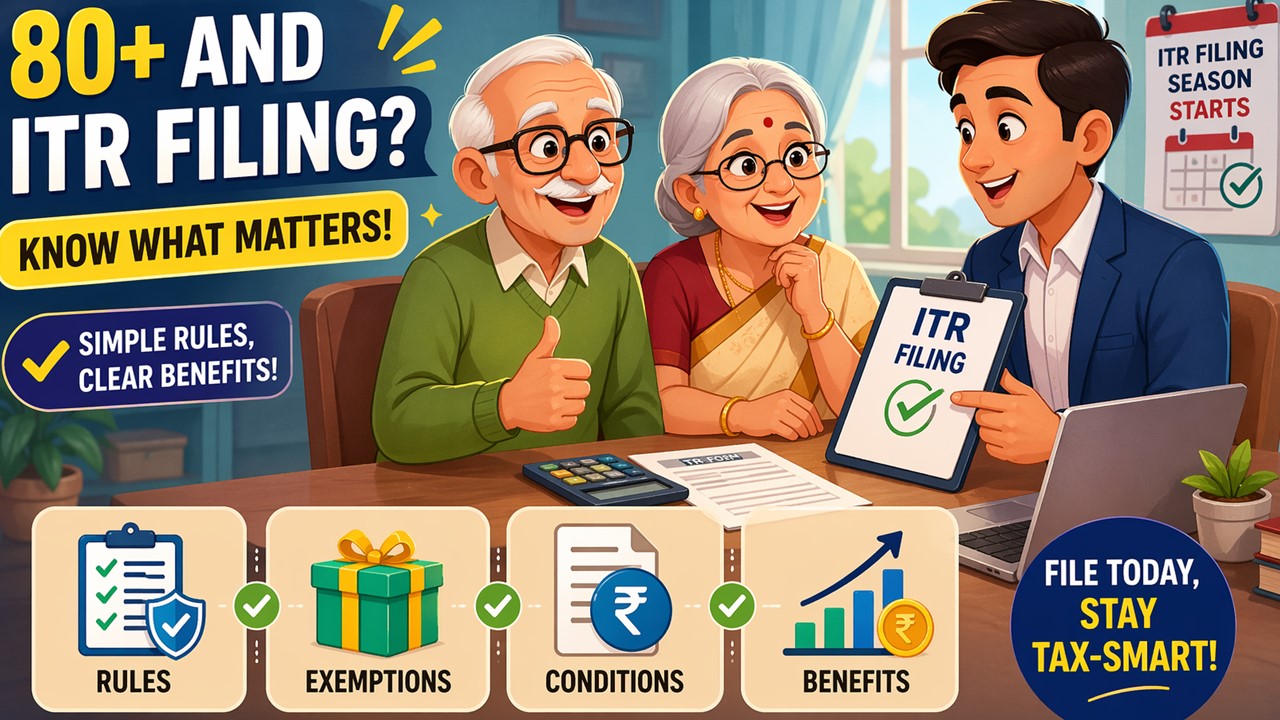
As the ITR filing season approached, it explained whether people aged 80 and above needed to file returns, highlighting rules, conditions, exemptions, and benefits in simple, clear terms.
ITR Rules for People Above 80: What You Must Know
 Kashish Bhardwaj
 Apr 23, 2026
Do People Above 80 Need to File ITR? Key Rules and Exemptions Explained
As the ITR filing season for AY 2026-27 approaches, numerous individuals have a common question: Do individuals aged 80 or above actually need to file an income tax return? The answer isn’t straightforward; it really depends on their personal situation and the type of income they earn.
Who is called a super senior citizen?
In income tax rules, age matters. People between 60 and 80 years old are known as senior citizens. Once someone turns 80 or above during the financial year, they fall into the super senior citizen category. They do get a few extra benefits, like the option to file returns in paper form if they are not comfortable with online filing.
When filing an ITR may not be required.
Some senior citizens are allowed to skip filing an ITR under a special rule under Section 194P. But this applies only in specific cases. The person must be 75 years old or a resident of India, and their income should come from two sources: a pension and interest. Also, both of these must come from the same bank.
They need to submit a declaration to the bank, and after that, the bank takes care of everything, calculating income, applying deductions, and deducting tax. In such cases, there is no need to file a return separately.
Why most people above 80 still need to file
In reality, this rule does not cover many people. Most super-senior citizens have income from more than just a pension and bank interest. For example, if someone earns rent, has capital gains, or gets interest from multiple banks, they will still need to file an ITR. Another point is that the bank must be a government-specified bank. If it is not, the benefit cannot be used.
No need to pay advance tax.
One relief available is that senior and super-senior citizens do not have to pay advance tax as long as they don’t have income from a business or profession. This makes things simpler and avoids extra penalties under Sections 234B and 234C.
Extra tax benefits available
Super senior citizens also get higher deductions in some areas. Up to a Rs 50,000 deduction on interest income under Section 80TTB can be claimed by them. For health insurance, they can claim up to Rs 50,000 under Section 80D. In case of certain serious illnesses, Section 80DDB allows a deduction of up to Rs 1 lakh.
In other words, it’s not correct to assume that people above 80 don’t need to file an ITR. The exemption exists, but only under strict conditions. In most real situations, especially when income comes from different sources, filing a return is still required. It’s always safer to check your eligibility instead of skipping it.

About Author


Kashish Bhardwaj
Content Writer
 StudyCafe
 Delhi, Delhi, India
 176
176My Recent Articles
- Supreme Court Judge Strength to Increase from 33 to 37 for Faster Justice
- Builder Cleared of Profiteering Charges After Passing Excess ITC Benefit to Homebuyers: GSTAT
- Jubilant Ingrevia to Challenge Rs 2.03 Crore GST Demand Before GSTAT
- Rs 70 Crore Claim Row: Ex-CFO Gobind Jain Moves Bombay High Court Against IndusInd Bank Over Alleged Wrongful Dismissal
- Dream Sports Launches Dream Street: AI-Powered Entry into India’s Retail Broking Market
Up Next
Loading suggestions…


Recent Posts

All Posts

Recent Posts
All Posts