Doctrine of Merger Not Applicable: Orders u/s 143(1) and 154 Separately Appealable:
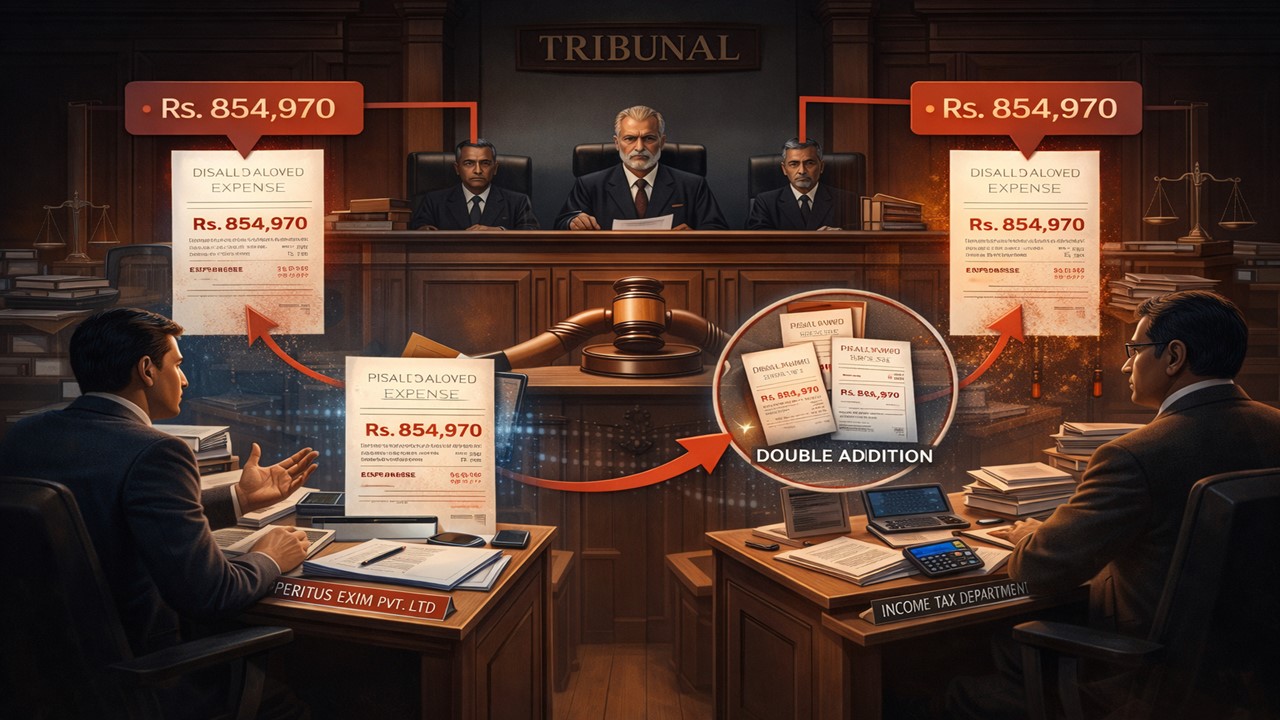
ITAT remands the double disallowance issue to AO, rejects CIT(A)’s view on the doctrine of merger, and allows the assessee’s appeal.
ITAT Allows Assessee’s Appeal for Statistical Purposes in Double Addition Case
 Vanshika verma
 Feb 14, 2026
Doctrine of Merger Not Applicable: Orders u/s 143(1) and 154 Separately Appealable
ITAT Delhi remanded the matter to the AO to verify and rectify the alleged double disallowance of Rs. 854,970, allowing the assessee’s appeal for statistical purposes.
The present appeal has been filed by Peritus Exim Pvt. Ltd against the DCIT in ITAT Delhi, against the order passed by CIT(A), dated June 24, 2025, for AY 2020-21.
The assessee filed its income tax return for AY 2020-21, declaring an income of about Rs. 39,387,570 on January 27, 2021. While filing the return, the company itself disallowed certain expenses amounting to Rs. 854,970 in its computation of income. The return of income was processed under section 143(1) of the Act.
Later, the assessee noticed that AO disallowed the same amount of Rs. 8,54,970, but in a different clause of the return of income. This resulted in a double disallowance of the same expense and created a tax demand. The assessee paid the demand of about Rs.2,90,398, and later another amount of Rs.2,98,854 was adjusted from its refund of the next year.
The assessee filed a rectification application under section 154 after realising that the same expense had been disallowed twice. However, the AO passed a rectification order again, raising the demand.
The assessee then approached CIT(A). However, the CIT(A) dismissed the appeal, stating that since the addition was originally made under section 143(1), the assessee should have challenged that order instead of filing rectification proceedings. He also said that both orders (under section 143(1) and section 154) are separate and independently appealable. However, he directed the AO to verify the tax payments already made by the assessee.
Being aggrieved with the CIT(A) decision, the assessee further approached the Tribunal. The AR argued that it had already disallowed the expenses in its return, and the department again disallowed the same amount, which clearly resulted in double addition. Therefore, the rectification application was valid and should have been allowed.
After hearing both sides, the Tribunal observed that the assessee had suo moto disallowed the amount, and the CPC again disallowed the same amount while processing the return. However, the Tribunal did not agree with the CIT(A)'s view that the doctrine of merger does not apply. It held that since the issue is directly related to a mistake apparent on record, the matter should be examined properly.
Therefore, in the interest of justice, the tribunal sent the matter back to the AO to reconsider the issue and verify the claim of double disallowance according to law. As a result, the Tribunal allowed the appeal for statistical purposes.
About Author


Vanshika verma
Content Writer
Vanshika Verma is a Content Writer with 1+ year of experience at Studycafe.in. A B.Com graduate from Delhi University, She writes articles on Finance, Tax, ICAI, GST, and the latest financial news, with a focus on making complex topics easy for readers and professionals.
Vanshika Verma is a Content Writer with 1+ year of experience at Studycafe.in. A B.Com graduate from Delhi University, She writes articles on Finance, Tax, ICAI, GST, and the latest financial news, with a focus on making complex topics easy for readers and professionals.
 Studycafe
 Delhi, Delhi, India
 2077
2077My Recent Articles
- Telangana ACB Arrests Tahsildar and Mandal Surveyor for Allegedly Accepting Rs 20 Lakh Bribe for Land Survey in Rangareddy
- Vindhya Telelinks Receives Rs 15.74 Lakh GST Demand Order Over Alleged Ineligible ITC Claims, To File Appeal
- Big UPI Update: NPCI to Introduce Merchant Discount Rate Charges on Certain Person-to-Merchant Transactions After Diwali
- 14 Years on the Run, Finally Caught! CBI Arrests Absconding Accused in Fake Currency Notes Case
- Bhopal CGST Superintendent Arrested in CBI Bribery Trap While Accepting Rs 2 Lakh; Rs 72.50 Lakh Cash Recovered
Up Next
Loading suggestions…


Recent Posts

All Posts


Tags
Recent Posts
All Posts