Foreign Assets Disclosure in ITR: Know Why It’s Essential and What You Need to Report:

Disclosing foreign shares in ITR ensures legal compliance, avoids penalties, and supports transparent global income reporting.
Why Reporting Foreign Shares in ITR Matters for Tax Compliance
 Saloni Kumari
 Jul 1, 2025
Table of Contents

Foreign Assets Disclosure in ITR: Know Why It’s Essential and What You Need to Report
As we all are aware, the deadline for filing the income tax return (ITR) for the financial year 2024-25 (assessment year 2025-26) has now been extended till September 15, 2025 (for non-audit taxpayers). Taxpayers are now advised to pay any pending dues (if any) and finish the return filing before the set deadline. In compliance with the tax guidelines, it is essential to report any foreign income or assets, including shares held in foreign companies, along with your income details.
Why Disclosing Foreign Shares Is Essential
It is essential for taxpayers to disclose any foreign assets, shares, or income in their income tax return (ITR), as it helps avoid tax evasion, ensures transparency, and assists the tax department in keeping track of global investments. Numerous Indians are now investing in foreign stocks, especially in US-based companies. However, if they are a Resident and Ordinarily Resident (ROR) in India, it is necessary for them to disclose all foreign shares, even if they did not earn any money. At the time of filling out Schedule FA (Foreign Assets), you must provide the following details:- Country name and code
- Address of the company or entity
- Type of asset (e.g., foreign shares)
- Date of purchase
- The total amount you invested
- Any income earned (like dividends)
- Your type of ownership, whether you own it directly or are a beneficial owner
Which ITR Form to Use
Foreign asset disclosures are associated with ITR-2 and ITR-3. If you have invested in foreign shares, make sure you use the correct form while filing.Consequences If You Don’t Disclose?
Taxpayers can suffer serious consequences if they do not disclose foreign assets or income, such as stringent penalties. According to the Black Money Act, 2015, you might suffer high penalties, or even legal action can be taken against you, as the income tax department has clearly stated this non-disclosure as a serious offence. When individuals disclose their complete foreign income or assets, it benefits them in the following ways:- Indicates that you are following the law.
- Assists in avoiding legal trouble.
- Allow you to claim foreign tax credit (tax already paid abroad), which reduces your Indian tax liability.
- Supports national growth by ensuring proper tax collection
About Author


Saloni Kumari
Content Writer
Saloni is a Content Writer with 2+ years of experience at studycafe.in. She writes legal, taxation, and finance related content including GST, Income Tax etc. Skilled in translating complex judicial pronouncements and regulatory developments into clear, and reader-friendly articles. Experienced in covering judgements of ITAT, High Court, GSTAT, and news related to Income Tax, GST, and corporate law. She can be reached at [email protected].
Saloni is a Content Writer with 2+ years of experience at studycafe.in. She writes legal, taxation, and finance related content including GST, Income Tax etc. Skilled in translating complex judicial pronouncements and regulatory developments into clear, and reader-friendly articles. Experienced in covering judgements of ITAT, High Court, GSTAT, and news related to Income Tax, GST, and corporate law. She can be reached at [email protected].
 StudyCafe
 Delhi, Delhi, India
 2919
2919My Recent Articles
- IBA Recommends Public Sector Banks to Reduce Ambit of Physical Branch Audits to 50% of Total Business
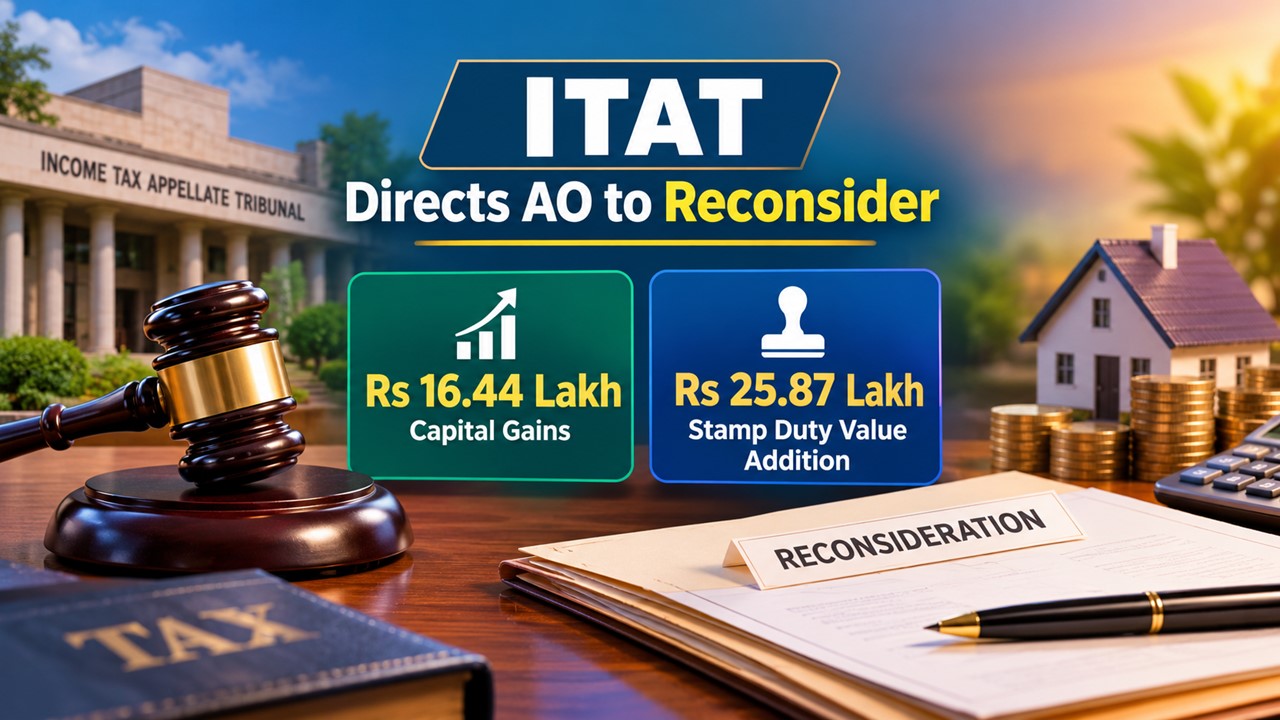
- ITAT Directs AO to Reconsider Rs 16.44 Lakh Capital Gains and Rs 25.87 Lakh Stamp Duty Value Addition
- ITAT Remands Rs 3.33 Crore Demonetisation Cash Deposit Case to AO, Directs Rs 10,000 Relief Fund Payment
- Income Tax Dept Increases Scope for Saksham Nudge Initiative to Further Include Professional Insuring Timely Compliance
- Vedanta Subsidiary ESL Steel Receives GST SCN for Rs. 2.76 Lakh IGST Demand Over Alleged RCM Short Payment
Up Next
Loading suggestions…


Recent Posts


All Posts


Tags
Recent Posts
All Posts