GSTAT: E-Way Bills Cannot Be Invalidated Merely Because They Were Not Generated by Original Supplier:
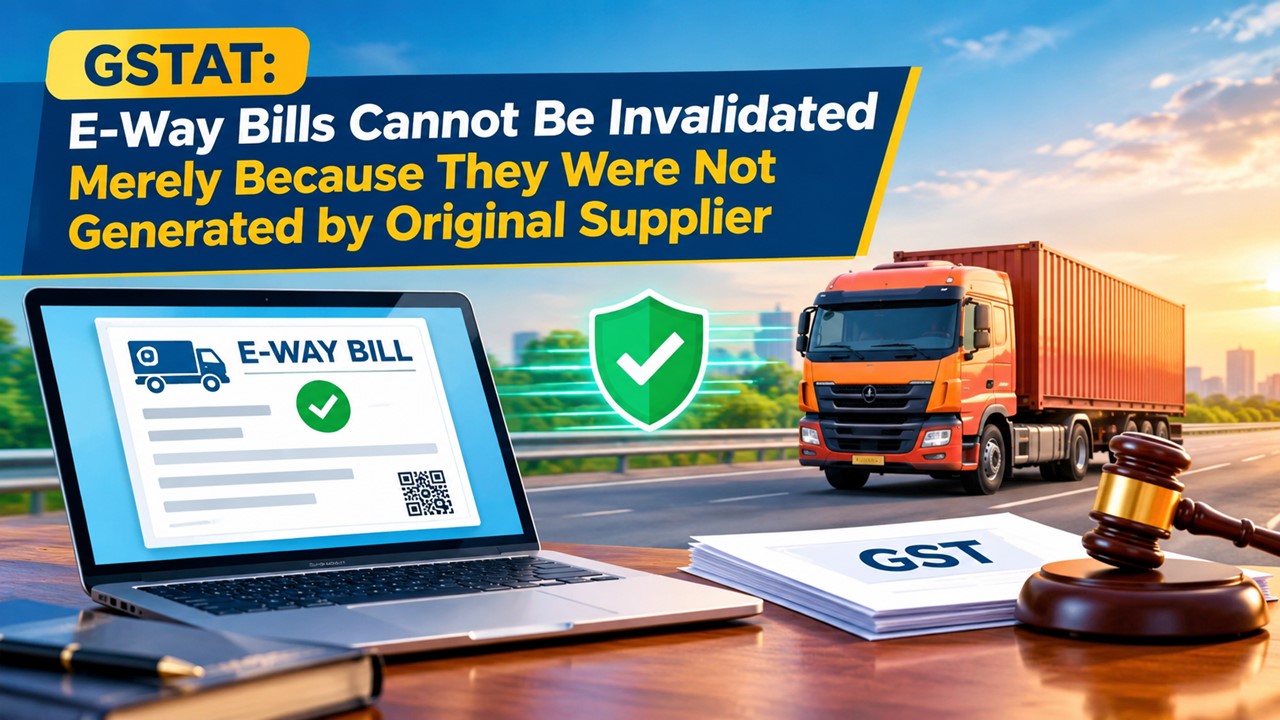
The GSTAT set aside the Section 129 penalty, holding that a genuine bill-to/ship-to transaction supported by valid invoices, e-way bills and movement records could not be penalised merely because the original supplier had not generated the e-way bills.
GST Penalty Unwarranted in Genuine Goods Movement, Holds GSTAT
 Saloni Kumari
 Oct 17, 2026
The GSTAT State Bench Raipur quashed a penalty imposed for alleged discrepancies in the transportation documents under Section 129 of the CGST/CGGST Acts, 2017, holding that the transaction was a genuine bill-to/ship-to arrangement supported by proper invoices, e-way bills and other documentary evidence. Accordingly, the final decision was announced in the appellant's favour.
The dispute arose when the GST officials intercepted the appellant's vehicle carrying MS TMT bars from Raigarh, Chhattisgarh, to Indore, Madhya Pradesh, on November 10, 2024, over non-issuance or generation of invoices and e-way bills by the actual supplier. Consequently, the tax authorities ended up imposing a penalty of Rs 3.20 lakh each under CGST and SGST.

The aggrieved appellant filed an appeal before the first appellate authority, challenging the penalty order; however, its appeal was dismissed. Thereafter, the appellant approached the GST Appellate Tribunal (GSTAT), raising the key ground that the first appellate authority had erroneously confirmed the imposition of a penalty equivalent to twice the amount of tax under Section 129(1)(a) of the GST Act, solely on the ground that the invoices were not issued by the actual seller and e-way bills were not generated by the actual seller.
The appellant contended that the transaction followed the bill-to/ship-to model, under which goods are delivered directly to the ultimate recipient on the instructions of an intermediary purchaser. It submitted that the required invoices and e-way bills were available during transportation and that the authorities had failed to properly consider its explanation and supporting documents.

The Tribunal cited the provisions of Section 10(1)(b) of the IGST Act, 2017, which recognises bill-to/ship-to transactions. In such arrangements, the original supplier invoices the intermediary but delivers the goods directly to the final recipient. The intermediary then issues a separate invoice for the onward supply. The Tribunal observed that this commercial arrangement is lawful when the transactions are genuine, properly documented, accounted for and taxed in accordance with the law.
The GSTAT noted that the invoices identified Jindal Steel and Power Limited as the bill-to party and Gupta and Sons as the ship-to party. The onwards invoices identified Gupta and Sons as both the purchaser and recipient. It also noted that Gupta and Sons had generated the e-way bills before the vehicle was intercepted. Under Rule 138(2) of the CGST Rules, 2017, the person responsible for causing the movement of goods may generate the e-way bill. Therefore, the e-way bills could not be treated as invalid merely because they were not generated by the original supplier.
The Tribunal had noted that "the vehicle was intercepted near Rinku Dhaba, which, according to the location details as per google is approximately 15 to 20 kilometres from the premises of Nalwa Steel and Power Limited. The appellant also produced documentary evidence relating to the factory-gate entry and movement of the vehicle. The said records indicate that vehicle bearing registration No. CG-04-PQ-5501 departed from the appellant’s factory premises at 2:20 PM on 10.11.2024, whereas it was intercepted at 2:58 PM on the same day. The timing and proximity of the interception to the place of dispatch are relevant circumstances supporting the appellant’s contention regarding the genuine movement of the goods."
Accordingly, the GSTAT held that the requirements had been complied with and Section 129 could not be invoked on the grounds recorded in the case. It allowed the appeal and granted consequential relief to Nalwa Steel and Power Limited.
About Author


Saloni Kumari
Content Writer
 StudyCafe
 Delhi, Delhi, India
 2927
2927My Recent Articles
- Defective Section 129 Penalty Order Cannot Sustain Penalty Without Effective Hearing Opportunity, Holds GSTAT
- Intent to Evade Tax Not Necessary for Penalty Under Section 129 for Expired E-Way Bills, Holds GSTAT
- Major Relief in Arbitration Case: MCIA Denies Rs 908 Crore Statement Claim Made by Allied Silica Against Tata Chemicals
- MCA and ICSI to Hold User Awareness Session on Form AOC-4 Filing Amid Glitches on MCA-21 Version-3 Portal
- GSTN Introduces New E-Invoicing Facility for Self-Invoices Under Reverse Charge Mechanism
Loading suggestions…


Recent Posts
All Posts
Recent Posts
All Posts