GSTAT Introduces SOP for Branch Officer-to-Branch Officer (BO-to-BO) Case Transfer Ensuring Seamless Reassignment of Cases:
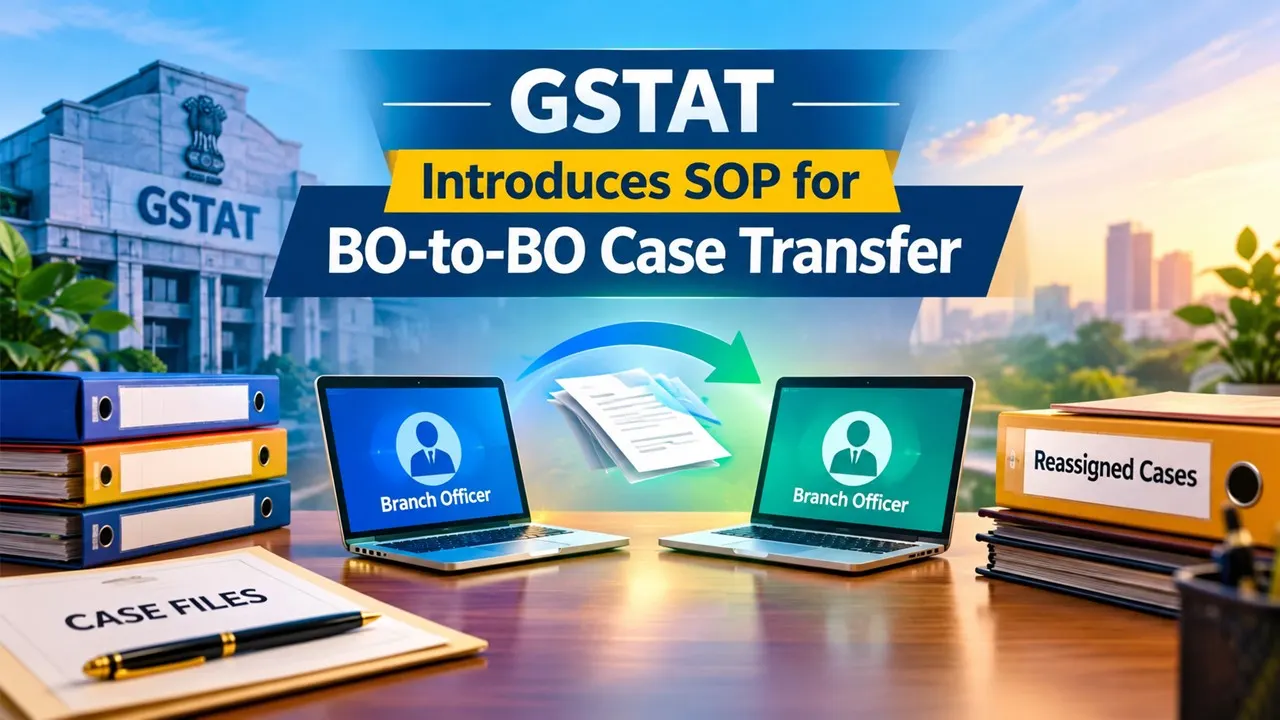
The GSTAT has introduced a Standard Operating Procedure (SOP) to facilitate transfer of cases from one Branch Officer to another (BO-to-BO), here is step by step procedure.
Here's Step-by-Step Procedure to Reallocate Cases
 Saloni Kumari
 Oct 17, 2026
The Goods and Services Tax Tribunal (GSTAT) has introduced a Standard Operating Procedure (SOP) for Branch Officer-to-Branch Officer (BO-to-BO) case transfers.
The key objective of this policy is to ensure seamless reassignment of cases, meaning that when a Branch Officer (BO) is transferred to another area, the cases pending with them can be assigned to another officer without any hassle.

"Before relocation, the BO should be able to transfer all cases assigned to them to their reporting authority, either the Sub-Office (SO) or the Nodal Officer. Once the cases have been transferred, the SO or Nodal Officer should be able to reassign those cases to another BO within the same location," according to the released SOP.
The process of reallocation of cases is completely digital-based and can be performed following the below simple steps:
Step 1: Log in to the GST e-Filing Portal using the required credentials.

Step 2: Thereafter, navigate to My Account → Request Case Release
Step 3: Select the case you want to transfer and then click on 'Request Selected'.
Step 4: After clicking on the 'Request Selected' option, a pop-up will appear on the screen for confirmation of the release request.
Step 5: After that, you will receive a request confirmation message.
Step 6: After the cases are successfully transferred, the Sub-Office (SO) or Nodal Officer reallocates those cases to another new Branch Officer (BO) of the same location.
Refer to the official PDF of the SOP for complete information.
About Author


Saloni Kumari
Content Writer
 StudyCafe
 Delhi, Delhi, India
 2929
2929My Recent Articles
- Madhya Pradesh HC Quashes Section 74 GST Show Cause Notice Passed Against G R Infraprojects
- GSTAT: E-Way Bills Cannot Be Invalidated Merely Because They Were Not Generated by Original Supplier
- Defective Section 129 Penalty Order Cannot Sustain Penalty Without Effective Hearing Opportunity, Holds GSTAT
- Intent to Evade Tax Not Necessary for Penalty Under Section 129 for Expired E-Way Bills, Holds GSTAT
- Major Relief in Arbitration Case: MCIA Denies Rs 908 Crore Statement Claim Made by Allied Silica Against Tata Chemicals
Loading suggestions…


Recent Posts

All Posts
Recent Posts
All Posts