GSTAT Upholds Anti-Profiteering Demand of Rs. 19.32 Lakh on Distributor for Not Passing GST Rate Cut:
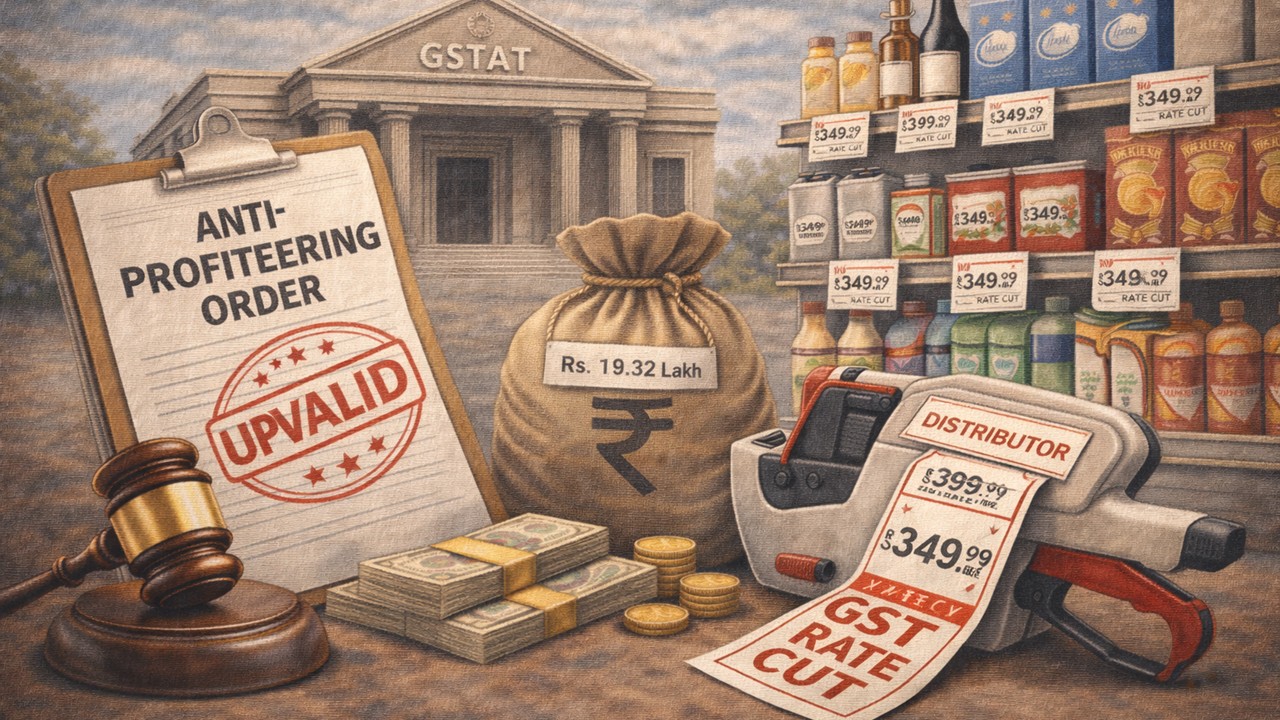
Weighted-average pricing method upheld; Section 171 enforceable despite absence of fixed formula
GSTAT Confirms Rs. 19.32 Lakh Anti-Profiteering Demand for Failure to Pass GST Rate Cut
 Meetu Kumari
 Jan 30, 2026
GSTAT Upholds Anti-Profiteering Demand of Rs. 19.32 Lakh on Distributor for Not Passing GST Rate Cut
A complaint was filed alleging that Shree Sai Kripa Marketing, a distributor of “Park Avenue Good Morning After-Shave Lotion 50 ml”, failed to pass on the benefit of GST rate reduction from 28% to 18% w.e.f. 15.11.2017. The DGAP investigated the period from 15.11.2017 to 31.03.2019 and concluded that the respondent had increased base prices post-rate reduction, resulting in profiteering. The erstwhile National Anti-Profiteering Authority (NAA) initially determined higher profiteering amounts, but the Delhi High Court set aside the order on the ground of factual errors (duplication of invoices) and remanded the matter for fresh adjudication.
DGAP revised the profiteered amount to Rs. 19,32,446. With the constitution of the GST Appellate Tribunal (Anti-Profiteering), the matter was finally adjudicated by GSTAT.
Main Issue: Whether Shree Sai Kripa Marketing had profiteered by not passing on the benefit of the GST rate reduction under Section 171 of the CGST Act, and whether the DGAP’s methodology and proceedings were legally sustainable.
ITAT's Ruling: The GSTAT held that Section 171 of the CGST Act is a valid and enforceable provision and does not fail for want of a prescribed mathematical formula. Relying on Reckitt Benckiser India Pvt. Ltd., the Tribunal held that anti-profiteering provisions are beneficial legislation and timelines under the Rules are directory, not mandatory.
The Tribunal accepted the revised DGAP computation and found that the respondent had profiteered Rs. 19,32,446 by keeping prices unchanged despite the GST rate cut. The respondent was directed to deposit the profiteered amount, without interest or penalty, equally into the Central and State Consumer Welfare Funds, as the affected consumers were unidentifiable.
To Read Full Judgment, Download PDF Given Below
About Author


Meetu Kumari
Content Manager
Meetu Kumari is an Experienced Advocate and Content Writer with 4+ years of demonstrated history of working in the law practice industry. Skilled in Developing Content, Researching, and Drafting. Strong professional with a Bachelor of Science (B.Sc.) focused on Law from Gujarat National Law University.
Meetu Kumari is an Experienced Advocate and Content Writer with 4+ years of demonstrated history of working in the law practice industry. Skilled in Developing Content, Researching, and Drafting. Strong professional with a Bachelor of Science (B.Sc.) focused on Law from Gujarat National Law University.
 Studycafe
 Jodhpur, Rajasthan, India
 2264
2264My Recent Articles
- ITAT Condones 302-Day Delay, Restores Salary Assessment for Fresh VerificationPremium
- ITAT Condones Delay After Tax Consultant's Death, Restores Appeals for Fresh HearingPremium
- ITAT Remands Salary Addition, Says Taxability Depends on Salary Becoming Due, Not Mere ReceiptPremium
- ITAT Deletes TP Royalty Adjustment, Orders Fresh Review of Commission BenchmarkingPremium
- ITAT Quashes Reassessment Over Unsigned Section 148 Notice Issued to AssesseePremium
Up Next
Loading suggestions…


Recent Posts

All Posts
Recent Posts
All Posts