High Court Sets Aside GST Notice Citing Factual Errors and Natural Justice Violations:
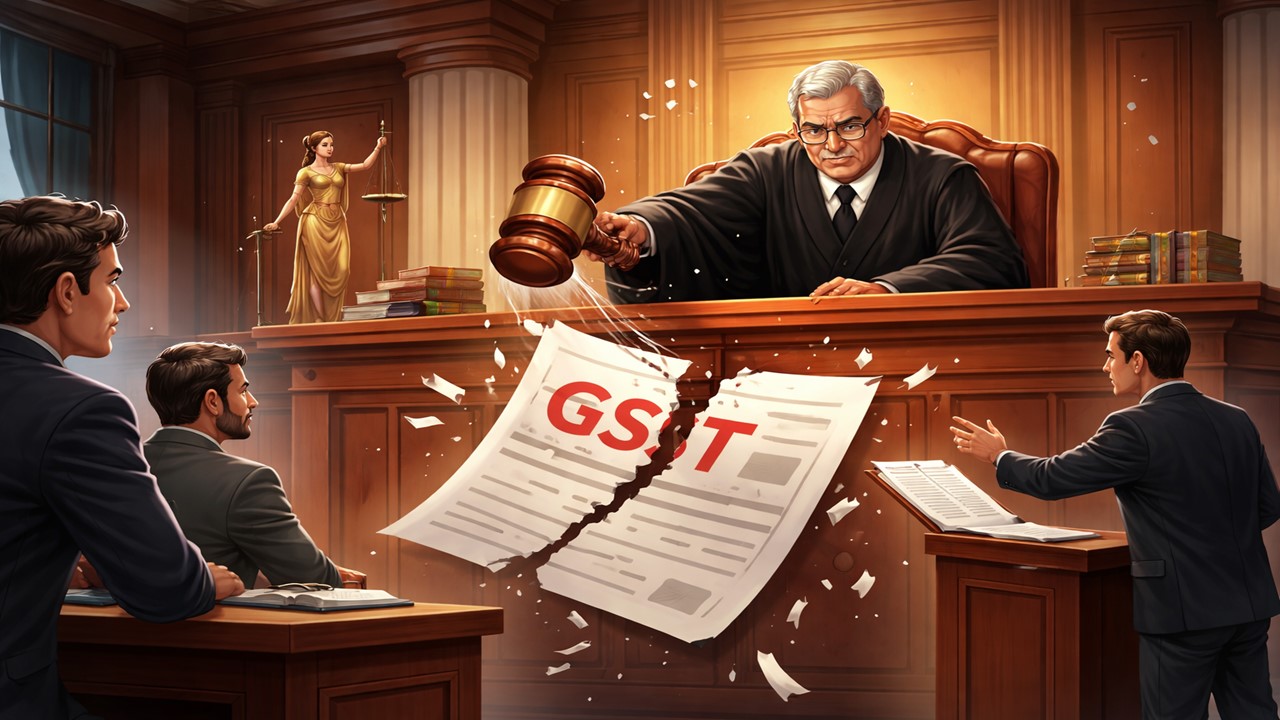
The High Court quashed the GST notice for being factually incorrect and violative of natural justice, granting liberty for fresh proceedings.
GST Show Cause Notice Invalidated for Lack of Specificity
 Vanshika verma
 Apr 14, 2026
High Court Sets Aside GST Notice Citing Factual Errors and Natural Justice Violations
The High Court quashed the show cause notice against the petitioner, as it was based on a factually incorrect CAG audit, while allowing fresh proceedings as per the law.
The present application has been filed by Abbitt Healthcare Private Limited against the Excise and Taxation Commissioner, Punjab, and others, challenging a show cause notice dated January 31, 2024.
Background of the Case
The court observed that the show cause notice issued to the petitioner company was based entirely on a special audit allegedly conducted by the Comptroller and Auditor General of India (CAG). However, during the hearing, the State's counsel admitted that no such audit of the petitioner company had actually been conducted by the CAG. Instead, the audit referred to was carried out by the CAG in relation to the GST Department of Punjab, not the petitioner company. The court held that the very foundation of the notice was therefore factually incorrect.
It was also undisputed that the CAG report, which formed the sole basis of the show-cause notice, was never supplied to the petitioner. The court further found that the notice was vague. However, it alleged that the petitioner had claimed excess Input Tax Credit (ITC) and referred to mismatches in ITC figures.
The notice also mentioned an undischarged tax liability of Rs 4,74,719 and a short payment of Rs 3,13,948 under the reverse charge mechanism but failed to clarify under which tax head the liability arose or the basis of these calculations.
The High Court stated that the purpose of issuing a show cause notice is to clearly inform the assessee of the department’s allegations so that an effective reply can be given. A vague notice does not fulfil such a purpose and violates principles of natural justice.
The court further said, "Not only should the notice be specific and detailed, but the material which forms the basis of the notice should also be supplied to the assessee along with the notice."
Apart from the above, the court observed that the law requires the proper officer to provide detailed information regarding unpaid, short-paid, or wrongly availed tax or input tax credits. In the present case, the notice failed to provide such mandatory details.
After considering all the facts, the High Court set aside the show cause notice and granted liberty to the authorities to initiate new proceedings against the petitioner as per the law.
About Author


Vanshika verma
Content Writer
Vanshika Verma is a Content Writer with 1+ year of experience at Studycafe.in. A B.Com graduate from Delhi University, She writes articles on Finance, Tax, ICAI, GST, and the latest financial news, with a focus on making complex topics easy for readers and professionals.
Vanshika Verma is a Content Writer with 1+ year of experience at Studycafe.in. A B.Com graduate from Delhi University, She writes articles on Finance, Tax, ICAI, GST, and the latest financial news, with a focus on making complex topics easy for readers and professionals.
 Studycafe
 Delhi, Delhi, India
 2027
2027My Recent Articles
- CBI Court Jails Ex-Bank Manager 7 Years in Rs 3.61 Crore Loan Fraud Case
- Income Tax Department Imposes Rs 57.74 Crore Penalties on Emcure Pharmaceuticals for Seven Financial Years
- ICAI Releases Revised Handbook on E-Way Bill Under GST, Covering Latest Legal Changes, Portal Updates and Key Judicial Decisions
- CBI Arrests 5 in Mumbai Bribery Case After CPWD Engineer Allegedly Demanded Rs 70 Lakh for Wadala Land NOC
- CBI Registers Rs 93.44 Crore PNB Bank Fraud Case, Searches Mumbai Premises Linked to Company Directors
Up Next
Loading suggestions…


Recent Posts


All Posts


Tags
Recent Posts
All Posts