Income Tax Alert: These Cash Transactions Can Land You in Trouble:
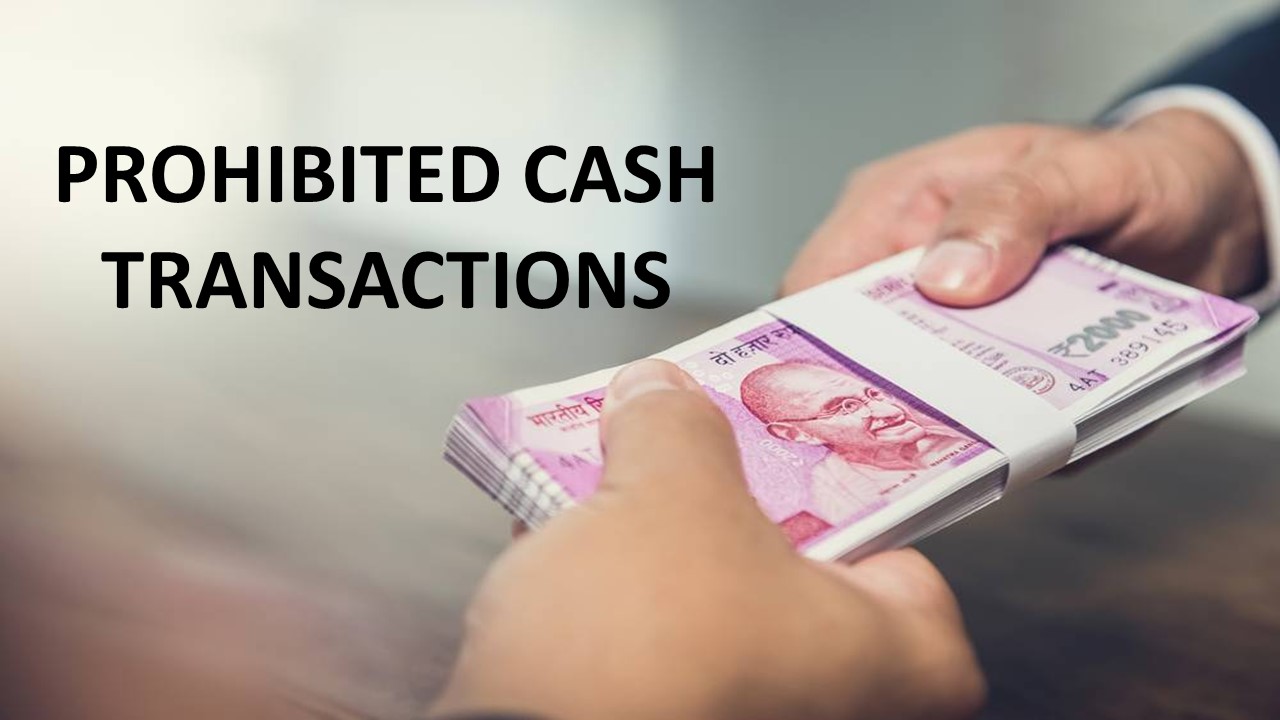
Know which cash transactions are not allowed under the Income Tax Act Cash Transaction Limits Under Income Tax Act Know which cash transactions are not allowed under the Income Tax Act
Cash Transaction Limits Under Income Tax Act
 Nidhi
Nidhi Aug 4, 2025
Table of Contents

Income Tax Alert: These Cash Transactions Can Land You in Trouble
The Income Tax Law has some rules that restrict the limit on the receipt and payment made in cash. These rules aim to curb black money and shift towards a cashless economy. Let us understand such cash transactions.
Disallowance of cash payments
Under section 40A(3), if a person incurs expenditure and makes payment of more than Rs. 10,000 in cash per day per person, the entire expenditure is disallowed as a deduction. However, in case the payment is made for plying, hiring, or leasing goods carriages, the applicable limit becomes Rs 35,000. The provision of Section 40A(3) does not apply to payments made by commission agents for goods received for sale on commission or consignment, as these payments are not expenditures because the goods were purchased on a commission basis. But if the commission agent buys goods on his own account, then section 40A(3) applies in such a case. Exemptions Some cash payments mentioned in Rule 6DD are not disallowed, such as:- Payments made to Specified Institutions, like RBI, LIC, Primary Agricultural Credit Society, Co-op. banks, land mortgage banks, etc.
- Payments made in remote villages or towns
- Payments made in legal tender to the Government
- Payments are made by modes including Letter of credit arrangements via bank, Mail or telegraphic transfer, Book adjustment, and Bill of Exchange.
- Payments made towards agriculture or animal produce or Cottage Industry Produce
- Terminal payments made to low-paid employees if the amount is not more than Rs. 50,000.
- Salary payment made to employees posted at remote places for 15 days or more.
- Payment made to an agent or an unauthorised dealer
- Payment made for buying animals from farmers to slaughter them and sell their raw meat to traders, factories, and retail outlets.
Accepting Loans, Deposits, and Specified sum
As per Section 269SS, a recipient cannot accept a loan, deposit or any specified amount from a depositor in cash mode or any impermissible mode if the amount is more than Rs 20,000. For Primary Agricultural Credit Societies (PACS) and Primary Co-Operative Agricultural and Rural Development Banks (PCARD), the limit is increased to Rs. 2 lakhs. Violating section 269SS can result in a penalty under Section 271D equal to the amount of loan or deposit accepted. Taxpayers should note that if both the recipient and depositor have agricultural income and do not have taxable income, then this section will not apply. Exceptions: Transactions made with the Government, banks, post office savings banks, co-operative banks, government companies, corporations established by a Central, State, or Provincial Act, and notified institutions are exempt.Mode of Undertaking Transactions
Section 269ST restricts any person from receiving Rs. 200,000 or more in cash:- From a single person in a day
- For a single transaction
- For multiple transactions related to one event or occasion from a person.
- Government
- Any banking company, post office savings bank, or cooperative bank, or
- Any other notified persons, class of persons, or receipts.
Payment Accepted Through Electronic Modes
If the total sales or turnover of a business is more than Rs. 50 crores in the previous year, it must provide facilities to accept payments through:- RuPay debit card
- BHIM-UPI
- BHIM-UPI QR Code

Mode of Repayment of Certain Loans or Deposits
Under Section 269T, a person cannot repay a loan, deposit, or any specified advance in cash if the amount of the repayment is over Rs 20,000, or if the unpaid balance is more than Rs 20,000, or if the aggregate of repayment on the date of payment exceeds Rs 20,000. The transactions covered under this section are:- Any loan or deposit repayable after notice or after a fixed period.
- Advance money related to the transfer of immovable property, even if the transfer does not happen.
- Government
- Any banking company, post office savings bank, or cooperative bank
- Any corporation established by a Central, State, or Provincial Act
- Any government company defined under section 2(45) of the Companies Act, 2013
- Any other notified institution, association, or body, or class of institutions, associations, or bodies
About Author


Nidhi
Content Writer
Nidhi is a skilled content writer specializing in personal finance. She creates clear, engaging articles on mutual funds, investments, insurance, and wealth-building strategies. With a passion for simplifying complex financial topics, Nidhi helps readers make informed money decisions with confidence. She can be reached at [email protected]
Nidhi is a skilled content writer specializing in personal finance. She creates clear, engaging articles on mutual funds, investments, insurance, and wealth-building strategies. With a passion for simplifying complex financial topics, Nidhi helps readers make informed money decisions with confidence. She can be reached at [email protected]
 Studycafe
 New Delhi, Delhi, India
 1832
1832My Recent Articles
- Karnataka High Court Gives Another Chance in GST Matter Due to Lack of Hearing
- Delay Should Be Condoned if Explanation is Unrefuted: ITAT
- Non-Service of Income Tax Notice, Ill health of taxpayer, ITAT condones Appeal filing delay
- Books of Accounts Cannot be Rejected Without Any Specific Defect: ITAT Kolkata
- Karnataka High Court Sends ITC Matter Back to GST Authorities for Reconsideration
Up Next
Loading suggestions…


Recent Posts
All Posts

Tags
Recent Posts
All Posts