Income Tax Portal 2.0 to Manage ITRs of both New and Old Law:
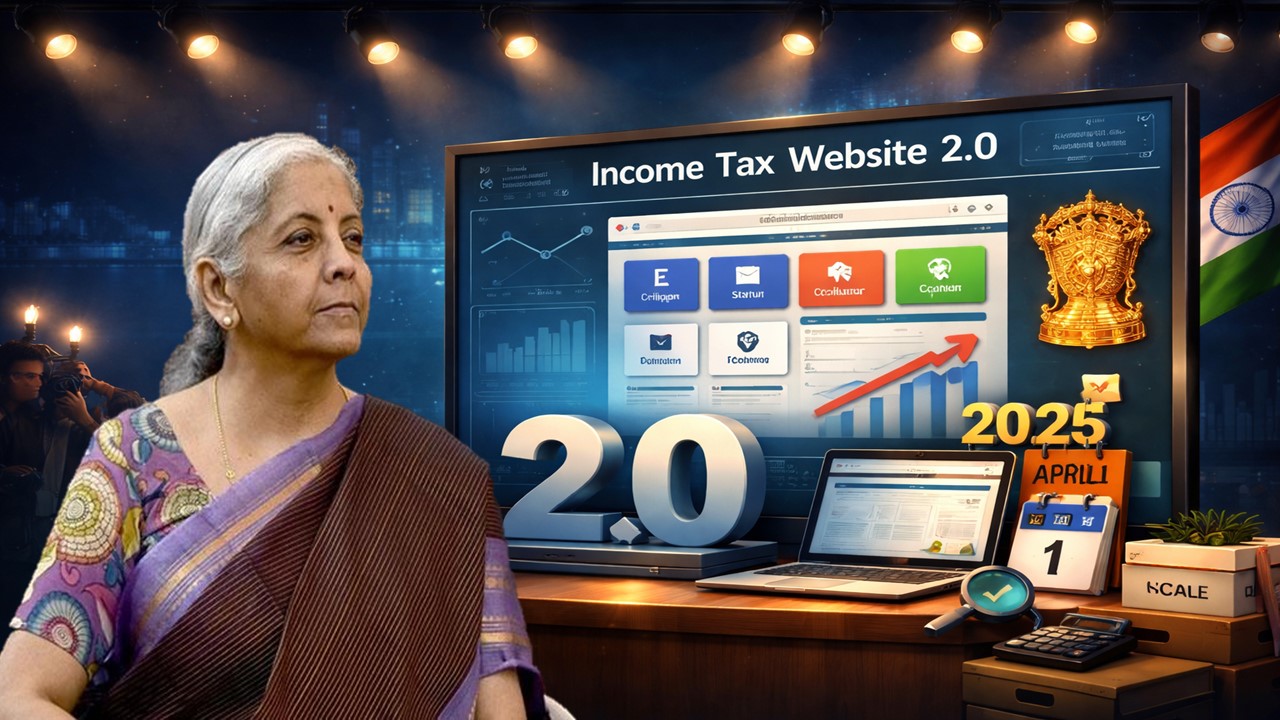
The Income Tax Department released FAQs on the new Income-tax Act, 2025, assuring taxpayers that it simplifies the law without increasing taxes.
Income Tax Dept shares FAQs on Income-tax Act 2025
 Vanshika verma
 Mar 24, 2026
Income Tax Portal 2.0 to Manage ITRs of both New and Old Law
Finance Minister Nirmala Sitharaman has recently launched an upgraded version of the e-filing portal, called Income Tax Website Version 2.0. This new platform will be effective from April 1, aligning with the implementation of the Income Tax Act 2025. This Portal will Manage ITRs of both New and Old Income Tax Law.
In its message, the department emphasised that the FAQs are part of a broader effort to support taxpayers and stakeholders during the shift. By providing clarity on the relationship between the old and new tax frameworks, the initiative aims to ensure a smooth and hassle-free transition to the updated system.
The following are some of the major questions asked by several taxpayers:
Q1. Why is the Income-tax Act, 2025, being introduced?
The Department explained that the 1961 law had become overly complex because of numerous amendments. The new Act is launched to make tax laws simpler, clearer, and easier to understand, while keeping the same basic tax rules.
Q2. Will the new Act fully replace the old one?
The department said that, from April 1, 2026, the 2025 Act will replace the 1961 Act. However, old cases and ongoing matters will still continue under the old law to avoid confusion.
Q3. Does the new Act increase taxes or add new ones?
The department clarified that it does not add new taxes or increase your tax burden. It mainly focuses on making the law clearer and reducing confusion and disputes.
Q4. How will small taxpayers benefit?
The department said small taxpayers will find it easier to understand and follow the law because the language is simpler and less confusing, and related rules are grouped together.
Q5. Has the law become shorter or simpler?
The department said the new law is shorter and less complex, as it includes a total of 536 sections and 16 schedules; however, the old law had 819 sections and 14 schedules. Apart from this, long explanations have been replaced with tables and formulas.
Q6. Is there any change in how tax is calculated?
The department clarified that the term "previous year" will now be called "tax year", and the concept of "assessment year" has been removed to make things simpler.
Q7. Will old tax cases and filings become invalid?
The department said nothing has changed for past cases. All previous filings and ongoing cases remain valid and will continue as usual.
About Author


Vanshika verma
Content Writer
Vanshika Verma is a Content Writer with 1+ year of experience at Studycafe.in. A B.Com graduate from Delhi University, She writes articles on Finance, Tax, ICAI, GST, and the latest financial news, with a focus on making complex topics easy for readers and professionals.
Vanshika Verma is a Content Writer with 1+ year of experience at Studycafe.in. A B.Com graduate from Delhi University, She writes articles on Finance, Tax, ICAI, GST, and the latest financial news, with a focus on making complex topics easy for readers and professionals.
 Studycafe
 Delhi, Delhi, India
 2096
2096My Recent Articles
- Pinarayi Vijayan Moves Supreme Court Challenging Kerala High Court Order to Register FIR in CMRL Alleged Bribery Case
- CBI Lays Trap in Srinagar, Arrests SMC Ward Officer Red-Handed While Allegedly Accepting Rs 10,000 Bribe
- NIIT Limited Discloses Income Tax Department’s Appeal Before Delhi ITAT, Says No Adverse Financial Impact Expected
- Fake WhatsApp Boss Dupes Company Accountant of Rs 40 Lakh; Surat Police Arrest Haryana Man in Cyber Fraud Case
- Uttarakhand Tax Department Detects Rs 2.5 Crore Tax Evasion at Ramnagar Resort
Up Next
Loading suggestions…


Recent Posts

All Posts

Recent Posts
All Posts