ITAT Bangalore issued order based on ChatGPT research on cases that don’t exist; Later withdraw the Order:
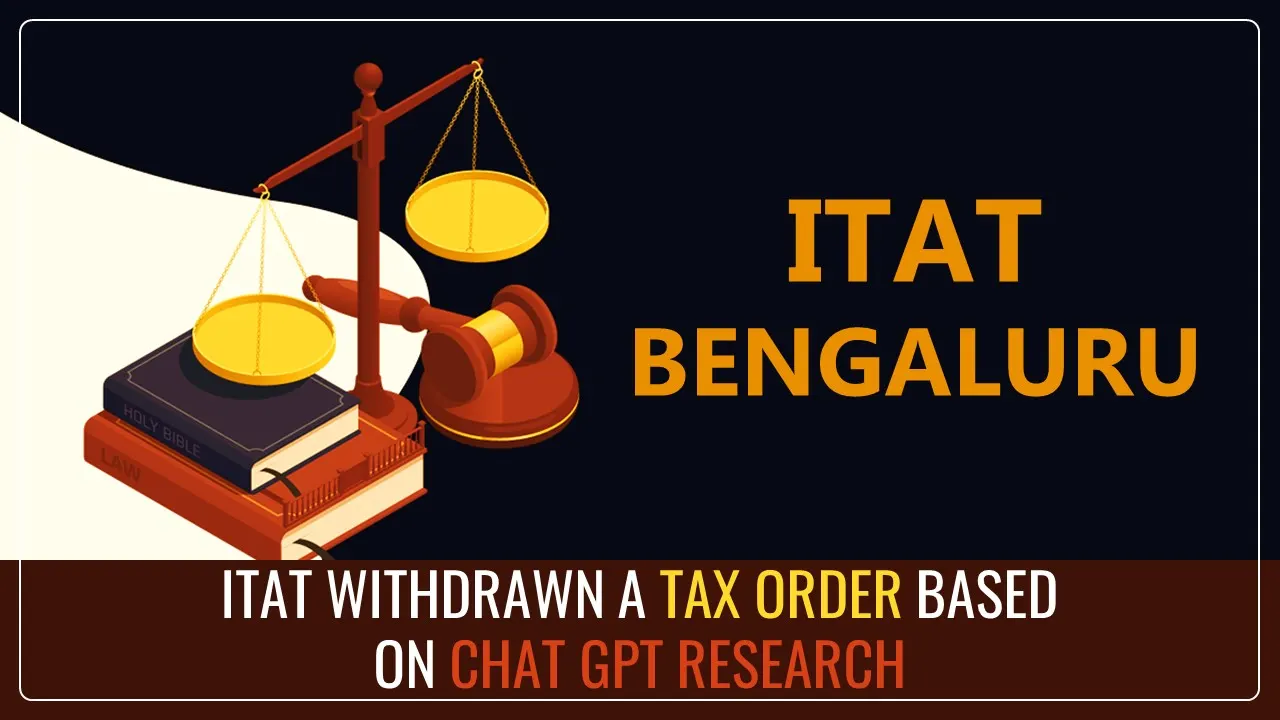
A tax order issued by the Bengaluru bench of ITAT was apparently withdrawn after it was discovered that the order was based on ChatGPT research on non-existent cases.
ITAT withdrawn a Tax Order based on Chat GPT Research
 Reetu
Reetu Feb 27, 2025
Table of Contents

ITAT Bangalore issued order based on ChatGPT research on cases that don’t exist; Later withdraw the Order
In an interesting incident, a tax order issued by the Bengaluru bench of the Income Tax Appellate Tribunal (ITAT) was apparently withdrawn after it was discovered that the order was based on ChatGPT research on non-existent cases.
According to reports, the tax order was given in the case of Buckeye Trust v PCIT -1 Bangalore (ITA No. 1051/Bang/2024) in December 2024. However, it was later dicovered that the order was based on three Supreme Court and one Madras High Court decisions that did not exist. The order was apparently withdrawn a week later, with the notice alleging accidental errors.
The case apparently dealt with the taxability of a transaction in which a person created a trust for Rs 669 crore, mostly by transferring an interest in a partnership to the trust. In general, transfers of more over Rs 50,000 done without consideration to non-relatives are taxable in the recipient's hands. However, the assessee's lawyers argued, among other things, that an interest in a partnership firm is not a property under tax law. The ITAT found in favour of the tax department, stating that an interest in a partnership is a sort of share (similar to a stock market share) and hence taxable.
According to the report, the ITAT relied on Supreme Court and Madras High Court decisions to rule in favour of the tax department. However, these decisions were fictitious, and they do not exist in the Supreme Court or Madras High Court records.
The order referenced three judgements - K. Rukmani Ammal v. K. Balakrishnan (1973) 91 ITR 631 (Madras High Court), S. Gurunarayana v. S. Narasinhulu (2004) 7 SCC 472 (Supreme Court of India), and Sudhir Gopi v. Usha Gopi (2018) 14 SCC 452. The citations for the first two cases do not appear to exist, while the third case refers to a different case, K. Subba Rao v. State of Telangana. A fourth citation mentioned in the order, 57 ITR 232(SC), was to a case named CIT v Raman Chettiar, however the case was about a Hindu Undivided Family that did not file an ITR and had nothing to do with partnership enterprises.
Bench did not Verify the Judgements
According to the report, some tax department representatives utilised the ChatGPT to locate case laws that favoured the tax department and then used the AI tool's results to their advantage. Even the bench did not verify the judgements and simply copied and pasted the case laws from the tax department's submissions without adequate diligence. This resulted in an incorrect judgement. AI is increasingly being used for research purposes, including legal research. However, AI tools might be prone to 'hallucinations', producing results that do not exist in reality. Therefore, it is vital to cross-check references supplied by AI tools.US law firm says AI can create fake cases; lawyers punished
Notably, this incident occurred barely a week after a major US law firm warned that Artificial Intelligence (AI) can create fake case law. Morgan and Morgan, a personal injury law firm, wrote an urgent email to over 1,000 lawyers earlier this month, warning them that AI can create fake cases and that using such cases in court files could result in their firing. Recently, a federal judge in the United States threatened to discipline lawyers who used fake case citations in a lawsuit against Walmart. The court penalised three lawyers a total of $5,000, including two from Morgan and Morgan. One lawyer admitted in court that he utilised artificial intelligence to find citations, claiming that the tool "hallucinated" the cases.About Author


Reetu
Content Manager
Reetu is a Content Writer with 4+ years of experience in GST, Income Tax, Finance, Company Law, Education and Career Related Content. She is a B.COM (Honrs.) Graduate.
Reetu is a Content Writer with 4+ years of experience in GST, Income Tax, Finance, Company Law, Education and Career Related Content. She is a B.COM (Honrs.) Graduate.
 Studycafe
 Delhi, Delhi, India
 8071
8071My Recent Articles
- Income Tax Guide for Indian Defence Personnel for Tax Filing, Taxable Allowances and Other Benefits
- Income Tax Return Breaking: ITR Forms released for AY 25-26
- Ex-DRT Officials Sentenced to 5 Years Rigorous Imprisonment by Madras High Court along with Rs.27 Lakh Fine
- GSTN issued Advisory on Case Sensitivity in IRN Generation
- RBI to issue Notes of Rs.10 and Rs.500 bearing Signature of Guv Malhotra
Up Next
Loading suggestions…


Recent Posts

All Posts
Tags
No tags yet.
Recent Posts
All Posts
Tags
No tags yet.