ITAT Deletes Section 270A Penalty After Acceptance of Reassessment Return:
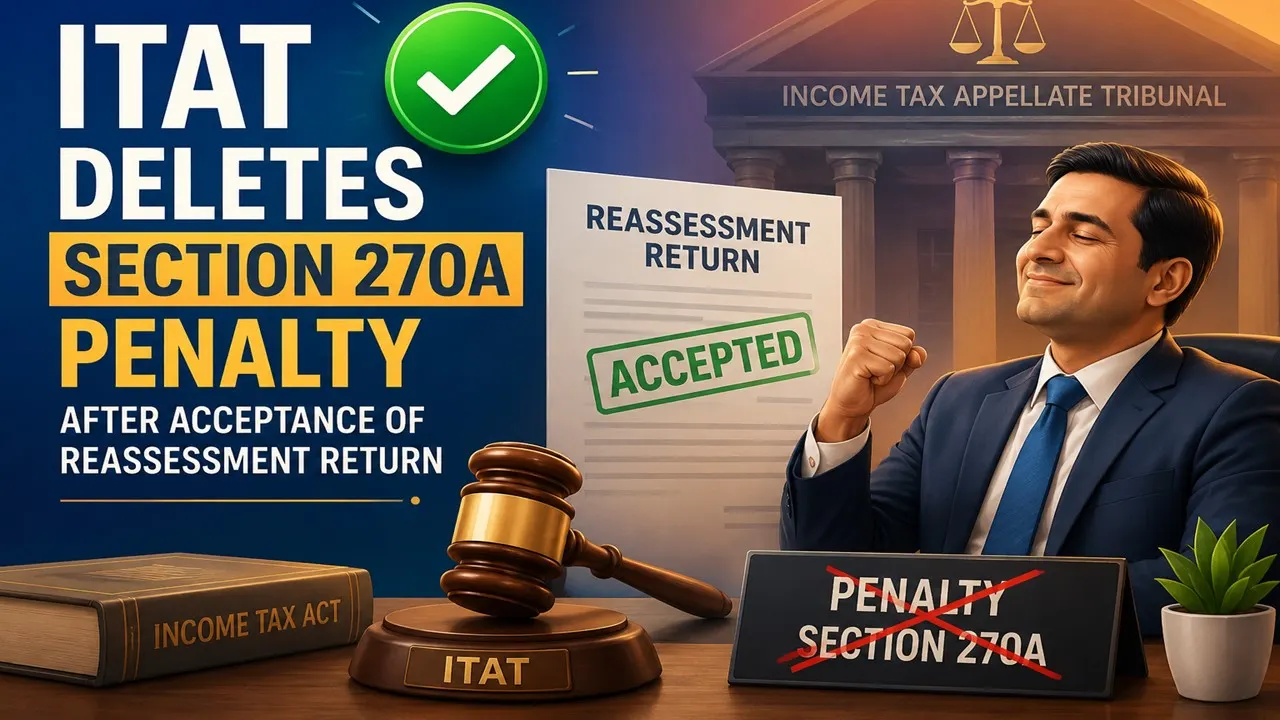
The ITAT deletes Section 270A penalty after reassessment return accepted without any income addition.
Tribunal Deletes Penalty After Reassessment Income Accepted Without Any Addition Entirely
 Meetu Kumari
 May 21, 2026
The Ahmedabad Bench of the Income Tax Appellate Tribunal (ITAT) on 15 May deleted penalty proceedings initiated under Section 270A of the Income Tax Act, 1961, holding that no case of under-reporting or misreporting survives once the income returned in response to notice under Section 148 is accepted without any addition. A Single Member Bench comprising Judicial Member Ms Suchitra Kamble set aside the orders of the Assessing Officer and the Commissioner of Income Tax (Appeals), who had confirmed a penalty of Rs 4.91 lakh against Ansh Organisers Private Limited.

The assessee had filed its return of income for AY 2020-21 under Section 148, declaring a total income of Rs. 37.82 lakh. The case was reopened after the department noticed that although sales were reflected in GSTR-1 and GSTR-3B, no return had originally been filed under Section 139(1). During reassessment proceedings, the assessee furnished reconciliation statements, financial statements, an audit report and bank details before the Assessing Officer.
The Assessing Officer ultimately accepted the returned income without making any addition in the reassessment order passed under Section 147 read with Section 144B. However, the AO initiated penalty proceedings under Section 270A, alleging under-reporting of income on the ground that the assessee had failed to file its original return under Section 139(1). The tribunal pointed out that "once the return filed under Section 148 was accepted by the Assessing Officer without any variation, there could not be any allegation of under-reporting or misreporting of income."

Before the ITAT, the assessee contended that the penalty notice as well as the assessment order failed to specify the exact limb under Section 270A(2) under which the penalty was proposed. It was further argued that complete disclosure of income and supporting records had been made during reassessment proceedings and, therefore, penalty provisions were wrongly invoked.
Accepting the contention of the assessee, the Tribunal held that the Assessing Officer had not properly specified the applicable provision of Section 270A while initiating penalty proceedings. The Bench further noted that the reassessed income had been accepted as returned and there was no finding of concealment or misreporting.
The Bench held that “once the return of income was accepted under Section 148, the Assessing Officer cannot make out the case that there is underreporting or misreporting.”
Thus, the ITAT allowed the appeal and deleted the penalty levied under Section 270A of the Act.
To Read Full Order, Download PDF Given Below.
About Author


Meetu Kumari
Content Manager
 Studycafe
 Jodhpur, Rajasthan, India
 2264
2264My Recent Articles
- ITAT Condones 302-Day Delay, Restores Salary Assessment for Fresh VerificationPremium
- ITAT Condones Delay After Tax Consultant's Death, Restores Appeals for Fresh HearingPremium
- ITAT Remands Salary Addition, Says Taxability Depends on Salary Becoming Due, Not Mere ReceiptPremium
- ITAT Deletes TP Royalty Adjustment, Orders Fresh Review of Commission BenchmarkingPremium
- ITAT Quashes Reassessment Over Unsigned Section 148 Notice Issued to AssesseePremium
Loading suggestions…


Recent Posts


All Posts


Recent Posts
All Posts