ITAT Dismisses Rs. 8.82 Crore Addition; Holds Estimated Disallowances Not Allowed Without Proof:
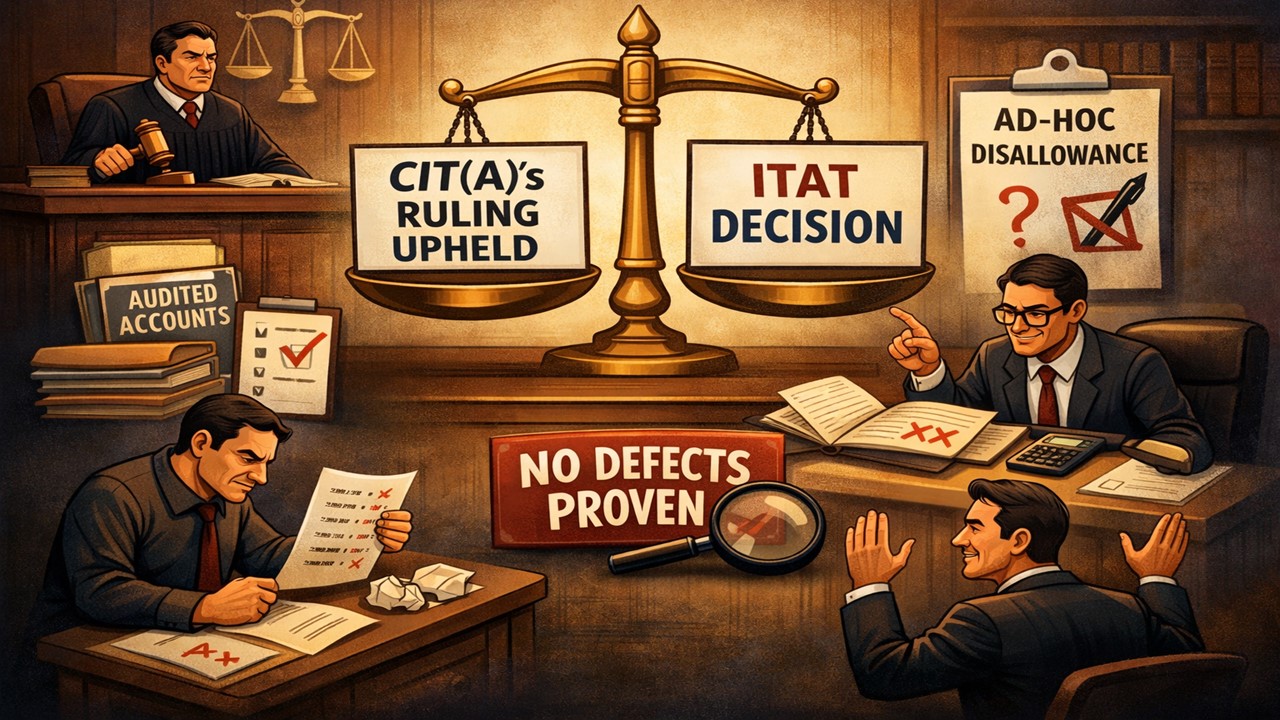
ITAT upheld the CIT(A)'s ruling, holding that ad-hoc expense disallowances without rejecting audited books or proving defects cannot be sustained.
ITAT Quashes Ad-Hoc Expense Disallowance
 Saloni Kumari
 Feb 12, 2026
ITAT Dismisses Rs. 8.82 Crore Addition; Holds Estimated Disallowances Not Allowed Without Proof
The Income Tax Authorities recently filed an appeal before the Income Tax Appellate Tribunal (ITAT) Mumbai against a company named NDX P2P Private Limited, challenging an order dated August 13, 2025, passed by the CIT(A)/NFAC Delhi for the Assessment Year 2022-23. The impugned order had deleted a disallowance amounting to Rs. 8.82 crore (which was 20% of the company’s “other expenses” worth about Rs. 44.14 crore) made by the Assessing Officer (AO).
The assessee had furnished its income tax return (ITR) for the year in consideration, declaring total income at Rs. 3.29 crore. The Assessing Officer (AO) chose the return for scrutiny. During examination, the AO noticed "other expenses" of about Rs. 44.14 crore. The AO claimed that the assessee failed to explain the source of the same, hence disallowed 20% of those expenses and made an addition of Rs. 77,60,711 to the assessee's income.
The assessee argued that they had submitted all the relevant documents explaining the source of those expenses, including party-wise expense details, ledger accounts, invoices, payment proofs, TDS records, etc. The company also highlighted that its books were audited under Section 44AB and the AO could not find any defect in them. Considering the same, the CIT(A) deleted the disallowance and the addition made by the AO.
The aggrieved tax authorities thereafter approached the ITAT Mumbai. When the tribunal analysed the facts of the case, it found no valid reason to interfere in the ruling of the CIT(A). It observed that the AO had not rejected the audited books of accounts nor flagged any specific defects or non-genuine expenses. The Tribunal stated that estimated disallowances cannot be made just on suspicion and must be supported by clear evidence. Since the assessee company had furnished all the relevant documents explaining the source of the expenses and the tax authority was unable to prove any wrongdoing, the ITAT sustained the deletion of the disallowance and dismissed the Revenue’s appeal.
About Author


Saloni Kumari
Content Writer
Saloni is a Content Writer with 2+ years of experience at studycafe.in. She writes legal, taxation, and finance related content including GST, Income Tax etc. Skilled in translating complex judicial pronouncements and regulatory developments into clear, and reader-friendly articles. Experienced in covering judgements of ITAT, High Court, GSTAT, and news related to Income Tax, GST, and corporate law. She can be reached at [email protected].
Saloni is a Content Writer with 2+ years of experience at studycafe.in. She writes legal, taxation, and finance related content including GST, Income Tax etc. Skilled in translating complex judicial pronouncements and regulatory developments into clear, and reader-friendly articles. Experienced in covering judgements of ITAT, High Court, GSTAT, and news related to Income Tax, GST, and corporate law. She can be reached at [email protected].
 StudyCafe
 Delhi, Delhi, India
 2866
2866My Recent Articles
- ITAT Sets Aside Rs 59.84 Lakh LTCG Addition, Orders De Novo Assessment
- Digisol Systems Receives Rs 1.76 Crore GST Show Cause Notice Over Excess ITC Availment, Return Discrepancies
- H.G. Infra Engineering Wins Major GST Relief as Karnataka Tax Authority Drops Entire Rs 94 Crore Demand
- ITAT Condones 608-Day Delay in Rs 79.28 Lakh Addition Dispute, Remands Case for Fresh Adjudication Citing Natural Justice
- ITAT Cuts Section 272A(1)(d) Penalty From Rs 30,000 to Rs 10,000 for Income Tax Notice Default After Assessee Cooperates in Assessment
Up Next
Loading suggestions…


Recent Posts

All Posts

Tags
Recent Posts
All Posts