ITAT Grants Tax Exemption to Educational Publishing Trust Under Sections 11 and 12:
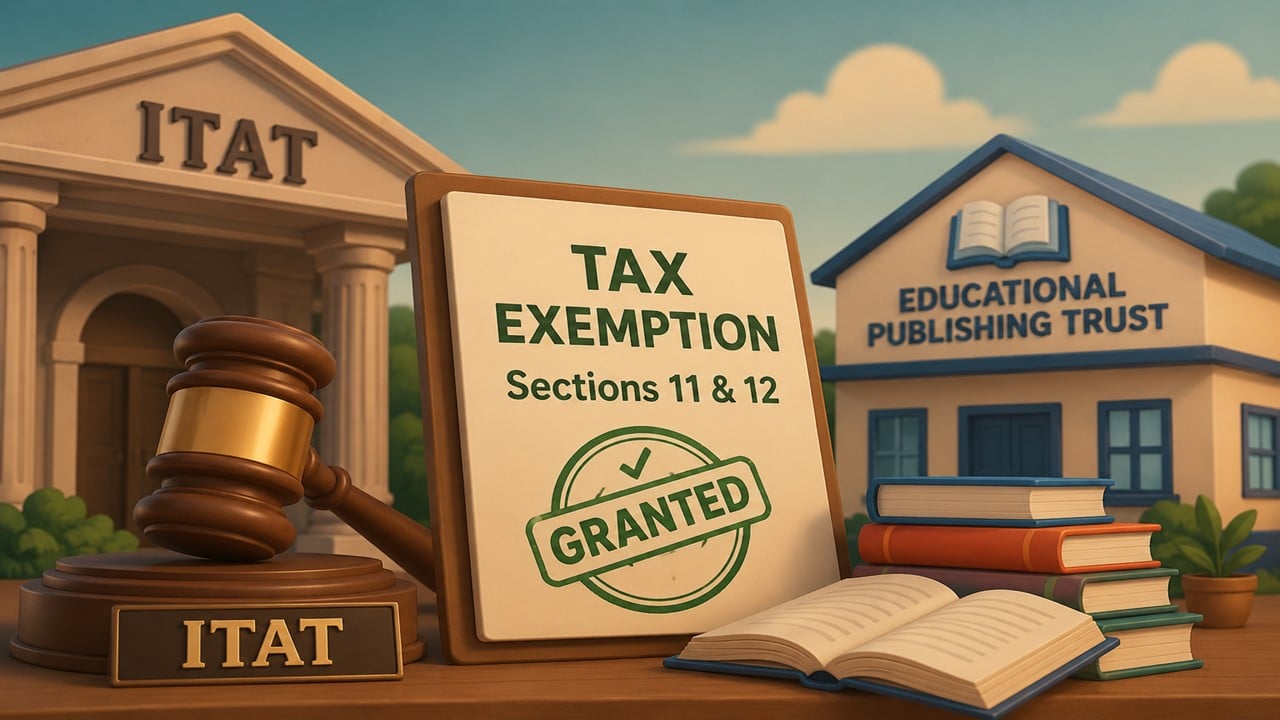
ITAT ruled that an educational publishing trust is entitled to Sections 11 and 12 tax exemption, as selling educational books does not amount to commercial activity.
ITAT Grants Section 11 Relief to Publishing Trust
 Vanshika verma
 May 29, 2026
Premium
ITAT Grants Tax Exemption to Educational Publishing Trust Under Sections 11 and 12
ITAT ruled that an educational publishing trust is entitled to Sections 11 and 12 tax exemption, as selling educational books does not amount to commercial activity.
Also Read
Income Tax Department Imposes Rs 57.74 Crore Penalties on Emcure Pharmaceuticals for Seven Financial YearsITAT Quashes Reassessment as Section 148 Notice Issued Beyond Limitation PeriodITAT Remits Rs. 93.34 Lakh Processing Fee Disallowance for Fresh AdjudicationITAT Deletes Rs. 20.17 Crore Transfer Pricing Adjustment on Intra-Group Services
About Author


Vanshika verma
Content Writer
Vanshika Verma is a Content Writer with 1+ year of experience at Studycafe.in. A B.Com graduate from Delhi University, She writes articles on Finance, Tax, ICAI, GST, and the latest financial news, with a focus on making complex topics easy for readers and professionals.
Vanshika Verma is a Content Writer with 1+ year of experience at Studycafe.in. A B.Com graduate from Delhi University, She writes articles on Finance, Tax, ICAI, GST, and the latest financial news, with a focus on making complex topics easy for readers and professionals.
 Studycafe
 Delhi, Delhi, India
 2027
2027My Recent Articles
- CBI Court Jails Ex-Bank Manager 7 Years in Rs 3.61 Crore Loan Fraud Case
- Income Tax Department Imposes Rs 57.74 Crore Penalties on Emcure Pharmaceuticals for Seven Financial Years
- ICAI Releases Revised Handbook on E-Way Bill Under GST, Covering Latest Legal Changes, Portal Updates and Key Judicial Decisions
- CBI Arrests 5 in Mumbai Bribery Case After CPWD Engineer Allegedly Demanded Rs 70 Lakh for Wadala Land NOC
- CBI Registers Rs 93.44 Crore PNB Bank Fraud Case, Searches Mumbai Premises Linked to Company Directors
Up Next
Loading suggestions…


Recent Posts

All Posts


Tags
Recent Posts
All Posts