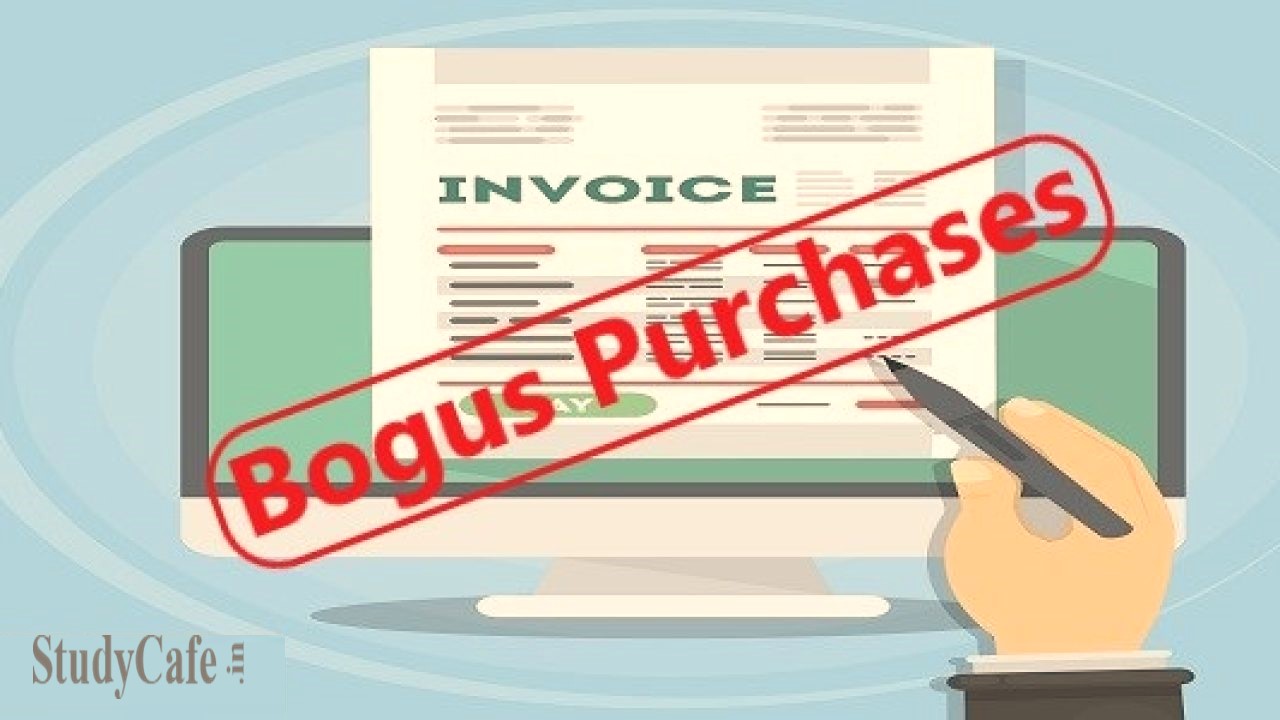
ITAT Instructs AO to Limit Disallowance at 2% of Fake Purchases
ITAT Instructs AO to Limit Disallowance at 2% of Fake Purchases The Income Tax Appellate Tribunal (ITAT Delhi )'s Bench has advised the Assessing Off…
 Sushmita Goswami
 Feb 17, 2022
ITAT Instructs AO to Limit Disallowance at 2% of Fake Purchases
The Income Tax Appellate Tribunal (ITAT Delhi )'s Bench has advised the Assessing Officer (AO) to limit disallowance to 2% of fake purchases.
R R Carwell Pvt. Ltd., the assessee, is involved in the application/job-work of Auto Additives and Car Care Products across a variety of two-wheeler and four-wheeler approved service centres. It submitted its income tax return on September 25, 2012, showing a profit of Rs.58,04,170/-. The return was handled in accordance with section 143(1), which determined the returned income.
Because the assessee could not produce the principal officer/director of M/s White Collar Management Service Pvt. Ltd., the A.O. asked the assessee to explain why the amount of Rs.10,00,000/- received as an unsecured loan from M/s White Collar Management Service Pvt. Ltd. should not be treated as unaccounted/bogus and added back to the assessee's total income for the year under consideration should not be treated as unaccounted/bogus and added
The assessee has challenged the CIT(A) order confirming the disallowance of Rs.1,03,22,034/-, or 25% of the purchases of Rs.4,12,88,138/-, by rejecting the books of accounts u/s 145(3) of the Act and directing the Assessing Officer to limit the disallowance to 20% in cases where the parties are found to be in existence by the Ward Inspector.
The Assessing Officer has been directed by the Coram of Judicial Member Suchitra Kamble and Accountant Member R.K.Panda to limit the profit on such fake transactions to 2% of the overall purchases.
"The assessee asserted that the aforementioned papers show cash balances and expenses expended on incentive and salary payments to employees at various locations." The income obtained from charging grey market purchases was utilized to cover business expenses, according to the explanation. The AO, on the other hand, was unconvinced by the assessee's claims, noting that the assessee had failed to prove that the transactions were recorded in the books of accounts. "As a result, he invoked section 69A of the Act and made the addition of Rs.9,80,410/-," the ITAT stated in its decision on the subject of the addition of Rs.9,80,410/- under section 69A of the Act.
To Read Judgement Download PDF Given Below:
About Author


Sushmita Goswami
Content Manager
Sushmita Goswami is a content writer with 2+ years of experience in Finance, Recruitment, Education and career Related Content. She is a Graduate from Delhi University in Journalism and Mass Communication
Sushmita Goswami is a content writer with 2+ years of experience in Finance, Recruitment, Education and career Related Content. She is a Graduate from Delhi University in Journalism and Mass Communication
 Studycafe
  New Delhi , Delhi, India
 886
886My Recent Articles
- What to Consider When Choosing an Online Trading Platform?
- Post Office Franchise Scheme: Take Post Office Franchise at Rs 5000 and Earn Commission upto 20%; Check Details Here
- IAN invests INR 4.5 crore in Fintech NBFC Indium Finance
- UPI a Digital Public Good, No Charges in Consideration: Finance Ministry
- ITR Filing Penalty: Check Taxpayers Exempt from Paying a Late Fee even Missing the Deadline
Up Next
Loading suggestions…


Recent Posts
All Posts
Tags
Recent Posts
All Posts