ITAT Partly Allows Appeal: Deletion of Deemed Rent on Vacant Flats, Relief on Self-Occupied Property Option:
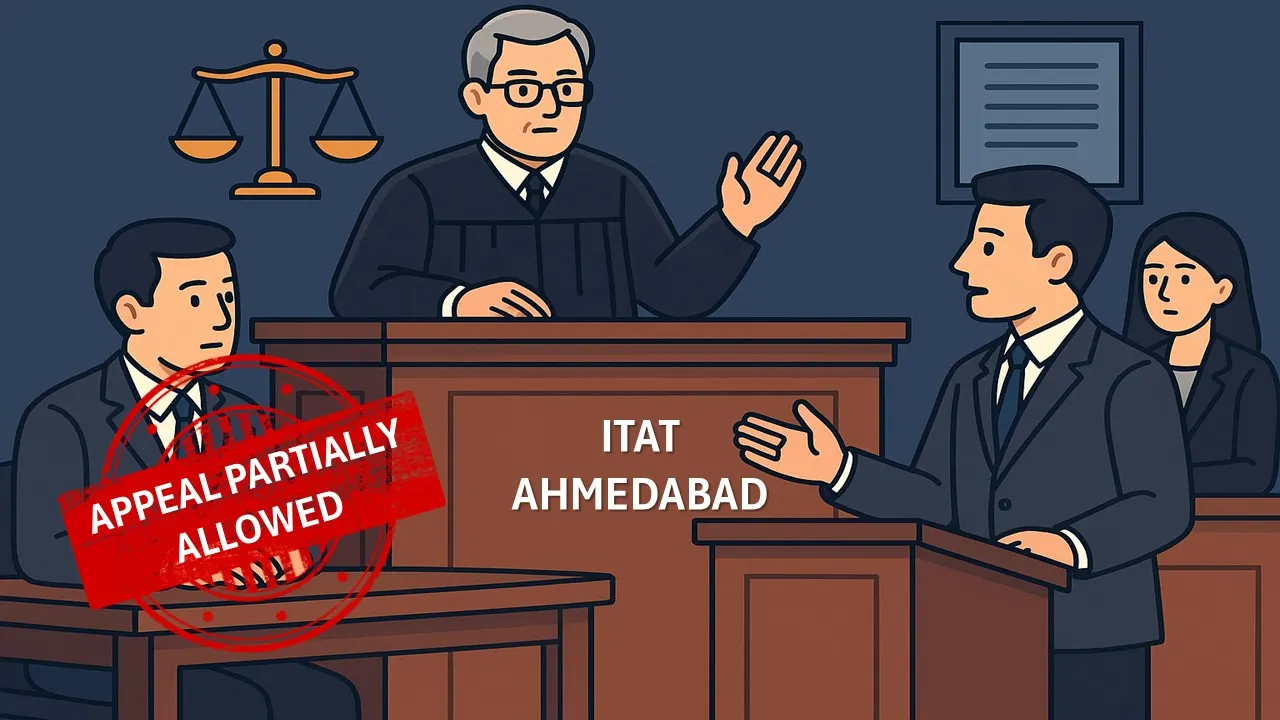
ITAT Ahmedabad partly allowed the appeal, deleting the deemed rent on vacant flats and permitting a change in self-occupied property choice.
Partial Relief Granted in Deemed Rent Dispute
 Saloni Kumari
 Nov 8, 2025
ITAT Partly Allows Appeal: Deletion of Deemed Rent on Vacant Flats, Relief on Self-Occupied Property Option
The present appeal has been filed by a taxpayer named Mohit Vijaykumar Gupta (Appellant) against the DCIT (Respondent) in the Income Tax Appellate Tribunal (ITAT) “A” Bench, Ahmedabad, before Dr Brr Kumar (Vice President) and Shri Siddhartha Nautiyal (Judicial Member). The case is related to the assessment year 2021-22, and was heard before the tribunal on August 06, 2025, and the final decision was announced on November 06, 2025. The appeal challenged an order dated December 14, 2025, passed by the CIT(A), NFAC, Delhi, under Section 250 of the Income Tax Act, 1961, for the assessment year 2021-22.
The assessee filed his income tax return (ITR) for the assessment year 2021-22 on October 02, 2021, declaring the total income of Rs. 106,037,350. Later on, the case was chosen for scrutiny under CASS; large deductions/exemptions were claimed by the assessee under Sections 54, 54B, 54EC, 54EE, 54F, 54G, 54GA and 54GB of the Act. During the assessment proceedings, the AO made additions to the income of the assessee and declared his total income at Rs. 11,026,981. The additions made by AO are as follows:
- (i) Rs. 21,03,258 under the head “Long-term Capital Gain (LTCG)”
- (ii) Rs. 7,43,199 as deemed rent on five flats situated in Mumbai, and;
- (iii) Rs. 13,86,000 as deemed rent on office premises claimed as self-occupied.

- Ground 1: Allowed (vacant flats)
- Ground 2: Dismissed (office rent claim)
- Ground 3: Allowed (change in self-occupied property choice)
About Author


Saloni Kumari
Content Writer
Saloni is a Content Writer with 2+ years of experience at studycafe.in. She writes legal, taxation, and finance related content including GST, Income Tax etc. Skilled in translating complex judicial pronouncements and regulatory developments into clear, and reader-friendly articles. Experienced in covering judgements of ITAT, High Court, GSTAT, and news related to Income Tax, GST, and corporate law. She can be reached at [email protected].
Saloni is a Content Writer with 2+ years of experience at studycafe.in. She writes legal, taxation, and finance related content including GST, Income Tax etc. Skilled in translating complex judicial pronouncements and regulatory developments into clear, and reader-friendly articles. Experienced in covering judgements of ITAT, High Court, GSTAT, and news related to Income Tax, GST, and corporate law. She can be reached at [email protected].
 StudyCafe
 Delhi, Delhi, India
 2945
2945My Recent Articles
- ICAI Opens Application Window for Empanelment of Members to Act as Observer at CA January 2027 Exams
- ICAI CA Inter Sept 2026 Result OUT at caresults.icai.org, Check Steps to Download
- Section 148 Notice Without Manual or Digital Signature Invalidates Entire Reassessment Proceedings, Holds ITAT
- ITAT Holds Failure to Issue Draft Assessment Order Under Section 144B Invalidates Assessment Procedure
- TRACES to Soon Permit Cross-Year Challan Corrections Amid New Income Tax Act Transition
Up Next
Loading suggestions…


Recent Posts
All Posts

Tags
Recent Posts
All Posts