ITR 2026 Update: From Secondary Address to Capital Gains; What Changed:
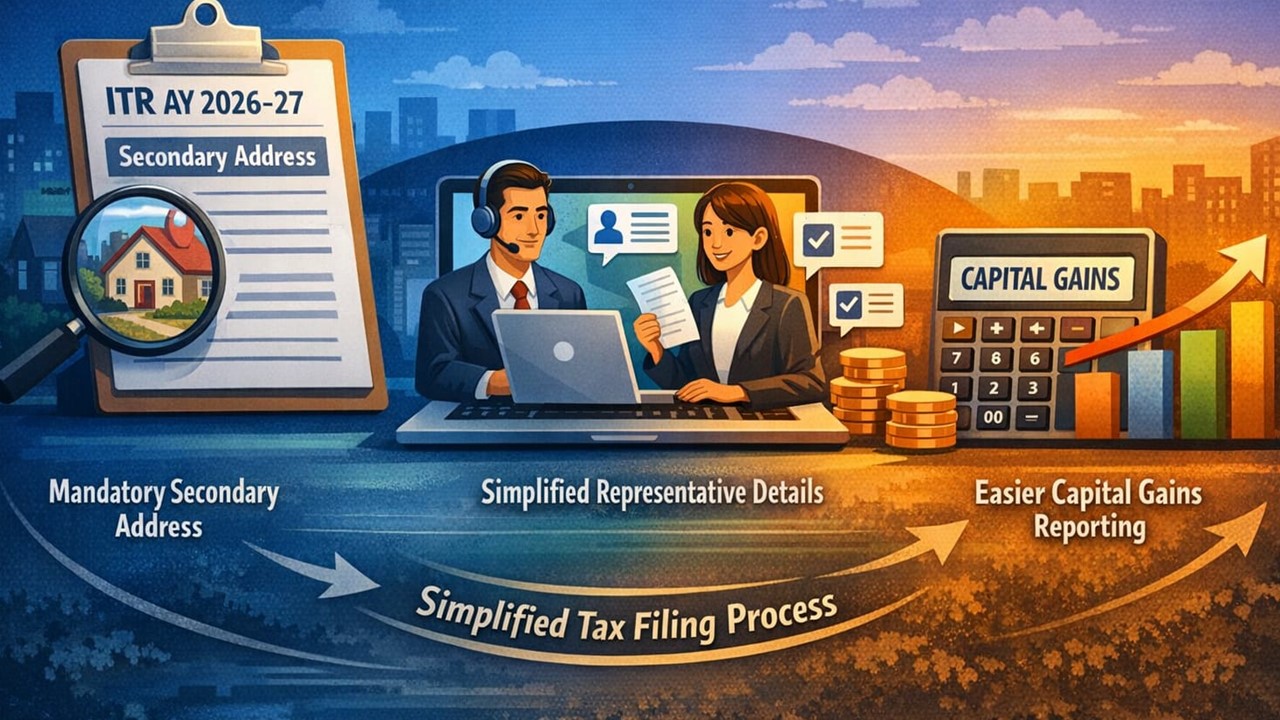
Income Tax Return forms for AY 2026–27 include a mandatory secondary address, simplified representative details, and easier capital gains reporting, making the filing process simpler and more efficient.
Income Tax Return 2026: Important Updates for Taxpayers
 Kashish Bhardwaj
 Apr 14, 2026
ITR 2026 Update: From Secondary Address to Capital Gains; What Changed
Taxpayers filing an Income Tax Return (ITR) for the assessment year 2026-27 should note some changes in the newly notified ITR forms. These changes will apply to the financial year 2025-26 and are aimed at improving disclosures and making reporting clearer. It is important to note that these new ITR forms are for AY 2026-27 and not for the tax year itself.
The last date for filing ITR for non-audit cases has been fixed as July 31, 2026. Taxpayers must file returns on time following the provisions of the Income Tax Act, 1961, and Income Tax Rules, 1961.
Now you will have to give primary and secondary addresses. The most important change in the new ITR forms (ITR-1 to ITR-7) is related to addresses. Earlier, taxpayers had to provide only one address, along with the option to provide a maximum of two mobile numbers and email IDs.
Now in revised format:
- It is mandatory to provide a primary address.
- A secondary address will also have to be given.
- Contact details (mobile number and email) will now also have to be entered separately in primary and secondary categories.
- Address
- PAN
- Aadhaar
- Name
- Email ID
- Contact Number

About Author


Kashish Bhardwaj
Content Writer
 StudyCafe
 Delhi, Delhi, India
 176
176My Recent Articles
- Supreme Court Judge Strength to Increase from 33 to 37 for Faster Justice
- Builder Cleared of Profiteering Charges After Passing Excess ITC Benefit to Homebuyers: GSTAT
- Jubilant Ingrevia to Challenge Rs 2.03 Crore GST Demand Before GSTAT
- Rs 70 Crore Claim Row: Ex-CFO Gobind Jain Moves Bombay High Court Against IndusInd Bank Over Alleged Wrongful Dismissal
- Dream Sports Launches Dream Street: AI-Powered Entry into India’s Retail Broking Market
Up Next
Loading suggestions…


Recent Posts



All Posts


Tags
Recent Posts
All Posts